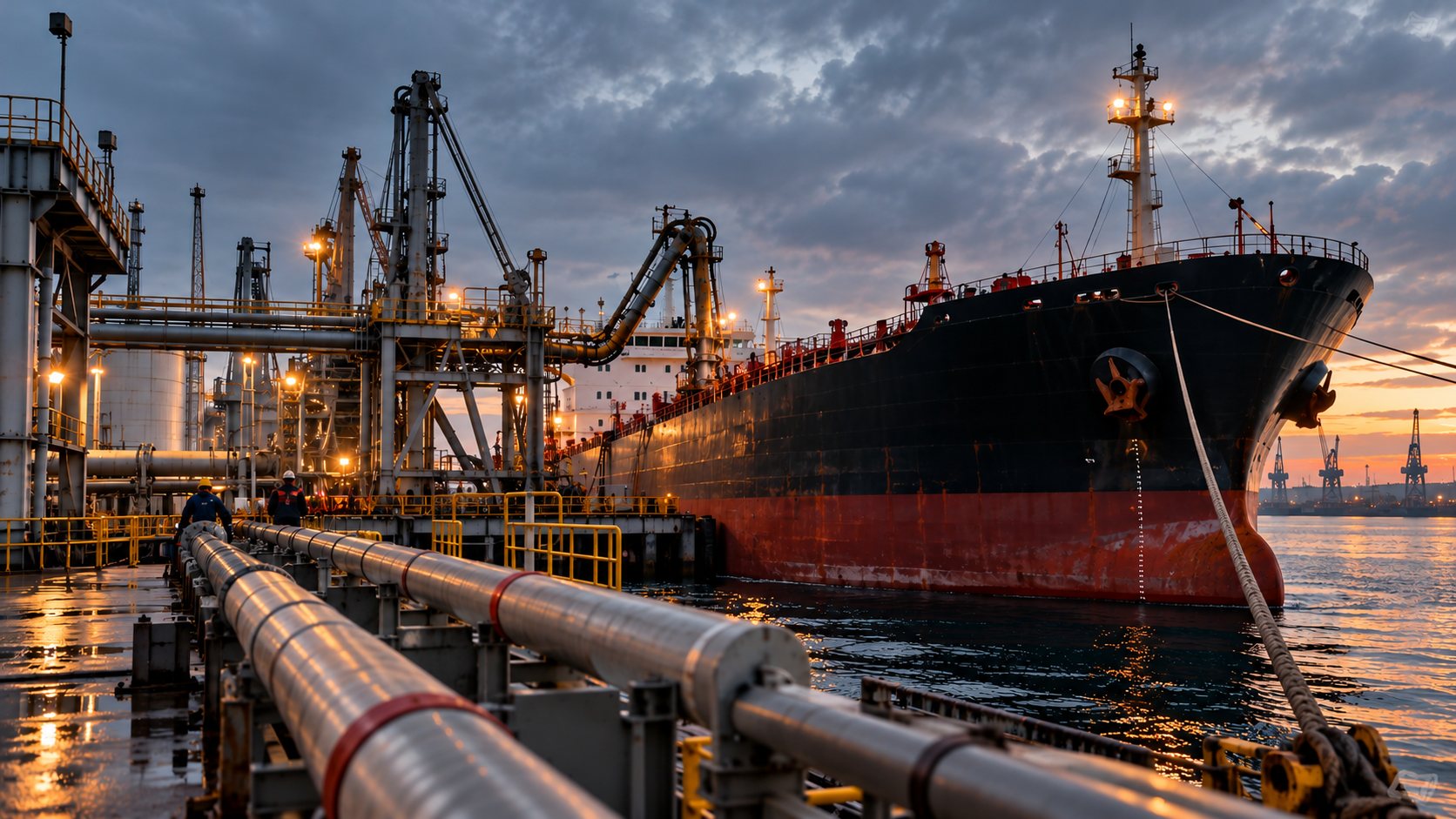
President Donald Trump has turned to Russian President Vladimir Putin for help lowering America's soaring diesel prices, announcing an agreement that would ease restrictions on Russian fuel exports even as Moscow continues its war against Ukraine.
The extraordinary arrangement has triggered criticism from lawmakers, Ukrainian officials, and energy analysts who question why an American president would offer economic relief to Russia while struggling to contain an energy crisis at home.
The agreement comes just weeks before the November midterm elections, with fuel costs emerging as a major political liability for Trump and congressional Republicans.
A Lifeline for Putin
Under the arrangement announced October 9, Russia would immediately supply more than 300,000 metric tons of diesel, with additional shipments promised in the coming months.
To facilitate the agreement, the Trump administration temporarily eased sanctions on Russian fuel exports, reversing a policy designed to restrict Moscow's ability to generate revenue during its invasion of Ukraine.
For Putin, the benefits are potentially significant. Russia gains renewed access to energy markets and an opportunity to increase revenue at a time when Western sanctions are intended to constrain its war-making capacity.
For American consumers, however, the benefits are far less certain.
Energy analysts have warned that the proposed shipments represent a relatively small amount of additional diesel compared with global consumption. Transportation delays, refining constraints, and broader disruptions to international energy markets could further limit their impact.
In other words, Trump may be offering Putin valuable economic concessions without securing meaningful relief for Americans at the pump.
Republicans Join the Backlash
The controversy has crossed party lines.
A bipartisan group of six senators, including Republicans Susan Collins, Lisa Murkowski, Thom Tillis, and John Curtis, has called on the administration to reverse course.
The lawmakers have raised questions about whether the agreement conflicts with existing restrictions on Russian energy imports and undermines American efforts to pressure Moscow.
The objections are particularly striking because they come from members of Trump's own party.
The administration's decision also raises a larger question: Why should the United States weaken economic pressure on Russia while Russian forces continue attacking Ukraine?
Trump Blames Ukraine Instead of Russia
Rather than holding Putin responsible for the consequences of Russia's invasion, Trump has directed criticism toward Ukrainian President Volodymyr Zelenskyy.
Trump has blamed Ukrainian strikes against Russian energy infrastructure for contributing to high diesel prices and suggested that Ukraine should elect different leadership.
The remarks represent another troubling reversal of responsibility.
Ukraine has been attacking Russian energy facilities as part of its effort to weaken the military and economic resources supporting Russia's invasion. Trump, however, has portrayed those attacks as an obstacle to lowering American fuel prices.
The result is a policy in which Ukraine faces pressure to limit its resistance while Russia receives an opportunity to sell more fuel.
An Energy Crisis With Political Consequences
Diesel prices have surged during the ongoing conflict involving Iran, adding to pressure on trucking companies, agricultural businesses, and consumers.
The national average reached approximately $6.28 per gallon in early October, according to Reuters, reflecting an increase of roughly 70% since the Iran conflict began.
Trump has repeatedly promised to bring energy costs under control. Instead, his administration is now seeking emergency measures, temporary regulatory changes, and assistance from a foreign leader whose government remains under sanctions.
The political implications are difficult to ignore.
With the midterm elections approaching, Trump faces growing pressure to demonstrate that his administration can deliver lower prices. But energy analysts remain skeptical that his Russian diesel agreement will produce substantial savings.
Who Benefits From Trump's Deal?
The central question is not whether Americans need lower diesel prices. They clearly do.
The question is whether weakening sanctions against Russia is an effective or defensible way to achieve that goal.
For Putin, the agreement offers potential revenue, diplomatic leverage, and evidence that American economic pressure can be relaxed when domestic political circumstances become inconvenient.
For American truckers and families, the promised relief remains uncertain.
Trump has presented the arrangement as an energy breakthrough. But until prices actually fall, the most visible beneficiary may be the Russian president whose government American sanctions were designed to constrain.