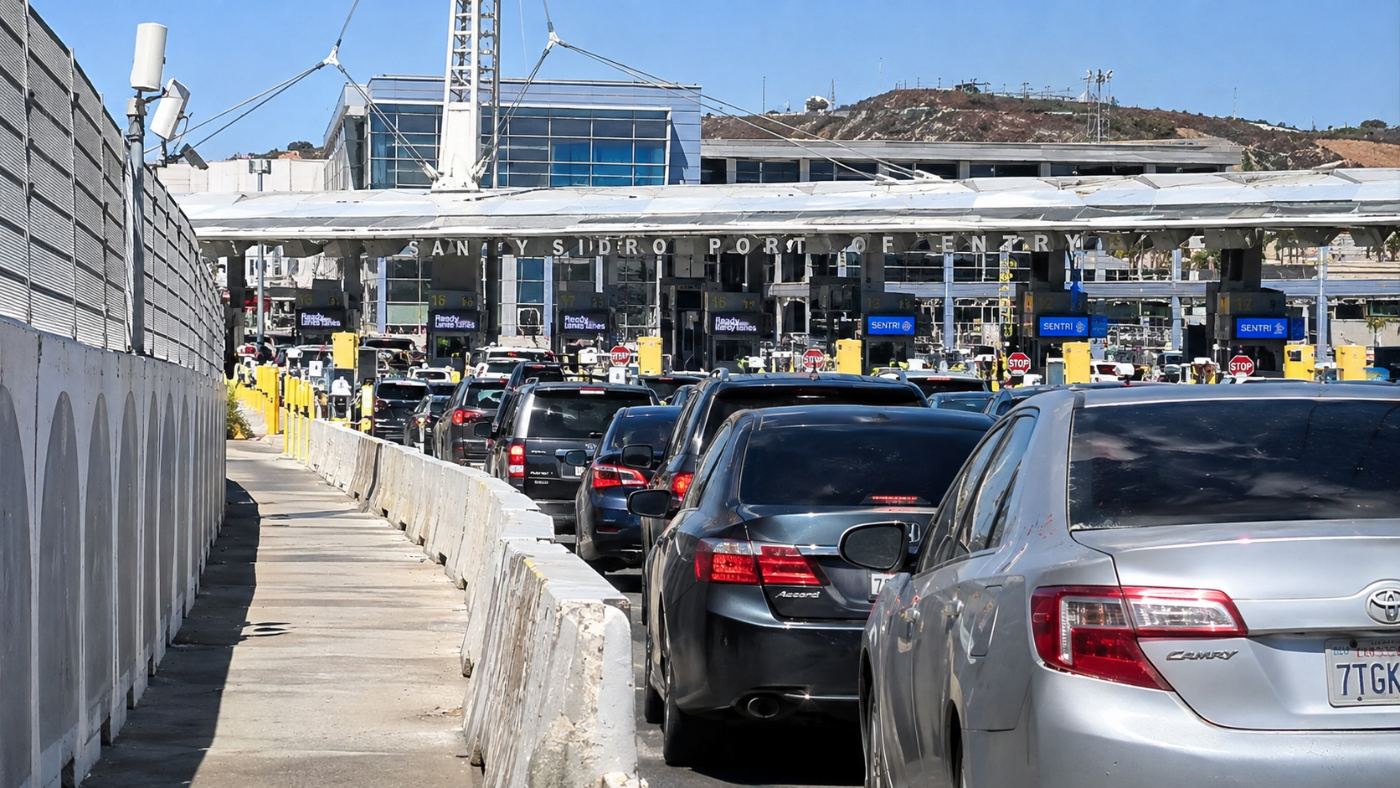
President Donald Trump threatened to close the entire United States–Mexico border on November 24, 2018, while declaring that asylum seekers would be forced to remain in Mexico until American courts approved their claims.
There was one significant problem: Mexico's incoming government said no such agreement existed.
The confrontation exposed the confusion surrounding Trump's immigration strategy, as the president publicly announced sweeping restrictions while negotiations with America's southern neighbor remained unresolved.
Trump Announces a Policy Mexico Hasn't Agreed To
On November 24, Trump used Twitter to announce that migrants seeking asylum at the southern border would not be admitted into the United States until their cases had been approved.
He declared that asylum seekers would remain in Mexico and threatened to close the border entirely if he considered it necessary.
The announcement followed a Washington Post report suggesting that Trump's administration had reached an understanding with Mexico's incoming government over a proposal called "Remain in Mexico."
Under the plan, asylum seekers would wait south of the border while their cases proceeded through American immigration courts.
But Mexican officials quickly challenged reports that an agreement had been finalized.
Mexico Publicly Contradicts Trump
Olga Sánchez Cordero, the incoming interior minister under President-elect Andrés Manuel López Obrador, issued a statement denying that Mexico had reached an agreement with the United States.
She acknowledged that discussions were taking place but emphasized that the incoming administration had not yet assumed office and could not finalize such an arrangement.
The denial was particularly awkward because earlier reporting had quoted Sánchez Cordero describing a tentative understanding as a short-term solution.
Mexican officials subsequently clarified that negotiations were ongoing and no formal agreement had been reached.
Trump was publicly describing a policy as though its implementation were settled while Mexico insisted that critical diplomatic questions remained unresolved.
Threatening to Close an International Border
Trump escalated the confrontation by threatening to close the southern border.
Such a move would have affected far more than asylum seekers.
The United States and Mexico maintained enormous commercial ties, with businesses depending on cross-border transportation, manufacturing supply chains, agricultural shipments, and daily trade.
A complete closure could have disrupted American companies, workers, and consumers alongside Mexican businesses.
Trump presented the threat as necessary to protect national security and prevent unauthorized immigration.
But critics questioned the wisdom of threatening a major trading partner while simultaneously seeking its cooperation on immigration enforcement.
Thousands of Migrants Caught in the Middle
The dispute unfolded as thousands of Central American migrants arrived in Tijuana after traveling north through Mexico.
Many had fled violence, poverty, and instability in countries including Honduras, Guatemala, and El Salvador.
Approximately 5,000 migrants had gathered in the city, where temporary shelters struggled to accommodate the growing population.
Trump repeatedly portrayed migrant caravans as a threat to American security.
His administration argued that allowing asylum applicants to remain in the United States while their cases proceeded encouraged additional migration.
Immigration advocates countered that forcing vulnerable people to wait in dangerous Mexican border communities could expose them to violence, exploitation, and inadequate living conditions.
The Legal Problem Trump Faced
Seeking asylum is a legal process recognized under American immigration law.
Individuals arriving at the border may request protection if they fear persecution in their home countries, although eligibility for asylum is subject to specific legal requirements.
Trump's administration had already attempted to restrict asylum eligibility for people entering between official ports of entry.
On November 19, federal Judge Jon Tigar temporarily blocked that policy, finding serious legal problems with the administration's restrictions.
The November 24 announcement therefore came during an ongoing conflict between Trump's immigration agenda and established asylum protections.
The proposed Remain in Mexico arrangement presented additional legal and humanitarian questions about where applicants could safely wait while their claims were considered.
Diplomacy by Threat and Announcement
The episode illustrated Trump's confrontational approach to international negotiations.
Rather than waiting for a finalized diplomatic arrangement, he publicly declared his preferred outcome and threatened additional action if circumstances did not satisfy him.
Supporters viewed the strategy as an attempt to pressure Mexico into cooperating on border enforcement.
Critics saw a president creating unnecessary diplomatic confusion and threatening economic disruption without a completed agreement.
The contradiction between Trump's announcement and Mexico's denial made the disagreement unusually visible.
What Happened Next
The November 24 dispute did not end negotiations.
In December 2018, the Trump administration formally announced the Migrant Protection Protocols, commonly called Remain in Mexico.
Implementation began in January 2019.
The policy required certain asylum seekers to wait in Mexico while their American immigration proceedings continued.
It subsequently faced extensive legal challenges and criticism over the dangers experienced by migrants waiting in Mexican border communities.
The later implementation of the policy does not change what happened on November 24: Trump publicly announced his intended approach before the two governments had finalized an agreement.
November 24: Another Border Confrontation
On November 24, 2018, Trump presented his immigration strategy in uncompromising terms.
Asylum seekers would remain in Mexico. The United States would refuse to release them into the country while their cases proceeded. And the southern border could be closed entirely.
Mexico's incoming government responded that no agreement had been reached.
The confrontation demonstrated the risks of treating international diplomacy as a series of public ultimatums.
Trump's administration was entitled to negotiate immigration arrangements and propose changes to border enforcement.
But implementing those changes required legal authority, diplomatic cooperation, and workable procedures.
On November 24, the president's public declarations had moved ahead of those requirements.
The result was a diplomatic dispute, uncertainty for asylum seekers, and another threat to disrupt one of America's most important international borders.