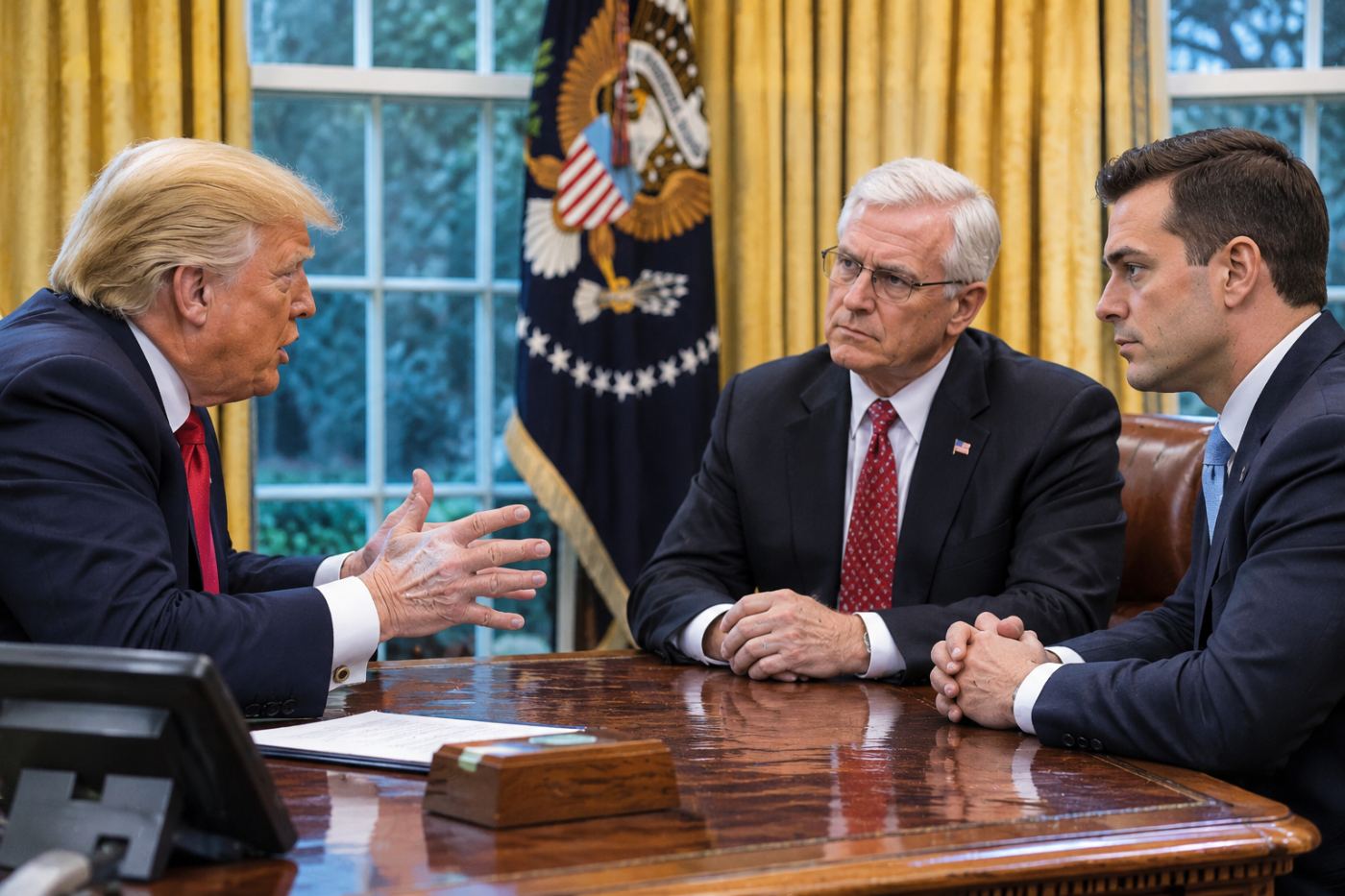
Donald Trump had lost Michigan. The voters had spoken, the ballots had been counted, and Joe Biden held a commanding lead of approximately 154,000 votes.
But on November 20, 2020, Trump was still searching for a way to reverse the outcome.
With his legal challenges struggling and his allegations of widespread voter fraud unsupported by credible evidence, the president turned to an extraordinary strategy: inviting Republican state lawmakers to the White House as his administration sought to prevent Michigan's election results from becoming official.
The meeting would become another chapter in Trump's attempt to remain in power after losing the presidential election.
An Invitation From the President
Michigan Senate Majority Leader Mike Shirkey and House Speaker Lee Chatfield, both Republicans, traveled to Washington after receiving invitations from Trump.
Their state was preparing to certify an election in which Biden had won by a substantial margin.
Trump and his allies were exploring whether Republican-controlled state legislatures could intervene in the Electoral College process and appoint electors who would support Trump despite the popular vote.
Such an intervention would have disregarded the expressed choice of Michigan voters.
The White House described the meeting as routine. But its timing, coming amid Trump's attempts to challenge election results in multiple battleground states, raised serious concerns.
Behind Closed Doors
Details of the meeting later emerged through testimony gathered by the House committee investigating January 6.
According to that investigation, Trump discussed allegations of election fraud with the Michigan lawmakers and brought Rudy Giuliani into the conversation by telephone.
Giuliani repeated accusations about supposed irregularities, but the lawmakers were not presented with persuasive evidence that would justify changing the outcome.
Chatfield later recalled Trump urging them to have more backbone and do the right thing.
Chatfield understood that message as encouragement to overturn the election by appointing electors favorable to Trump.
Shirkey, meanwhile, told the president he would not violate Michigan law.
The meeting ended without the commitment Trump was seeking.
Republicans Refuse to Reverse the Results
Following their White House visit, Shirkey and Chatfield released a joint statement emphasizing that they had received no information that would change Michigan's election outcome.
They pledged to follow the law and the normal process for selecting the state's presidential electors.
Their message was unmistakable: Allegations of fraud deserved investigation, but the candidates receiving the most votes were entitled to win.
The lawmakers also said they had used the meeting to advocate for additional federal coronavirus relief.
For Trump, the public statement represented another obstacle to his effort to challenge Biden's victory.
Georgia Delivers Another Setback
While Trump was meeting with Michigan Republicans, another battleground state was moving forward.
On November 20, Georgia certified Biden's victory following a statewide hand-count audit that confirmed the original result.
Republican Secretary of State Brad Raffensperger oversaw the certification process, and Republican Governor Brian Kemp subsequently formalized the state's presidential election results.
Biden had won Georgia by approximately 12,000 votes.
The developments in Michigan and Georgia illustrated the growing divide between Trump's election allegations and the actions of officials responsible for administering the vote.
The Pressure Campaign Continued
The White House meeting did not end Trump's efforts to influence Michigan Republicans.
Subsequent congressional testimony revealed that Trump continued contacting state legislative leaders after the election, repeatedly raising allegations of fraud.
Chatfield reported receiving several calls from the president and said he never encountered evidence sufficient to change Michigan's result.
Michigan certified Biden's victory on November 23.
The events of November 20 exposed an important dimension of the post-election controversy.
Trump was no longer relying solely on recounts and lawsuits. His efforts had expanded to direct engagement with state officials who held responsibilities in the election process.
The Michigan lawmakers declined to abandon established procedures.
Their decision demonstrated how state election laws and officials could constrain presidential pressure during a disputed political transition.
Trump's effort to reverse the election continued, but Michigan's electoral votes ultimately went to the candidate its voters had chosen.