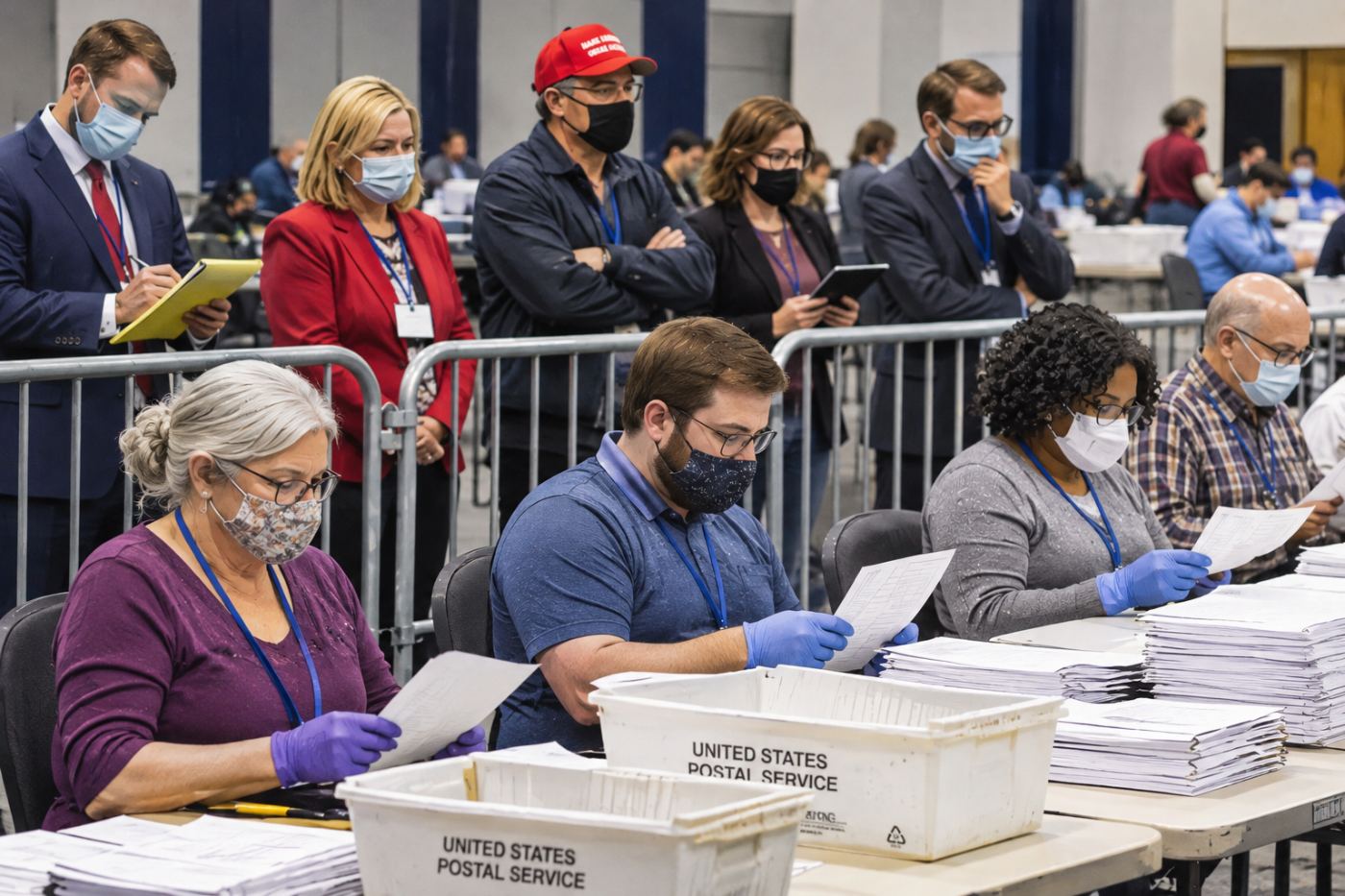
President Donald Trump spent $3 million trying to challenge his election defeat in Wisconsin. By November 25, 2020, the recount he demanded was producing only tiny changes in the vote totals, offering little indication that the state's election outcome would change.
Four days later, the final results delivered an embarrassing outcome for the president: Joe Biden's statewide lead had actually increased by 87 votes.
Trump had paid millions to recount ballots in two heavily Democratic counties, only to confirm that the voters had chosen his opponent.
Three Million Dollars to Challenge an Election
Following his defeat in the November 3 presidential election, Trump refused to accept the results and repeatedly alleged widespread voter fraud.
Wisconsin was among the battleground states targeted by his campaign.
Biden had won the state by approximately 20,600 votes, but Trump demanded a recount in Milwaukee and Dane counties.
The two counties were Democratic strongholds. Milwaukee County included Wisconsin's largest city, while Dane County included Madison, the state capital.
Under Wisconsin law, Trump's campaign was required to pay for the recount because the election margin exceeded the threshold for a publicly funded recount.
On November 18, the campaign transferred $3 million to the Wisconsin Elections Commission.
The recount began shortly afterward.
The Numbers Barely Move
By November 25, election workers had spent days examining ballots, reviewing records, and addressing challenges from campaign representatives.
The early results were hardly encouraging for Trump.
According to Wisconsin Public Radio, the recount had produced a net change of just 52 votes in Trump's favor as of Wednesday morning.
That was an insignificant adjustment compared with Biden's statewide advantage of more than 20,000 votes.
Election workers continued their painstaking review while campaign attorneys and observers monitored the proceedings.
Despite Trump's sweeping allegations, the recount was not uncovering anything remotely approaching the number of votes necessary to reverse his defeat.
Why Target Democratic Counties?
Trump's campaign requested recounts only in Milwaukee and Dane counties rather than throughout Wisconsin.
Those counties had delivered overwhelming margins for Biden.
Milwaukee County also contained a substantial Black population, while Dane County included Madison's large university community.
The campaign argued that absentee-ballot procedures and election administration practices in those counties warranted scrutiny.
Critics questioned why the president was challenging ballots concentrated in Democratic communities rather than seeking a statewide review.
The selective recount raised concerns about whether legitimate votes were being subjected to unequal scrutiny based on where they had been cast.
Election Workers Face Intense Pressure
The recount required substantial work from local election officials during the COVID-19 pandemic.
Workers reviewed ballots, checked documentation, and considered objections while operating under heightened public attention.
The process involved hundreds of election workers, attorneys, and observers.
Wisconsin election officials maintained that the recount was proceeding according to state law.
Trump's campaign continued questioning absentee-ballot procedures, including practices that election administrators had previously permitted.
The recount was a legitimate legal mechanism, but the campaign's broader allegations of widespread fraud remained unsupported by evidence sufficient to overturn the result.
Milwaukee Finishes — Biden Gains Votes
On November 27, Milwaukee County completed its recount.
The result was another setback for Trump's challenge.
Biden gained 257 votes compared with the original count.
Trump gained 125.
That meant Biden's margin in Milwaukee County increased by 132 votes.
The recount had uncovered some ordinary counting discrepancies, including previously uncounted ballots, but it did not establish widespread election fraud.
Instead, the county's completed review strengthened Biden's lead.
Dane County Confirms the Outcome
Dane County completed its recount on November 29.
There, Trump gained a net 45 votes.
But that small improvement was not enough to offset Biden's additional 132-vote advantage in Milwaukee County.
The combined result was unmistakable.
Biden's statewide lead increased by 87 votes.
Wisconsin's final certified results showed:
- Joe Biden: 1,630,866 votes
- Donald Trump: 1,610,184 votes
- Biden's winning margin: 20,682 votes
Trump's $3 million recount had not reversed the election.
It had confirmed his defeat.
The Campaign Continues Fighting
Even after the recount concluded, Trump's campaign continued pursuing legal challenges.
His attorneys questioned categories of absentee ballots and sought to invalidate votes they argued had been improperly counted.
But the recount itself had provided no evidence of widespread fraud capable of changing Wisconsin's result.
Wisconsin certified Biden's victory on November 30.
Trump's subsequent legal efforts did not overturn that certification.
The Price of Refusing to Accept Defeat
The Wisconsin recount illustrated the difference between challenging an election through established procedures and substantiating allegations that an election had been stolen.
Trump was entitled to request a recount under state law.
His campaign paid the required amount, and Wisconsin election officials conducted the review.
But the results did not support his claims that large-scale irregularities had deprived him of victory.
The process consumed millions of campaign dollars, required extensive work by election officials, and produced only minor adjustments to the original totals.
The final result was particularly striking because the recount slightly increased the margin by which Trump had lost.
November 25: Millions Spent, Defeat Unchanged
On November 25, 2020, the Wisconsin recount was still underway.
Trump's campaign had committed $3 million to challenge results in two Democratic counties.
Election workers were carefully examining ballots.
And the numbers were barely changing.
Four days later, the recount ended with Biden gaining an additional 87 votes in his statewide margin.
The outcome demonstrated that Trump's allegations had not translated into evidence capable of reversing Wisconsin's election results.
He had demanded another count.
Wisconsin gave him one.
And the voters' decision remained the same.