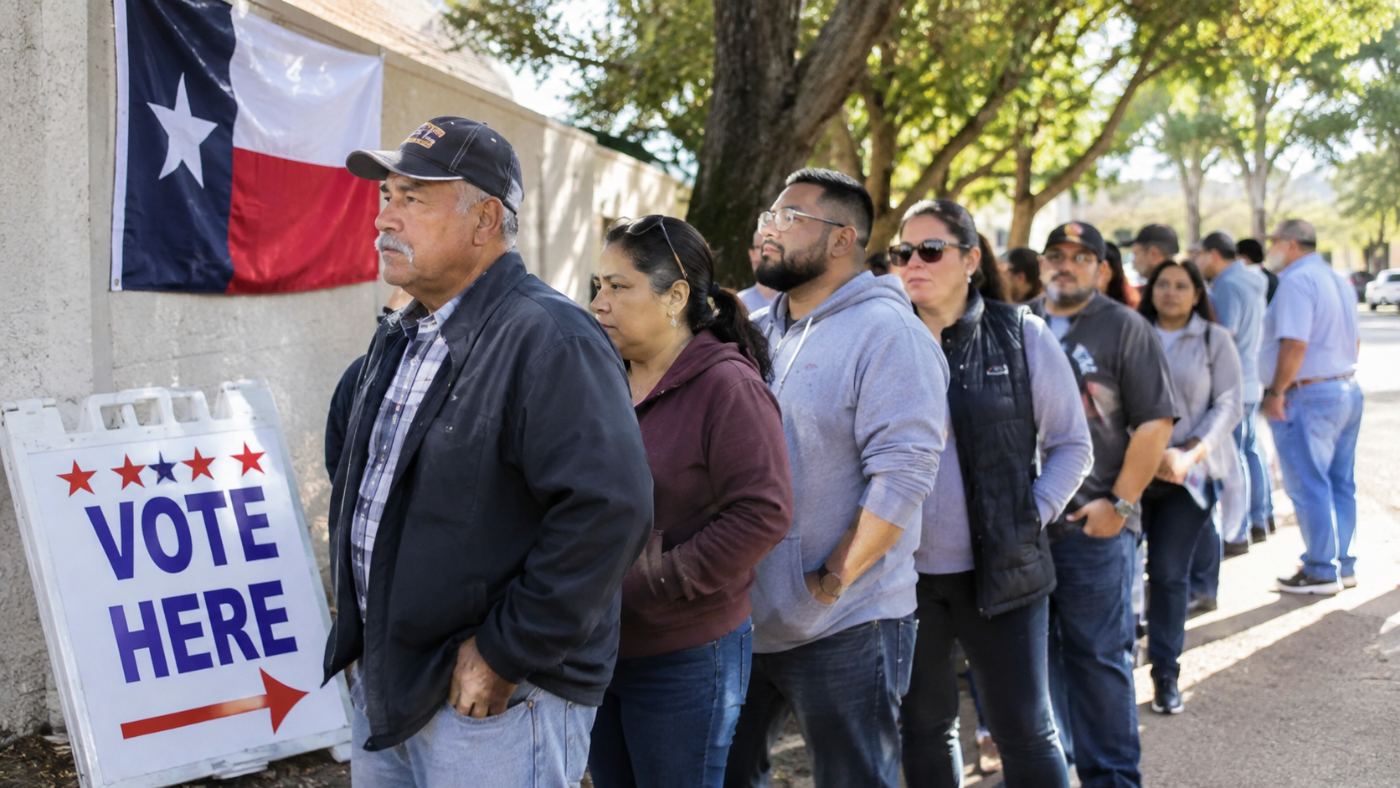
Donald Trump and Texas Republicans believed they had found a winning political formula. After making historic gains among Hispanic voters in 2024, Republicans redrew congressional districts hoping to turn those gains into additional seats.
Instead, the 2026 midterm elections delivered a devastating reversal. Hispanic voters helped propel Democrats to sweeping victories across Texas, rejecting Republicans amid mounting frustration over the cost of living, immigration enforcement, and Trump's economic leadership.
The results were extraordinary. Democrats captured the governor's office, flipped the Texas House, won a U.S. Senate seat, and made significant congressional gains. Gina Hinojosa defeated Republican Governor Greg Abbott, becoming the first Latina governor in Texas history.
But the most revealing story came from the voters Republicans believed were moving permanently into their coalition.
The Economy Became Trump's Biggest Liability
A new UnidosUS and Latino Community Foundation election survey found that 61% of Hispanic voters in Texas identified inflation and the cost of living as a leading concern.
The financial pressures were unmistakable:
- 61% cited grocery prices as a major concern.
- 44% identified property taxes and utility costs as pressing housing concerns.
- 55% reported having little or nothing left after paying monthly expenses, struggling financially, or facing serious financial difficulties.
- 48% expected Trump's economic policies to leave them worse off in the coming year.
For families struggling to afford groceries, housing, gasoline, and electricity, political promises were no substitute for financial relief.
Trump repeatedly presented himself as the candidate who would restore prosperity and bring prices down. Yet the voters surveyed increasingly associated his presidency with continued economic hardship.
Hispanic Voters Turn Against Trump
The survey revealed just how badly Trump's standing had deteriorated.
Among Texas Hispanic voters, 65% viewed Trump unfavorably, while 72% disapproved of his handling of inflation and the cost of living.
Another 71% disapproved of his immigration enforcement policies, and 70% disapproved of his handling of the war with Iran.
The political consequences were substantial. Hispanic voters supported Democratic congressional candidates by 65% to 33%, according to UnidosUS.
In the Rio Grande Valley, where Republicans had celebrated their growing strength just two years earlier, Democratic congressional support reached 71%.
These results challenge the Republican assumption that Hispanic voters who supported Trump in 2024 would remain loyal indefinitely.
Redistricting Couldn't Save Republicans
Texas Republicans had pursued an aggressive redistricting strategy intended to expand their congressional advantage.
Their calculations depended partly on maintaining the Hispanic support they gained in 2024.
But voters had other priorities.
Rather than delivering the anticipated Republican victories, the election exposed the danger of assuming demographic gains were permanent.
Republicans could redraw district boundaries, but they could not redraw voters' household budgets.
A Warning for the Republican Party
The Texas election represents more than a temporary political setback. It demonstrates how quickly voters can abandon a party when its promises collide with their everyday experiences.
Hispanic voters did not necessarily become permanently Democratic. Their message was more practical: deliver economic results, respect communities, and earn their votes.
For Trump, the consequences are particularly damaging. His administration's economic performance and immigration policies became major liabilities among voters Republicans had spent years courting.
The same Hispanic electorate that helped strengthen Trump's political coalition in 2024 helped dismantle Republican dominance in Texas just two years later.
The lesson from Texas is unmistakable: political loyalty has limits, especially when families cannot afford the cost of living.