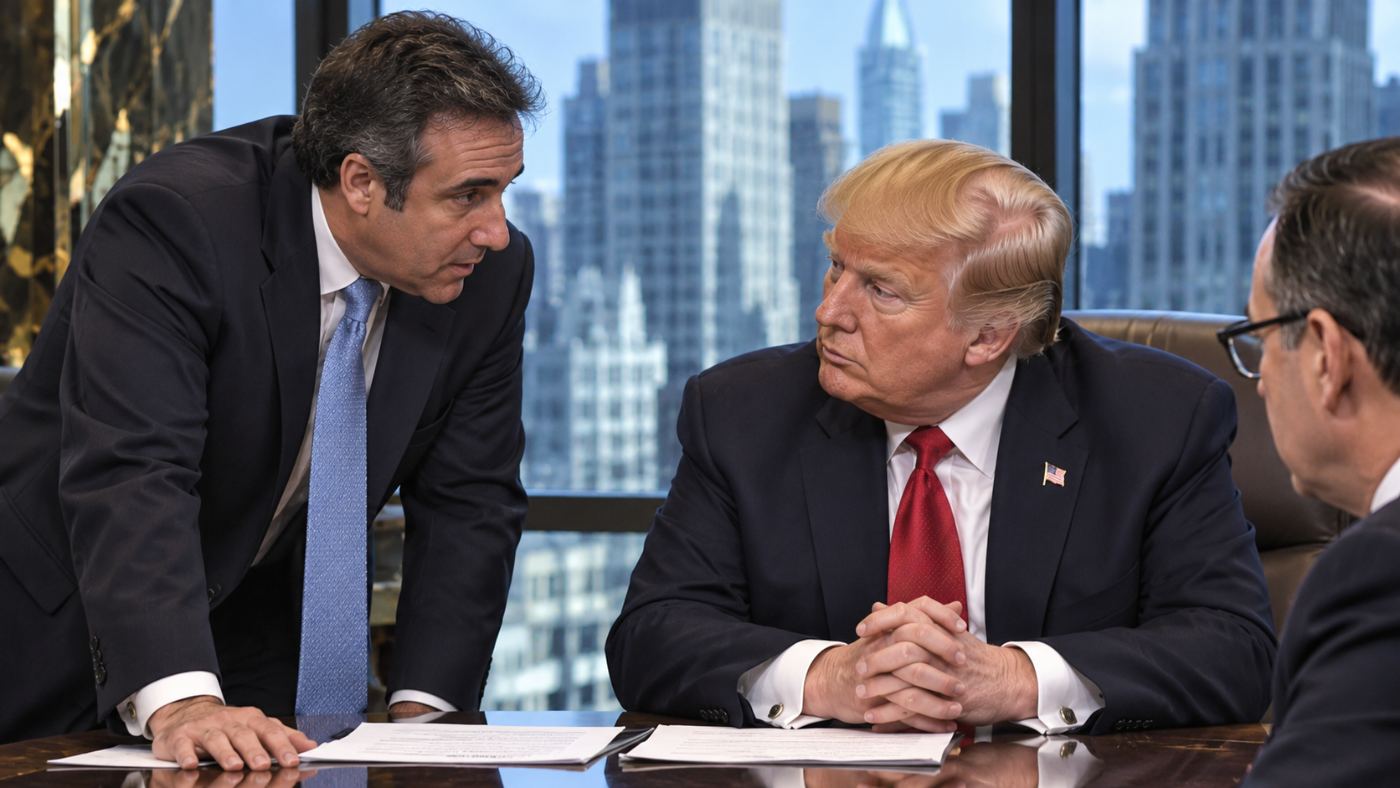
President Donald Trump's former personal attorney and longtime fixer, Michael Cohen, pleaded guilty on November 29, 2018, to lying to Congress about negotiations for a Trump-branded skyscraper in Moscow, revealing that discussions about the project had continued months longer than he previously acknowledged.
The admission contradicted Cohen's earlier congressional testimony and intensified scrutiny of Trump's business interests in Russia during the 2016 presidential election.
Cohen entered his guilty plea in federal court in Manhattan as part of Special Counsel Robert Mueller's investigation into Russian interference in the election.
He acknowledged that he had knowingly provided false information to the Senate and House intelligence committees about the proposed Trump Tower Moscow project.
In his original account, Cohen claimed that discussions about the project had ended in January 2016, before the presidential primaries began.
That statement was false.
According to federal prosecutors, negotiations continued until at least June 2016, when Trump had effectively secured the Republican presidential nomination.
The difference was significant because Trump had repeatedly sought to distance himself from business dealings involving Russia while campaigning for president.
Cohen admitted that he had misrepresented the timeline to minimize connections between the Moscow project and Trump's presidential campaign.
He also acknowledged that he had discussed the project with Trump and members of the Trump Organization on multiple occasions.
The proposed development was not a minor business opportunity.
Plans envisioned a luxury Trump-branded skyscraper in Moscow, potentially providing substantial financial benefits through licensing and development arrangements.
Cohen had worked with Russian-born developer Felix Sater, who was involved in efforts to advance the project.
In January 2016, Cohen contacted the office of Russian President Vladimir Putin seeking assistance with the stalled negotiations.
He subsequently received a response from an assistant to a senior Kremlin official and discussed the project during a telephone conversation.
These contacts demonstrated that efforts to secure the Moscow development involved outreach to Russian government officials while Trump was seeking the presidency.
Cohen also admitted that he had considered traveling to Russia in connection with the project and had discussed the possibility of Trump making a trip.
The development was never built, and the negotiations ultimately failed.
Nevertheless, the guilty plea established that Trump's business organization had continued exploring a potentially lucrative Russian venture during a period when Russia was interfering in the American presidential election.
The timing created an important political contradiction.
Throughout the campaign, Trump frequently denied having business interests in Russia.
In July 2016, he publicly stated that he had nothing to do with Russia.
Yet Cohen's admission showed that discussions involving a Trump-branded Moscow development had continued into the summer of that same year.
The revelations did not establish that the Moscow project was connected to Russia's election interference operation.
They did, however, raise questions about the accuracy of public statements concerning Trump's business relationships and the extent to which those relationships had been disclosed to voters.
Trump reacted angrily to Cohen's guilty plea.
Speaking to reporters at the White House, the president called his former attorney weak and accused him of lying to obtain a reduced prison sentence.
Trump also argued that pursuing a real estate development in Russia would not have been illegal because he had been a businessman during the campaign.
On that narrow point, Trump was correct. Negotiating a foreign real estate project was not itself a crime.
The criminal offense Cohen admitted committing was lying to Congress about the timing and nature of those negotiations.
Trump further maintained that the Moscow project had never advanced beyond preliminary discussions and that no agreement had been finalized.
Federal prosecutors did not allege that the skyscraper had been constructed or that Trump had completed a financial transaction involving the development.
The issue was the discrepancy between the actual negotiations and the accounts previously given to Congress and the public.
Cohen had spent years serving as Trump's personal attorney, business representative, and political defender.
His responsibilities included handling sensitive business matters and responding to controversies involving Trump.
By November 2018, however, their relationship had deteriorated dramatically.
Cohen had already pleaded guilty in August to federal financial crimes and campaign-finance violations involving payments intended to influence the 2016 election.
His new guilty plea brought the Mueller investigation directly into questions surrounding Trump's business activities in Russia.
The development also undermined earlier statements from Cohen that had minimized the extent of the Moscow negotiations.
In December 2018, Cohen was sentenced to three years in federal prison for offenses arising from the two criminal cases.
Mueller's investigation ultimately documented numerous contacts between individuals associated with Trump's campaign and Russian interests.
The special counsel's final report, released in 2019, described the Trump Tower Moscow negotiations and Cohen's efforts to advance the project.
The report did not establish that the Trump campaign criminally conspired or coordinated with the Russian government in its election interference activities.
That conclusion did not erase Cohen's admitted false statements or the evidence that the Moscow business discussions had continued during the presidential campaign.
The November 29, 2018, guilty plea remains an important moment in the historical record of Trump's first presidency.
A man who had worked closely with Trump for years admitted that he had lied to Congress about a Russian business venture, specifically to minimize its political significance.
The case demonstrated how undisclosed business negotiations could become a matter of national concern when they involved a presidential candidate and a foreign government accused of interfering in an American election.
It also established that the public timeline of the proposed Trump Tower Moscow development had been materially inaccurate.
What Cohen originally described as a project abandoned before the presidential primaries had, in fact, continued while Trump was approaching the Republican nomination.
The revelation added another documented layer to the questions surrounding Trump's business interests, his campaign's public statements, and the broader investigation into Russian interference in the 2016 election.