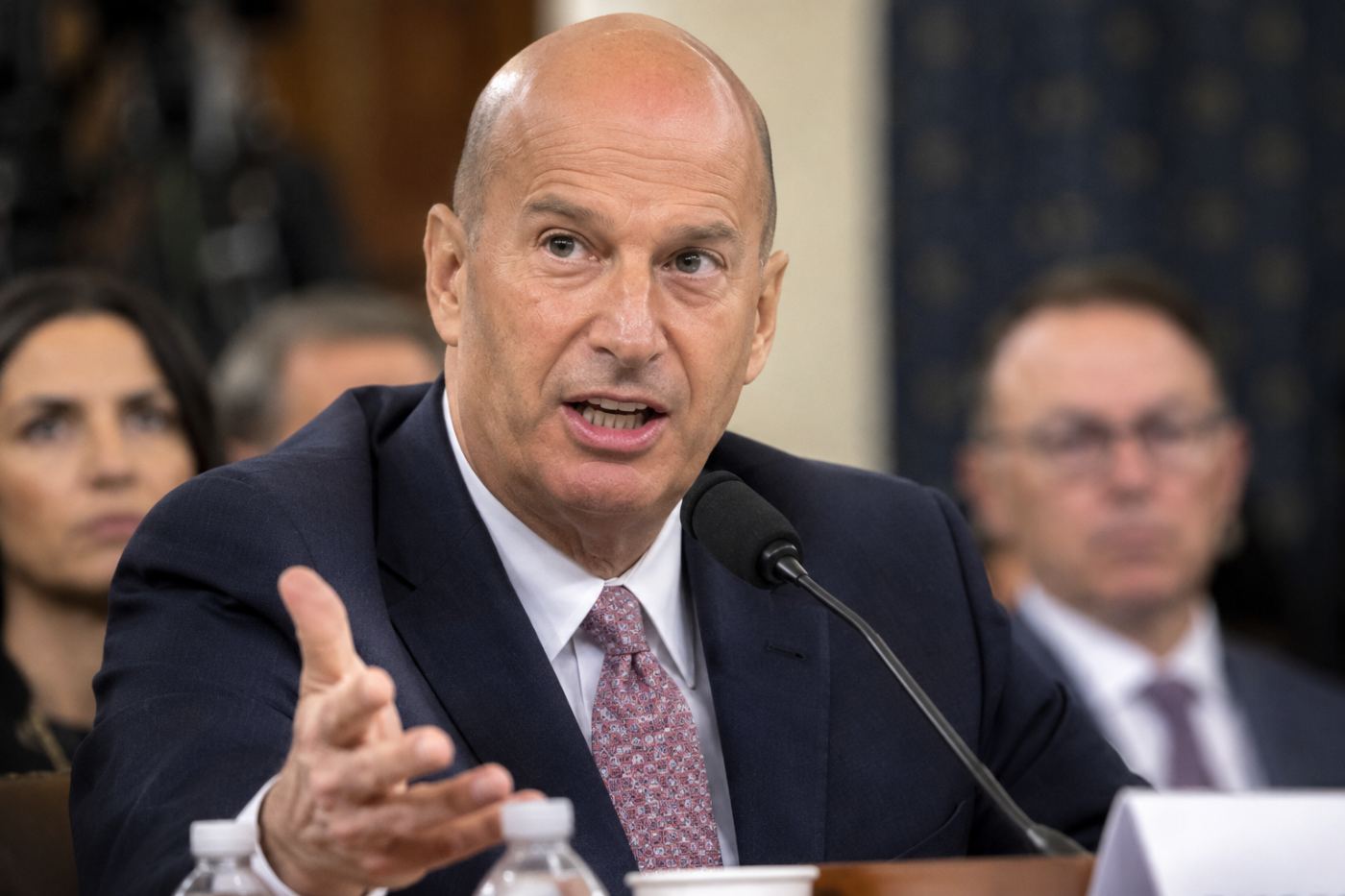
For weeks, Donald Trump had insisted there was no quid pro quo in his dealings with Ukraine.
On November 20, 2019, one of his own ambassadors delivered testimony that directly challenged that defense.
Gordon Sondland, Trump's ambassador to the European Union and a major donor to his inauguration, appeared before the House Intelligence Committee during the president's first impeachment inquiry.
Under oath, Sondland confirmed that a coveted White House meeting for Ukrainian President Volodymyr Zelensky had been conditioned on Ukraine publicly announcing investigations sought by Trump's representatives.
His testimony connected the arrangement to the president's instructions and revealed that senior administration officials knew about the effort.
Following the President's Orders
Sondland explained that he, Energy Secretary Rick Perry, and special envoy Kurt Volker had worked with Trump's personal attorney, Rudy Giuliani, on Ukraine policy.
According to Sondland, the arrangement was not their preference.
Trump had specifically directed them to coordinate with Giuliani.
Giuliani wanted Ukraine to announce investigations involving Burisma, the energy company where Joe Biden's son Hunter had served as a board member, and allegations concerning Ukrainian interference in the 2016 election.
Sondland testified that these demands were conditions for arranging a White House meeting between Trump and Zelensky.
The ambassador's testimony established that the requested investigations were not simply a matter of routine diplomatic cooperation.
They had become prerequisites for an official presidential meeting.
Everyone Was in the Loop
Sondland also described communications involving senior administration officials, including Secretary of State Mike Pompeo and acting White House Chief of Staff Mick Mulvaney.
He testified that the effort to obtain the investigation announcements was widely understood among officials involved in Ukraine policy.
The testimony challenged suggestions that Giuliani had operated independently or that senior officials were unaware of the diplomatic pressure.
Sondland produced emails documenting his communications with administration officials.
His account placed the Ukraine controversy inside the administration's foreign-policy operations rather than solely within Trump's personal political circle.
The Military Aid Question
The controversy extended beyond a White House meeting.
The Trump administration had temporarily withheld nearly $400 million in congressionally approved military assistance to Ukraine, which was defending itself against Russian aggression.
Sondland testified that he came to believe the aid would remain frozen until Ukraine publicly committed to the requested investigations.
However, he acknowledged an important distinction.
Trump had never personally told him that military assistance was conditioned on those announcements.
Sondland's conclusion about the aid was based on the circumstances and his communications with other officials.
He also recounted a September conversation in which Trump explicitly denied wanting a quid pro quo.
The testimony therefore established a direct connection between Giuliani's demands and the White House meeting, while describing Sondland's belief—not a direct presidential instruction—concerning military assistance.
Trump's Defense Meets the Testimony
Trump emphasized Sondland's account of the president denying a quid pro quo.
Republicans also noted that Ukraine ultimately received the military assistance without publicly announcing the requested investigations.
Democrats pointed to Sondland's confirmation that a White House meeting had been conditioned on the announcements and his testimony about the administration's internal communications.
The hearing exposed the competing interpretations at the center of the impeachment inquiry.
A Defining Day in the Impeachment Investigation
Sondland's November 20 testimony became one of the most significant moments of Trump's first impeachment.
A presidential appointee had acknowledged that access to an official White House meeting was tied to politically sensitive investigation announcements.
He had also described his belief that military assistance was connected to the same demands.
On December 18, 2019, the House impeached Trump for abuse of power and obstruction of Congress. The Senate acquitted him on February 5, 2020.
The historical significance of Sondland's testimony remains in the distinction it documented: The White House meeting arrangement was explicitly described as a quid pro quo, while the connection to military aid rested on the ambassador's understanding of the pressure campaign.
Both became central questions in the impeachment proceedings.