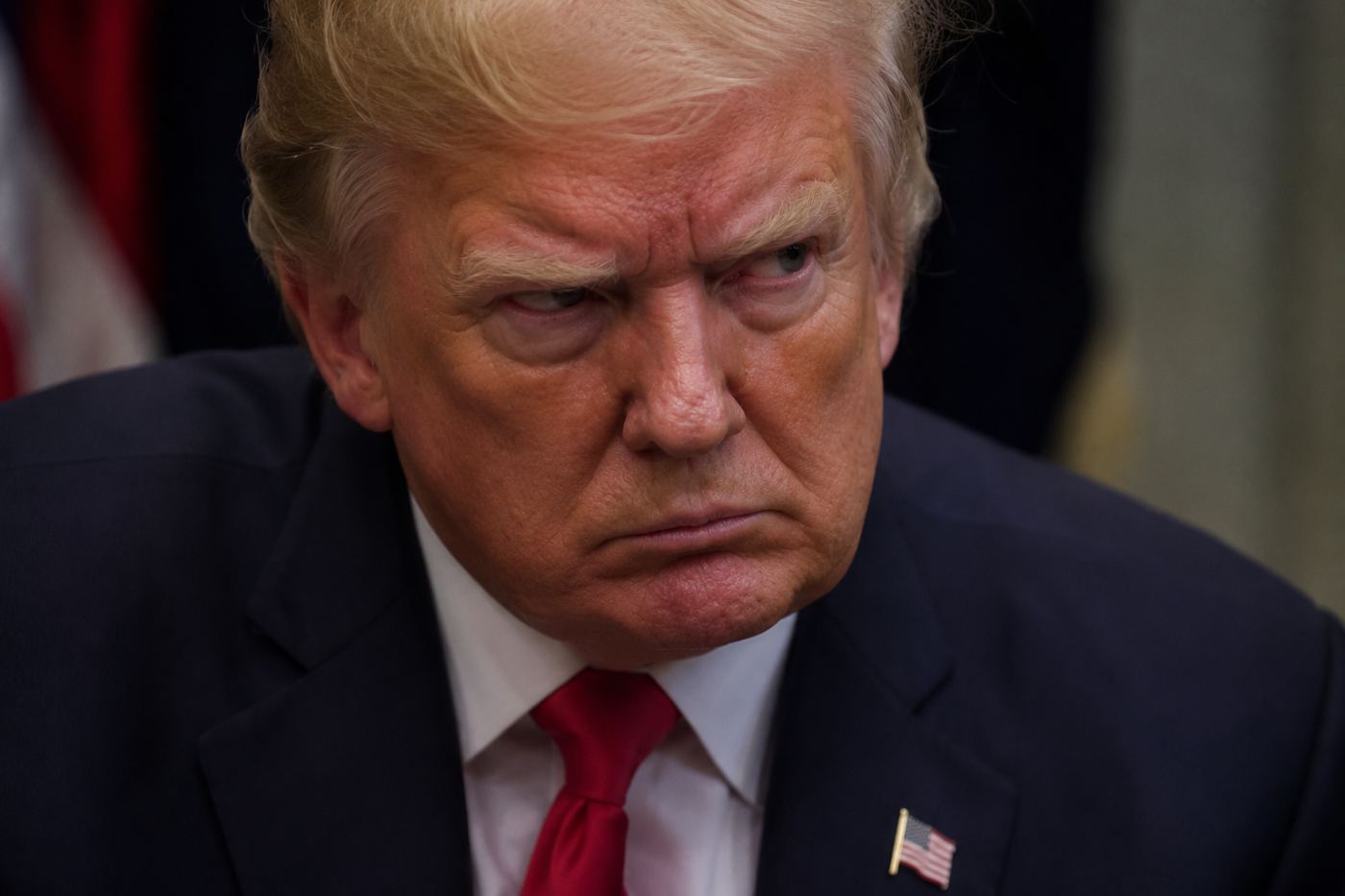
President Donald Trump's carefully cultivated image of political invincibility suffered a crushing blow Tuesday night as American voters handed Democrats control of both chambers of Congress. Behind the scenes at the White House, the president was reportedly furious as the scale of the Republican defeat became impossible to ignore.
According to a Daily Beast report citing accounts from unnamed White House insiders, Trump spent election night secluded in his private residence alongside longtime aide Natalie Harp and White House Chief of Staff Susie Wiles, watching Fox News as Republican candidates suffered one defeat after another.
The atmosphere reportedly deteriorated as election returns shattered the administration's expectations of victory.
White House aides had apparently prepared for a celebration. Instead, reports described uneaten food, stunned officials, and staff members seeking refuge at nearby bars as the political disaster unfolded.
The election results were unmistakable. Democrats captured the House of Representatives and Senate, overturning Republican control of Washington and delivering a devastating rejection of Trump's leadership.
The Democratic wave extended far beyond traditional battleground states.
In Texas, Democrat James Talarico defeated Republican Ken Paxton, breaking a decades-long Republican hold on the state's Senate representation. In South Carolina, Democrat Annie Andrews defeated Republican Darline Graham. Democrats also secured remarkable victories in Kansas, Ohio, Iowa, and North Carolina.
Many of the defeated Republicans had received Trump's personal endorsement and campaign support.
Rather than acknowledge his role in the losses, Trump immediately began shifting responsibility elsewhere.
Despite spending weeks campaigning for Republican candidates and encouraging supporters to treat the midterms as a referendum on his presidency, Trump insisted that the outcome would have been different had his own name appeared on the ballot.
"I wasn't on the Ballot and if I was, we would have won IN A LANDSLIDE!" Trump declared on Truth Social.
The statement illustrated a remarkable contradiction. Trump had made himself central to the Republican campaign, yet attempted to distance himself from its defeat.
The Daily Beast also reported that Trump directed anger toward Fox News and Texas Governor Greg Abbott, while speculation circulated among administration insiders about possible personnel changes.
According to the report, officials including Defense Secretary Pete Hegseth, Secretary of State Marco Rubio, and Chief of Staff Susie Wiles were mentioned as potential targets of Trump's frustration. Those discussions remained speculation, with no confirmed dismissals resulting from the election-night fallout.
The political consequences extend well beyond embarrassment.
Democratic control of Congress will give the opposition the ability to block major Republican legislation, scrutinize administration spending, investigate executive branch conduct, and exercise substantial oversight authority.
For a president accustomed to demanding loyalty and exercising influence over Republican lawmakers, the prospect of congressional investigations represents a dramatic reversal.
Voters delivered their verdict amid widespread dissatisfaction over rising living costs, the administration's handling of the economy, and the ongoing war with Iran. Exit polling indicated that large majorities wanted Congress to provide stronger checks on presidential power.
The results also raised uncomfortable questions about Trump's political influence. Candidates he personally championed lost races in states Republicans had considered secure, suggesting that his endorsement no longer guarantees victory and may carry significant political liabilities.
Trump's public response was characteristically defiant. His reported private reaction, however, suggested something considerably different: a president confronting the collapse of his party's congressional power.
For years, Trump portrayed himself as the Republican Party's greatest electoral asset.
On November 3, 2026, American voters delivered a very different assessment.
And for the first time in his second presidency, Trump faces the prospect of a Congress controlled entirely by the opposition.