President Donald Trump's administration raised more than $50 million in private donations for America's 250th birthday celebrations. But newly released financial records suggest taxpayers were expected to cover most of the costs of the events, leaving watchdog organizations and members of Congress demanding an accounting of the private money.
Documents obtained through the Freedom of Information Act and released October 8 by Public Employees for Environmental Responsibility (PEER) reveal that the Trump-backed Freedom 250 organization budgeted approximately $128.5 million for major anniversary celebrations, with $114.2 million in anticipated federal funding.
The documents do not identify how the more than $50 million reportedly raised from corporate sponsors was allocated to those events.
The discrepancy raises an obvious question: If taxpayers were paying for most of the celebration, what happened to the private donations?
There is no public evidence establishing that the money was stolen or personally pocketed by Trump. But the absence of a complete public accounting has intensified scrutiny of an organization already facing allegations of questionable fundraising practices, political favoritism, and insufficient financial transparency.
A $128 Million Celebration, Mostly Funded by Taxpayers
America's 250th anniversary was supposed to be a historic national celebration bringing Americans together to commemorate the signing of the Declaration of Independence.
Instead, its financing has become the subject of an expanding controversy.
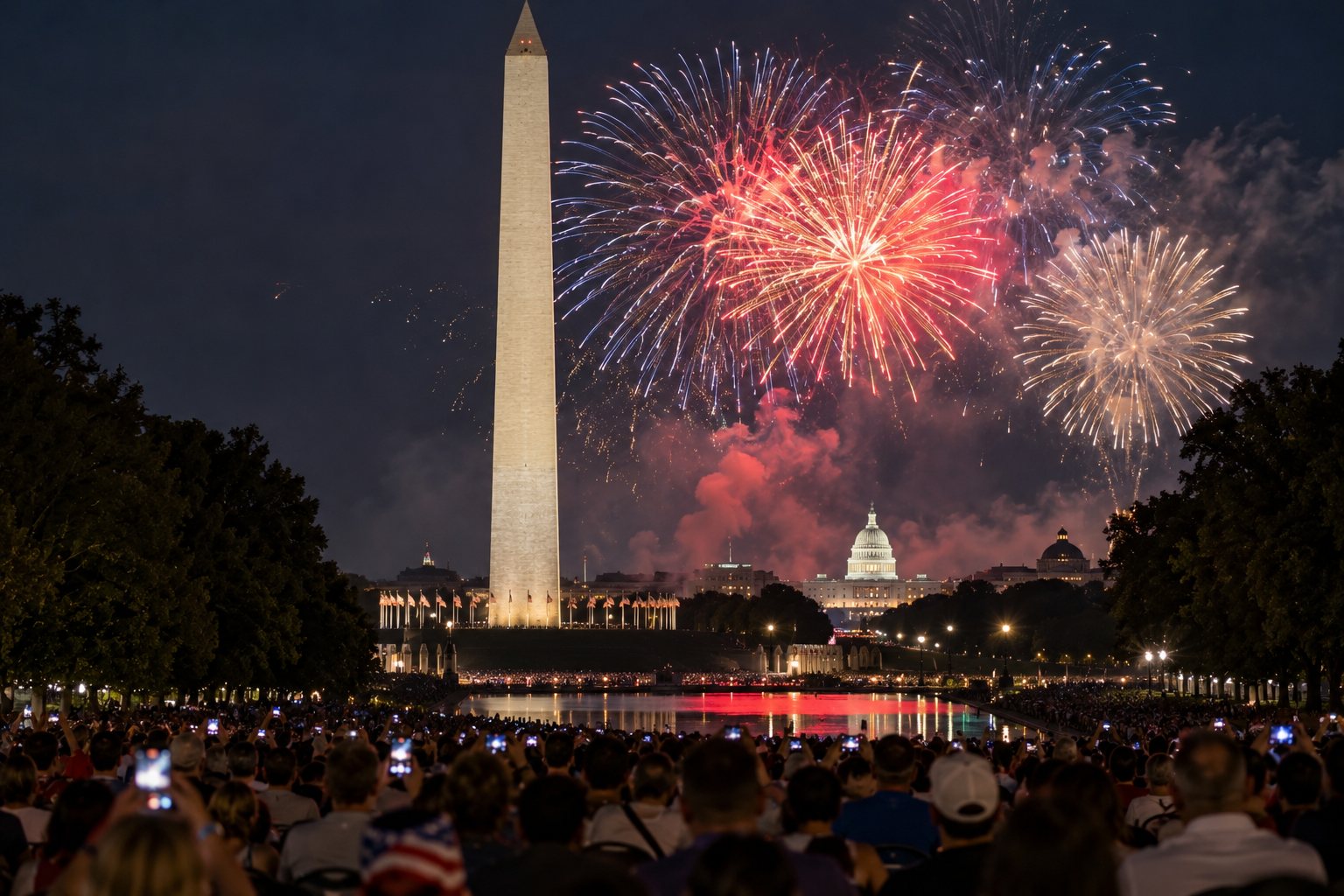
According to documents released by PEER, Freedom 250's preliminary budget included major events such as the Great American State Fair, the Patriot Games, and Independence Day festivities on the National Mall.
The estimated costs totaled $128.5 million.
The budget anticipated approximately $100 million in congressional funding and another $14.2 million in federal grant money, including support for traveling educational exhibits known as Freedom Trucks.
That left an estimated funding gap of roughly $14 million.
Yet the budget documents did not appear to account for the tens of millions of dollars in private donations that Freedom 250 had reportedly collected.
The Wall Street Journal previously reported that the organization raised more than $50 million from corporate and other private sources.
The figures are not necessarily contradictory: preliminary event budgets do not always reflect every revenue source, and donations may be reserved for other activities or expenses.
But without a detailed financial reconciliation, the public cannot determine how those contributions were used.
Major Corporations Contributed Millions
Freedom 250 received financial support from some of America's largest corporations, including businesses with significant federal contracts or regulatory interests.
Lobbying disclosures identified several substantial contributions:
- Chevron: $5 million
- United Airlines: $2.5 million
- RTX, formerly Raytheon: $1.5 million
Other reported sponsors included major technology, energy, and defense companies.
Corporate sponsorship of public celebrations is not inherently improper. Companies routinely support community events, national commemorations, and nonprofit organizations.
However, contributions to an initiative closely associated with a sitting president create additional transparency concerns when donors also have business before the federal government.
Democratic lawmakers have questioned whether corporate donations could provide opportunities to gain access or favorable treatment.
No publicly established finding demonstrates that a particular Freedom 250 donation purchased a government decision.
Nevertheless, lawmakers have argued that full disclosure of donors, amounts, and expenditures is necessary to evaluate potential conflicts of interest.
Trump Created a Separate Organization
The controversy is complicated by the existence of two organizations with similar names.
Congress established the United States Semiquincentennial Commission in 2016 to coordinate the country's 250th anniversary. Its associated nonprofit, America250, was intended to support a bipartisan national commemoration.
But the Trump administration subsequently established a separate initiative called Freedom 250.
Freedom 250 operates as a limited liability company wholly owned by the National Park Foundation, the congressionally chartered nonprofit partner of the National Park Service.
The arrangement allowed Freedom 250 to organize large anniversary events while receiving federal support and soliciting corporate contributions.
According to CBS News, the subsidiary does not file a separate publicly available nonprofit tax return, making its finances less directly visible than those of a conventional standalone charity.
The National Park Foundation has explained that Freedom 250 was created to provide event-planning expertise and assist the National Park Service with anniversary activities.
Critics argue that the arrangement has complicated oversight of taxpayer money and private donations.
Government Contracts Awarded Without Open Competition
The newly released records also reveal that Freedom 250 benefited from a waiver of ordinary competitive procurement procedures.
In November 2025, National Park Foundation officials requested permission to bypass competitive bidding for certain anniversary-related contracts.
The foundation argued that tight deadlines, security requirements, and the complexity of major national events made conventional procurement impractical.
The National Park Service approved the request in December.
The waiver allowed contractors to be selected without the usual open competition.
Such exceptions can be lawful when justified by government procurement rules. Large public events, particularly those involving presidential security, may require specialized contractors and accelerated schedules.
But eliminating competition also reduces one of the mechanisms designed to demonstrate that taxpayers are receiving appropriate value.
PEER has called for congressional scrutiny of the contracting decisions and the relationships between Freedom 250, the National Park Foundation, and event vendors.
The Administration Asked for Another $10 Million
The financial questions did not begin with this week's document release.
In July, the Trump administration asked Congress for an additional $10 million to cover costs associated with Freedom 250 events.
Those events included Independence Day fireworks, the Great American State Fair, and a religious-themed gathering on the National Mall.
Senator Jeff Merkley, an Oregon Democrat involved in overseeing Interior Department appropriations, demanded an explanation.
The Interior Department said the additional funding was needed in part to cover heightened security expenses.
Security for a presidential event can be expensive, and some federal costs may reasonably be separate from privately funded entertainment or production expenses.
However, the request raised questions about why more taxpayer funding was necessary after Congress had already appropriated substantial anniversary funding and the organization had solicited major corporate donations.
Congress did not approve or disburse the additional $10 million requested in July, according to the latest reporting.
Why Financial Transparency Matters for Fireworks Committees
Across the United States, local fireworks celebrations are organized by nonprofit committees, community volunteers, civic associations, and charitable organizations.
These groups frequently spend months raising money through individual donations, business sponsorships, fundraising events, and local partnerships.
A community fireworks display may require expenditures for pyrotechnics, professional operators, permits, insurance, security, fire protection, cleanup, and other services.
For volunteer organizers, accountability is a fundamental part of maintaining public trust.
A committee collecting donations for a Fourth of July celebration must be able to explain how much money was received, what expenses were paid, and what happened to any remaining funds.
Some organizations also receive public support, making it especially important to distinguish taxpayer expenditures from privately funded activities.
That does not mean every nonprofit must publish every internal financial document. Disclosure requirements vary according to the organization's legal structure and applicable laws.
But the underlying principle remains the same: donors and taxpayers should have reasonable assurance that money designated for a public celebration is being managed appropriately.
If a small community organization were unable to reconcile substantial donations with its event expenses, supporters would reasonably expect an explanation.
When the organization is associated with the White House and receives tens of millions in public funding, the importance of financial accountability is even greater.
Lawmakers Demand Answers
In September, Democratic Senators Elizabeth Warren, Adam Schiff, Alex Padilla, and Richard Blumenthal demanded that Freedom 250 disclose its corporate donors and provide additional information about its finances.
Their concerns included potential conflicts of interest involving corporations seeking favorable treatment from the federal government.
Earlier, House Democrats alleged that some donors intending to contribute to the original America250 organization had been directed toward Freedom 250 instead.
Freedom 250 denied those allegations, describing the congressional report as politically motivated and false.
The allegations have not been established as criminal wrongdoing.
Still, the newly released financial documents provide an additional reason for congressional oversight.
PEER says it intends to release further records in the coming weeks.
Meanwhile, people familiar with the event planning told The Washington Sun that organizers were still reconciling costs and disputed whether the preliminary budget accurately represented the final financial picture.
Freedom 250 has defended its work, emphasizing the anniversary celebrations and nationwide initiatives it helped organize.
The Question Remains: Where Is the Accounting?
The controversy surrounding Freedom 250 is ultimately about public accountability.
The organization reportedly raised more than $50 million privately.
Its preliminary event budget anticipated more than $114 million in federal funding.
The administration subsequently sought another $10 million from Congress.
And the public still lacks a comprehensive accounting showing how private contributions were received, allocated, and spent.
Those facts do not prove financial misconduct. But they establish a legitimate need for greater disclosure.
The appropriate response is straightforward: publish a detailed reconciliation of revenue and expenses, identify donors to the extent required by law, explain the use of federal funds, and account for remaining balances.
America's 250th birthday was a celebration of a nation built around representative government and accountability to the people.
The public deserves to know how its money was spent celebrating that history—and what became of the millions contributed in its name.