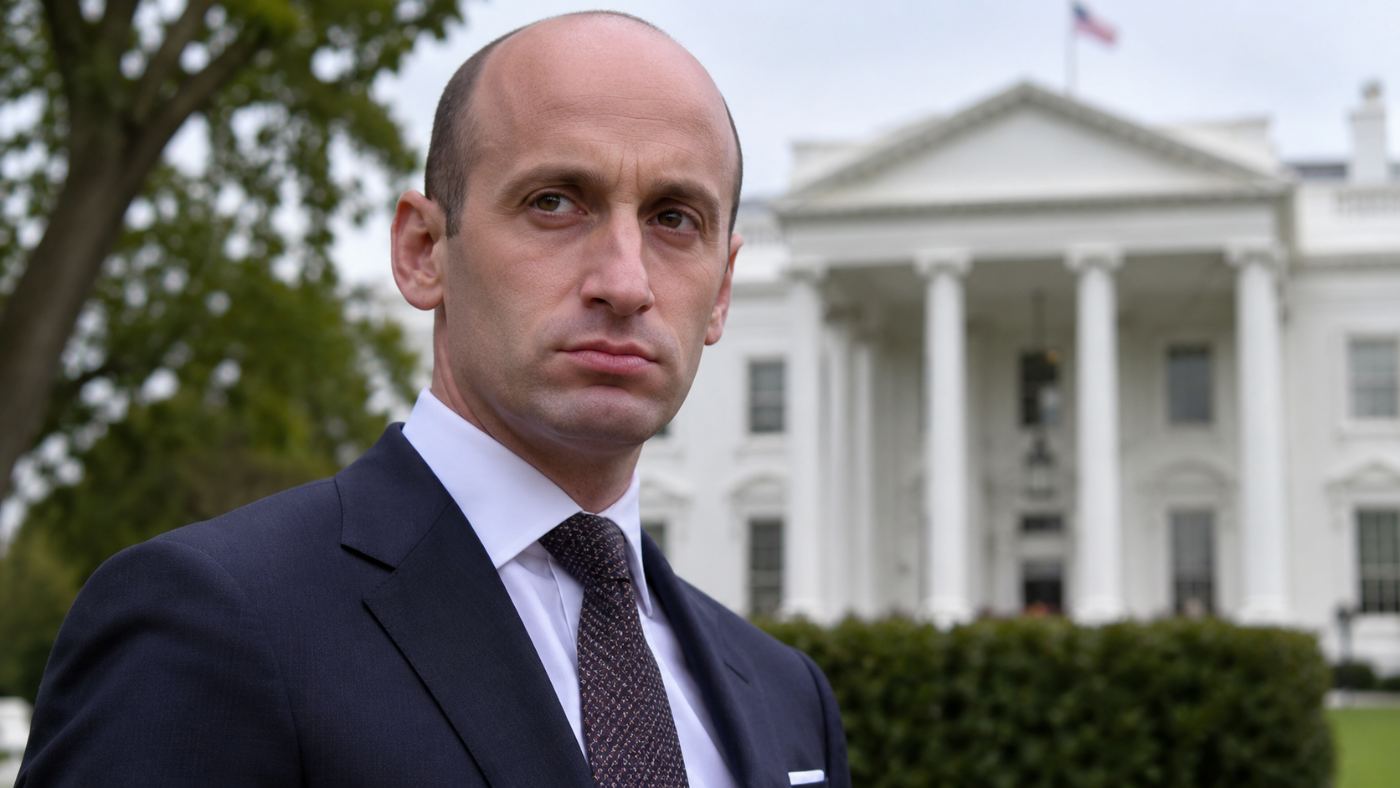
Donald Trump has responded to his party's devastating midterm election losses by promoting one of the most controversial figures in American politics.
Stephen Miller, the longtime Trump adviser responsible for shaping some of the administration's harshest immigration policies, will become White House chief of staff on Monday, replacing Susie Wiles.
The appointment places a man associated with family separations, mass deportations, sweeping immigration restrictions, and repeated constitutional controversies in one of the most powerful positions in the federal government.
For nearly a decade, Miller has helped shape Trump's immigration agenda. Now he will have an even broader role in coordinating the administration's operations.
The Man Behind Family Separations
Perhaps the most notorious policy associated with Miller is the Trump administration's 2018 family separation program.
Under the administration's zero-tolerance immigration policy, thousands of children were forcibly separated from their parents at the southern border.
Some children were infants. Others were too young to understand why their parents had disappeared.
Miller was among the policy's leading advocates, defending the administration's aggressive approach to immigration enforcement.
The separations provoked international condemnation and eventually prompted a federal judge to order the government to reunite affected families.
The consequences continued long after the original policy ended.
An Associated Press investigation published in June 2026 documented additional cases of children being separated from parents during Trump's second administration.
The ACLU has identified more than 11,800 affected parents, children, and other family members covered by litigation and settlement efforts arising from the earlier separations.
The Muslim Travel Ban
Miller also played a central role in developing Trump's 2017 restrictions on travel from several predominantly Muslim countries.
The policy triggered protests at airports, separated families, and generated years of litigation.
Critics argued that the restrictions discriminated against Muslims. The administration maintained that they were necessary for national security.
After several revisions, the Supreme Court upheld the third version of the policy in 2018.
Miller also pushed for dramatic reductions in refugee admissions, helping establish a historically low ceiling of 15,000 refugees for fiscal year 2021.
Emails Promoting White Nationalist Material
In 2019, the Southern Poverty Law Center published an investigation examining more than 900 emails Miller sent to Breitbart News editors between 2015 and 2016.
The correspondence revealed that Miller had promoted material associated with white nationalist and anti-immigrant movements.
Among the material discussed was The Camp of the Saints, a French novel widely circulated among white nationalist organizations.
The investigation also documented Miller's interest in restrictive immigration policies from the 1920s and his efforts to encourage negative coverage of immigrants.
The emails intensified longstanding criticism of Miller's ideological influences.
Attempts to Restrict Legal Immigration
Miller's agenda has extended well beyond undocumented immigration.
During Trump's first administration, he supported efforts to terminate the Deferred Action for Childhood Arrivals program, which protects certain immigrants brought to the United States as children.
The Supreme Court blocked that attempted termination in 2020 because the administration had not followed required administrative procedures.
Miller also advocated restrictions affecting legal immigrants who received public assistance, along with measures limiting green cards and citizenship opportunities.
His approach has consistently emphasized reducing immigration through both legal and unauthorized channels.
Three Thousand Arrests Every Day
During Trump's second administration, Miller became a driving force behind dramatically expanded immigration enforcement.
In May 2025, he publicly pressed Immigration and Customs Enforcement to reach at least 3,000 arrests per day.
That demand placed enormous pressure on immigration authorities and encouraged enforcement operations far beyond individuals convicted of serious crimes.
Workplace raids, courthouse arrests, and neighborhood operations expanded.
The administration also received approximately $170 billion in additional immigration enforcement and border-security funding through the One Big Beautiful Bill Act.
Miller supported deploying National Guard personnel to assist mass-deportation operations, further blurring the traditional distinction between civilian immigration enforcement and military involvement.
Deportations Without Meaningful Due Process
Miller championed the administration's use of the Alien Enemies Act of 1798 to accelerate the deportation of alleged Venezuelan gang members.
Some were transported to El Salvador's notorious CECOT prison.
The administration argued that the wartime statute provided authority to remove individuals it considered dangerous.
Courts questioned whether detainees had been given constitutionally adequate opportunities to challenge their removal.
The Supreme Court subsequently required that affected individuals receive notice and an opportunity to contest deportation.
Miller also supported deporting immigrants to third countries where they lacked citizenship or established family connections.
In May 2025, he publicly discussed the administration's consideration of suspending habeas corpus, the constitutional mechanism allowing people to challenge unlawful detention.
The proposal prompted serious objections from constitutional scholars and civil liberties advocates.
Children Remain a Target
Miller's influence over immigration policy has continued to expand.
A September 2026 investigation by The Guardian described a coordinated White House effort led by Miller to accelerate the removal of undocumented immigrant children.
The initiative involved multiple federal agencies and tactics that immigration advocates argued endangered vulnerable minors and undermined legal protections.
His role in these policies has made him a central target of criticism from immigrant-rights organizations, civil liberties advocates, and congressional Democrats.
A Promotion After Political Defeat
Miller's appointment comes just days after Republicans lost control of Congress in the 2026 midterm elections.
Susie Wiles, who managed Trump's successful 2024 presidential campaign, resigned Thursday. Trump accelerated her departure and announced that Miller would take over Monday.
The president praised Miller's loyalty and management abilities.
Democrats responded with immediate condemnation.
Senate Democratic leader Chuck Schumer criticized Miller's immigration record, while Representative Robert Garcia, expected to lead the House Oversight Committee, promised investigations into his conduct.
Democratic lawmakers have indicated they intend to use subpoenas, hearings, and congressional oversight to examine the administration's immigration enforcement operations.
Miller's promotion may therefore place him at the center of an increasingly contentious relationship between the White House and Congress.
The Record That Follows Him
Stephen Miller's influence on American immigration policy is not theoretical.
His record includes advocating family separations, helping design the Muslim travel ban, restricting refugee admissions, opposing protections for Dreamers, promoting mass-deportation targets, supporting third-country removals, and encouraging extraordinary assertions of executive authority.
His leaked correspondence has also raised substantial questions about the ideological influences behind his policy positions.
Supporters consider him an effective advocate for strict border enforcement and presidential authority.
Critics see a government official whose policies have repeatedly threatened civil liberties, separated families, and subjected vulnerable people to severe hardship.
Now, following an election in which immigration enforcement was a major source of voter dissatisfaction, Trump has given Miller greater responsibility rather than reducing his influence.
Stephen Miller's elevation to White House chief of staff means that the official who helped design many of Trump's most controversial immigration policies will now help direct the administration responsible for carrying them out.
His record will face renewed scrutiny as a Democratic-controlled Congress prepares to exercise its oversight powers.