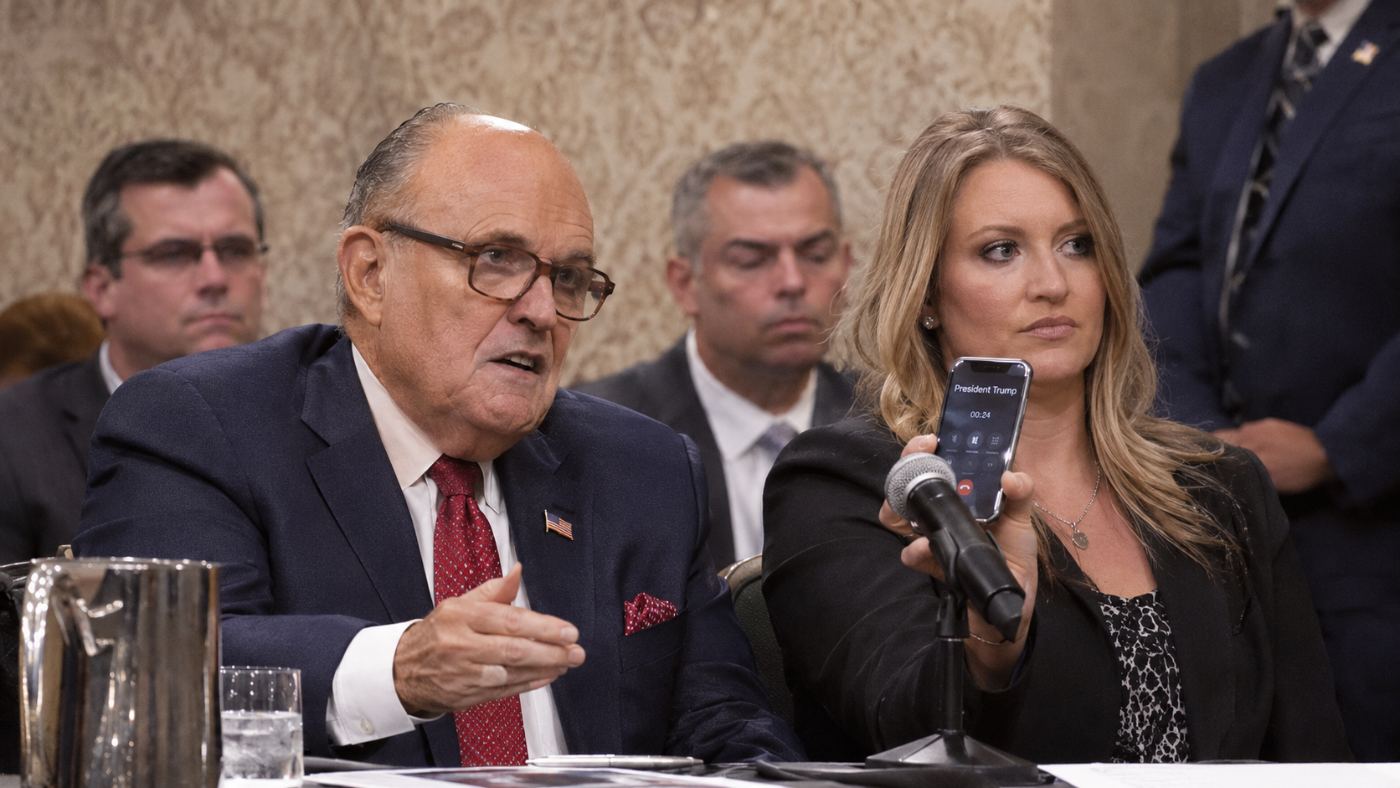
Just 24 hours after Pennsylvania officially certified Joe Biden's presidential election victory, Donald Trump was still trying to reverse the result.
On November 25, 2020, Trump telephoned a Republican-organized meeting in Gettysburg, where his attorneys were presenting allegations of election fraud to state lawmakers.
Speaking through a phone held up to a microphone by attorney Jenna Ellis, Trump repeated claims that the election had been stolen and encouraged Pennsylvania Republicans to challenge the certified outcome.
The extraordinary intervention came after state election officials had confirmed Biden's victory by 80,555 votes.
Rather than acknowledge the result, Trump was appealing directly to Republican lawmakers in a state he had lost.
A Presidential Call to Gettysburg
The meeting took place at the Wyndham Gettysburg hotel and was organized by Republican state lawmakers.
It was not an official hearing of the Pennsylvania Legislature.
Trump's personal attorney Rudy Giuliani attended, presenting allegations concerning mail-in ballots, election administration, and supposed irregularities in the vote count.
Then Trump joined by telephone.
His voice filled the conference room as Republican lawmakers and supporters listened.
Trump praised Giuliani's efforts and insisted that Pennsylvania's election results were deeply flawed.
He claimed that Democrats had manipulated the election and that large numbers of ballots were questionable.
But the president offered no verified evidence demonstrating fraud sufficient to overcome Biden's statewide victory.
Pennsylvania Had Already Certified Biden's Win
The timing made Trump's intervention particularly significant.
On November 24, Pennsylvania Secretary of the Commonwealth Kathy Boockvar certified the presidential election results.
Governor Tom Wolf subsequently signed the Certificate of Ascertainment identifying the state's 20 presidential electors pledged to Biden and Kamala Harris.
The certified totals were:
- Joe Biden: 3,458,229 votes
- Donald Trump: 3,377,674 votes
- Biden's margin: 80,555 votes
All 67 Pennsylvania counties had completed their required certification procedures.
The president was therefore challenging an outcome that had already passed through the state's established election process.
Trump Turns to Republican Lawmakers
By November 25, Trump's campaign had suffered significant legal setbacks.
On November 21, federal Judge Matthew Brann dismissed a major lawsuit seeking to prevent Pennsylvania's certification.
The campaign appealed, but certification proceeded.
The Pennsylvania Supreme Court had also rejected challenges involving thousands of mail-in ballots with technical deficiencies.
With those efforts failing to prevent Biden's victory from being certified, Trump and his allies increasingly directed their attention toward Republican-controlled state legislatures.
The broader strategy included urging lawmakers to investigate alleged irregularities and consider extraordinary measures involving the appointment of presidential electors.
In Pennsylvania, however, state law had already established how electors were selected through the popular vote.
The president's political objections did not give lawmakers an automatic legal basis to disregard the certified results.
Giuliani Presents the Allegations
Giuliani used the Gettysburg meeting to question Pennsylvania's election administration.
He alleged that voting procedures had been improperly changed and that mail-in ballots had been handled inconsistently.
Other participants offered testimony and statistical claims intended to cast doubt on Biden's victory.
But the event was not a judicial proceeding.
Witnesses were not being examined under the same evidentiary standards applied in court, and the meeting did not establish that the allegations were true.
Election officials had already reviewed and certified the results.
Trump's campaign had not demonstrated widespread fraud capable of changing Pennsylvania's outcome.
The President Refuses to Accept Defeat
Trump's participation illustrated how personally involved he remained in efforts to challenge the election.
He was not simply waiting for his lawyers to pursue appeals.
He was directly addressing state lawmakers, encouraging them to question an election their own state had already certified.
The president's statements came while his administration was beginning the formal transition to Biden following weeks of delay.
On November 23, the General Services Administration had finally authorized transition resources.
But Trump continued refusing to concede.
The contradiction was striking: the federal government was preparing for a Biden presidency while Trump continued attempting to challenge the state results that made that presidency possible.
Republican Officials Face a Choice
The Gettysburg meeting placed Pennsylvania Republicans at the center of Trump's post-election campaign.
Some lawmakers supported further investigation of alleged irregularities.
Others recognized that the legislature could not simply discard certified election results because the president disputed them.
The meeting did not reverse Pennsylvania's certification.
Nor did it establish a legal mechanism allowing Trump to claim the state's electoral votes.
The certified result continued to stand.
November 25: A President Challenges the Voters' Decision
Trump's November 25 telephone appearance was another stage in his effort to contest the 2020 election.
His campaign had challenged ballots, pursued lawsuits, and questioned election officials.
Now he was appealing directly to Republican lawmakers after Pennsylvania had formally confirmed his defeat.
The president had the right to pursue lawful election challenges and express concerns about election administration.
But those rights did not establish that fraud had occurred or authorize officials to disregard certified votes.
Pennsylvania had counted its ballots.
Its counties had certified their returns.
Its secretary of state had confirmed the statewide result.
And its governor had signed the document identifying Biden's electors.
Yet Trump continued urging Republicans to challenge the outcome.
On November 25, 2020, the president's refusal to accept defeat was no longer confined to campaign speeches or courtroom filings.
His voice was coming through a telephone in Gettysburg, addressing Republican lawmakers in a state whose voters had already chosen someone else.