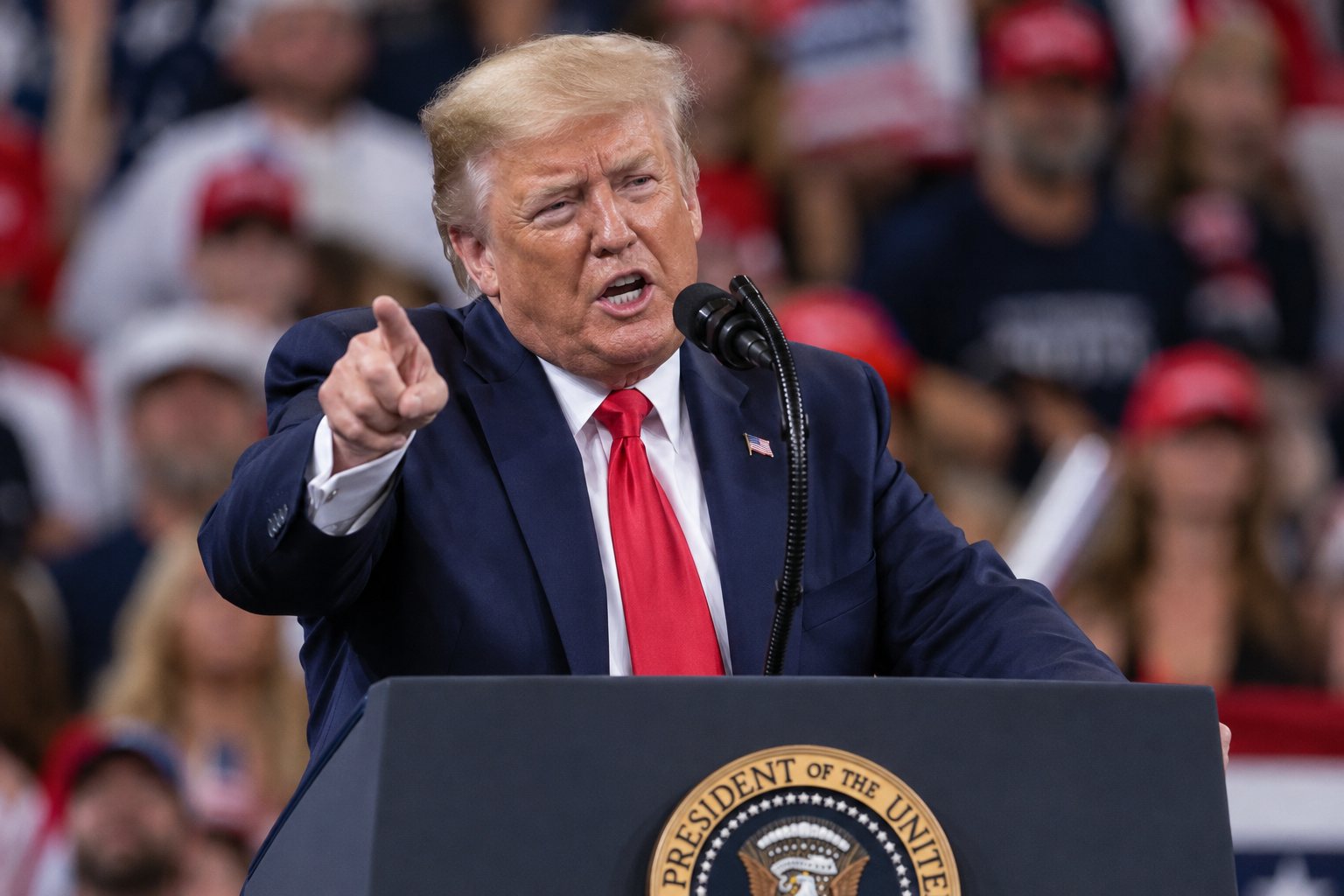
President Donald Trump has offered an unusually revealing glimpse into how he views one of the most extraordinary powers of the presidency: the authority to pardon people accused or convicted of federal crimes.
At a campaign rally in San Antonio, Texas, on October 7, Trump publicly criticized Democratic Congressman Henry Cuellar for refusing to switch to the Republican Party after receiving a presidential pardon.
Trump insisted there had been no agreement requiring Cuellar to change parties. But he also made clear that he had hoped the congressman would reward his generosity with political loyalty.
The remarks raise a troubling question: Does Trump view presidential clemency as an act of justice, or as a favor that should be repaid?
A Pardon That Ended a Major Corruption Case
In May 2024, federal prosecutors charged Representative Henry Cuellar of Texas and his wife, Imelda, with bribery, money laundering, and conspiracy.
Prosecutors alleged that the couple accepted approximately $600,000 in improper payments from interests connected to Azerbaijan and a Mexican commercial bank.
According to the indictment, the payments were routed through companies associated with Imelda Cuellar in exchange for the congressman's use of his official position to benefit those interests.
The Cuellars denied wrongdoing. The charges remained unresolved when Trump intervened.
On December 3, 2025, Trump pardoned both Henry and Imelda Cuellar, effectively ending their federal criminal prosecution.
Trump defended the decision by arguing that the Biden administration had unfairly targeted the congressman because of his criticism of Democratic immigration policies.
There was no judicial finding establishing that the prosecution was politically motivated.
Trump Expected Political Loyalty
The relationship deteriorated almost immediately.
Cuellar filed for reelection as a Democrat rather than joining the Republican Party.
Trump responded by publicly questioning the congressman's gratitude and loyalty.
Then, at Wednesday's San Antonio rally, the president returned to the subject.
"I made no deal," Trump declared, insisting that he had not conditioned the pardons on a party switch.
But he proceeded to explain that he had expected Cuellar might change his political allegiance.
Trump suggested that Cuellar could have been welcomed into the Republican Party and expressed disappointment that the congressman had not taken that path.
He also discussed letters from Cuellar's daughters, who had appealed for their parents' pardons, and suggested that the family could have encouraged the congressman to make a different political decision.
The president portrayed the pardon as a personal act of generosity for which Cuellar had failed to show sufficient appreciation.
From Presidential Mercy to Political Grievance
The most revealing aspect of Trump's remarks was the distinction he drew between making an explicit deal and expecting political gratitude.
Trump denied negotiating a party switch before issuing the pardon. There is no publicly established evidence of such an agreement.
Yet his subsequent criticism demonstrated that he associated the pardon with an expectation of political loyalty.
That distinction matters legally. Hoping someone will support you politically is not the same as demanding political support in exchange for official action.
But it also raises an important ethical question.
Presidential pardons are an exercise of constitutional authority, not personal gifts purchased with the president's own money.
The power exists to provide mercy, correct injustices, and address circumstances in which the ordinary criminal justice process may have produced an unfair result.
A recipient's subsequent political affiliation should not determine whether the president considers the exercise of that power worthwhile.
When a president publicly condemns someone for failing to deliver political gratitude after receiving clemency, the distinction between public responsibility and personal allegiance becomes increasingly important.
Trump Turns Against the Man He Pardoned
Trump's criticism went beyond disappointment.
In an October 7 Truth Social post, he endorsed Cuellar's Republican opponent, Tano Tijerina, and accused the Democratic congressman of disloyalty.
Trump also suggested that Cuellar and his wife should be serving lengthy prison sentences.
That was a remarkable reversal from the president who had previously characterized their prosecution as politically motivated.
The underlying criminal allegations had not been resolved by a trial. The pardons did not establish innocence, but neither had the prosecution resulted in convictions.
Nevertheless, Trump now invoked the prospect of prison as part of his attack on the congressman.
The contrast is striking: The same president who portrayed Cuellar as a victim of an unjust prosecution now points to the threatened punishment as a reason the congressman should feel indebted to him.
Cuellar Refuses to Switch Parties
Cuellar has maintained that he intends to remain a Democrat.
Responding to Trump's latest criticism, the congressman expressed gratitude that the federal case against his family was behind them while emphasizing his commitment to representing his South Texas district.
He identified immigration enforcement, the cost of living, Medicare, and Social Security among his priorities.
He did not announce any intention to change political parties.
Trump, meanwhile, has endorsed the Republican challenging Cuellar in the 2026 congressional election.
The dispute has therefore moved beyond a disagreement about gratitude. It has become part of an active electoral contest in which the president is campaigning against a congressman he previously pardoned.
A Larger Question About Presidential Power
Article II of the Constitution gives presidents broad authority to grant pardons for federal offenses, excluding impeachment cases.
That authority is extensive, and presidents from both major parties have faced criticism over controversial clemency decisions.
Trump's remarks do not establish that he sold a pardon, demanded a party switch as a condition of clemency, or committed a crime.
They do, however, provide direct evidence of a president publicly expressing frustration that someone he pardoned did not subsequently make the political choice he preferred.
That creates a serious question about how presidential power is understood and exercised.
If clemency recipients believe that their future political conduct could affect how the president treats them, the power of pardon risks becoming entangled with political loyalty.
And if a president publicly portrays clemency as a personal favor that creates an obligation, it becomes harder to separate the interests of the office from those of the person occupying it.
The Problem Is What Trump Said Out Loud
The central issue is not whether Henry Cuellar should have received a pardon. That decision can be examined independently, including the seriousness of the allegations against him and Trump's stated reasons for intervening.
The issue is what happened afterward.
Trump pardoned a Democratic congressman, hoped that congressman would join his political party, and then publicly attacked him when he refused.
The president says there was no deal, and the available evidence does not establish otherwise.
But his own words reveal an expectation that an exercise of presidential clemency should produce political gratitude.
A pardon is supposed to be an act of government, not a personal debt owed to the president.
The distinction matters regardless of which political party controls the White House.