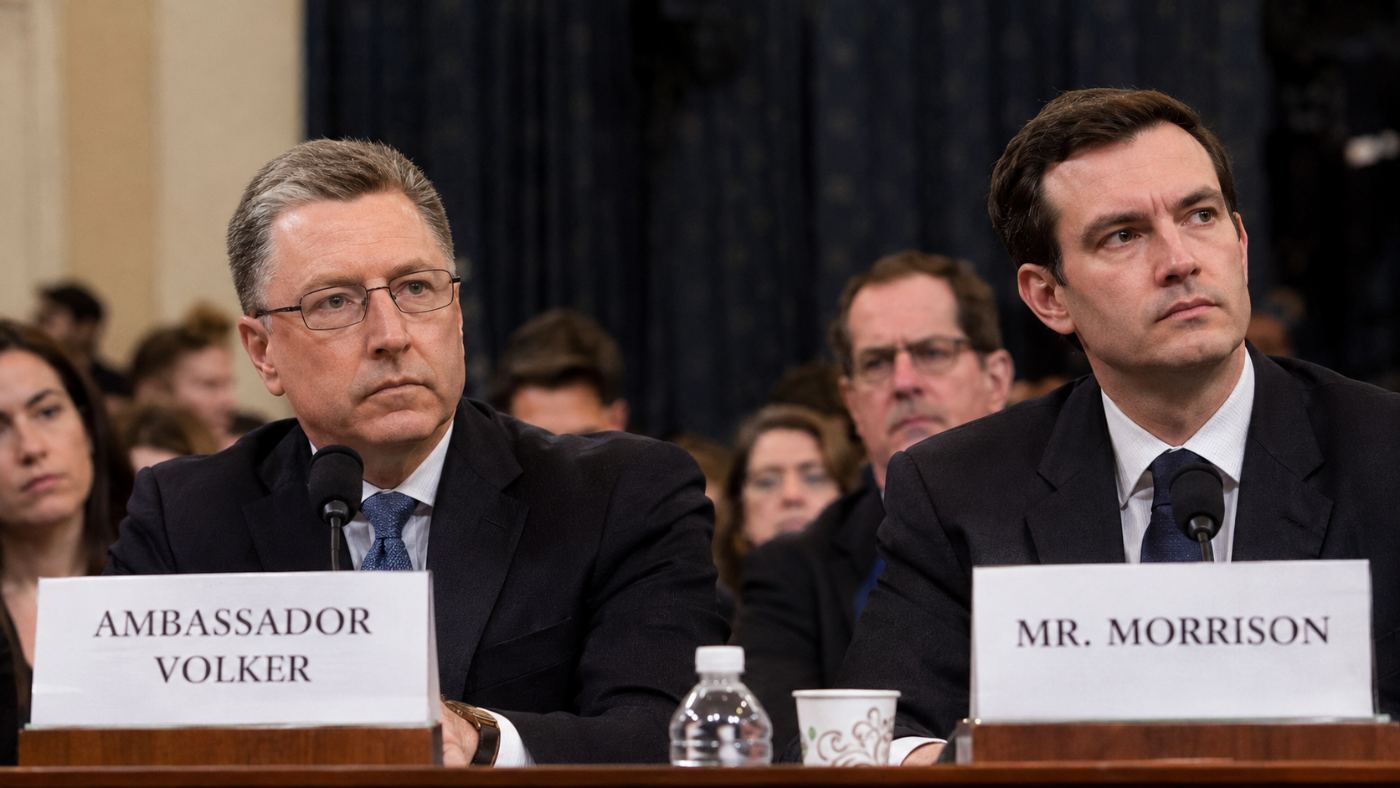
On November 19, 2019, two officials who had worked inside Donald Trump's administration appeared before Congress and offered testimony that revealed the confusion, contradictions, and competing explanations surrounding the president's dealings with Ukraine.
Kurt Volker, the former U.S. special envoy to Ukraine, and Timothy Morrison, a former senior National Security Council official, testified publicly during the House impeachment inquiry.
Neither witness portrayed himself as an opponent of Trump. Both had served his administration.
Yet their testimony raised troubling questions about an American president seeking politically sensitive investigations from a foreign government while military assistance to that country remained suspended.
The Investigation Trump Wanted
The controversy centered on Trump's July 25 telephone conversation with Ukrainian President Volodymyr Zelensky.
During the call, Trump asked Zelensky to pursue investigations involving former Vice President Joe Biden and allegations about Ukrainian interference in the 2016 American election.
At the same time, the Trump administration had frozen nearly $400 million in congressionally approved security assistance to Ukraine.
House Democrats argued that Trump had used American foreign policy to pressure Ukraine into announcing investigations that could benefit his reelection campaign.
Trump and his Republican defenders denied that the president had improperly conditioned assistance on political favors.
Morrison Describes a Troubling Conversation
Morrison had personally listened to the July 25 presidential call.
He testified that he had not believed anything illegal was discussed during the conversation.
But his testimony also revealed significant concerns about subsequent developments.
Morrison described a September conversation with Ambassador Gordon Sondland, who had spoken directly with Trump about what the president wanted from Ukraine.
According to Morrison, Sondland relayed that Trump insisted there was no quid pro quo, but also wanted Zelensky personally to announce the investigations.
Sondland indicated that without such an announcement, relations between the two governments would remain at a stalemate.
Morrison testified that this development gave him a sinking feeling.
He was particularly concerned about the implications for Ukraine's security assistance.
The distinction was significant: Morrison did not accuse Trump of committing a crime during the July telephone call, but his account described a diplomatic process in which politically sensitive investigations had become entangled with American support for Ukraine.
Volker Changes His Understanding
Volker's testimony revealed another complication.
He had helped coordinate American diplomatic contacts with Ukraine and had communicated with Trump's personal attorney, Rudy Giuliani.
Volker maintained that he had not knowingly participated in an effort to pressure Ukraine into investigating Biden.
Initially, he believed discussions about the Ukrainian energy company Burisma concerned corruption rather than the former vice president.
But after reviewing the July 25 call record, Volker acknowledged that he understood the connection between Trump's interest in Burisma and the Bidens.
He testified that asking a foreign government to investigate an American political rival was inappropriate.
Volker also rejected allegations that Biden had improperly used his vice presidency for personal financial benefit, describing those claims as not credible.
Two Witnesses, Different Interpretations
Republicans emphasized Morrison's statement that he had not identified illegal conduct during the presidential call.
Democrats focused on the testimony describing requests for investigations, diplomatic pressure, and the suspension of military assistance.
Both witnesses opposed the hold on security assistance, although they described different understandings of how the situation developed.
Their testimony illustrated why the impeachment inquiry could not be reduced to a single telephone conversation.
The investigation concerned a broader sequence of meetings, communications, and decisions involving White House officials, diplomats, and Trump's personal attorney.
The Contradictions Become Part of History
The November 19 hearing exposed competing accounts from officials who had participated in the administration's Ukraine policy.
Volker acknowledged that the president's request involving Biden was inappropriate.
Morrison maintained that he had not judged the July call illegal, while describing subsequent communications that raised serious concerns.
Their testimony became part of the evidence considered during Trump's first impeachment.
On December 18, 2019, the House impeached Trump for abuse of power and obstruction of Congress. The Senate acquitted him in February 2020.
The hearing left an important historical record: Even officials who defended aspects of Trump's conduct described a diplomatic process in which American security assistance, presidential meetings, and politically sensitive investigations had become intertwined.