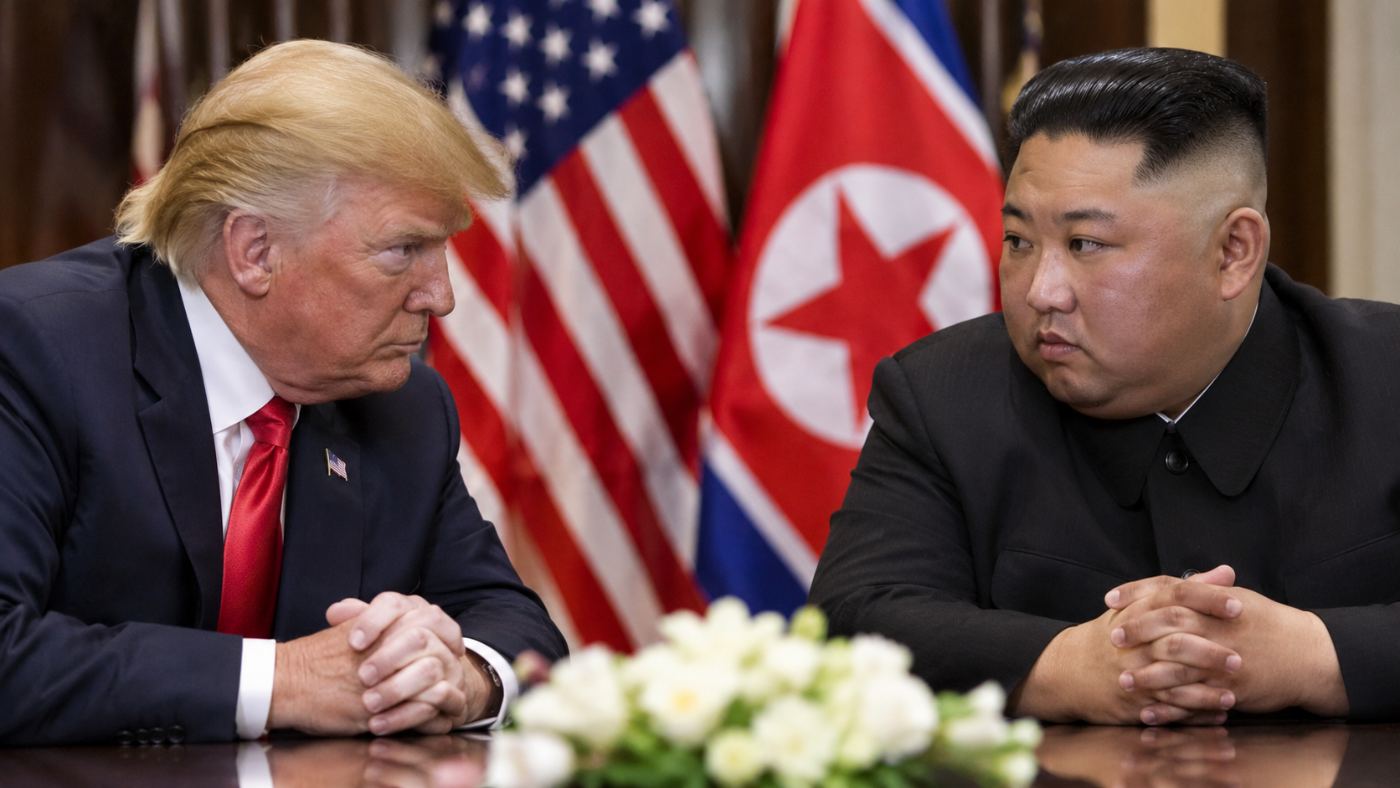
Donald Trump's humiliating midterm election defeat could send him searching for a political victory in one of the most unlikely places on Earth: North Korea.
According to a November 6 Reuters report, foreign-policy analysts believe Trump may attempt to revive his relationship with North Korean dictator Kim Jong Un as a way to demonstrate that he remains an influential world leader.
There is just one problem.
Kim Jong Un may no longer need Donald Trump.
A Weakened President Looking for a Victory
The Republican Party's crushing defeat in the 2026 midterm elections has fundamentally altered Trump's political position.
With Democrats capturing both chambers of Congress, the president faces the prospect of congressional investigations, legislative obstruction, and increasing scrutiny of his administration.
Foreign policy, however, offers opportunities for presidential action that do not always require congressional approval.
That makes North Korea an attractive possibility for a president who has long valued dramatic diplomatic spectacles.
During his first administration, Trump repeatedly celebrated his personal relationship with Kim, even declaring that the two leaders had fallen in love.
Their historic summits generated extraordinary international attention but failed to produce a lasting agreement to dismantle North Korea's nuclear weapons program.
Now, Trump may be tempted to try again.
Kim Jong Un Holds the Stronger Hand
Unfortunately for Trump, the geopolitical landscape has changed considerably since his first meetings with Kim.
North Korea has continued expanding its nuclear weapons and ballistic missile capabilities, strengthening its ability to threaten neighboring countries and potentially the United States.
Pyongyang has also developed closer relationships with Russia and China, reducing its dependence on negotiations with Washington.
Kim is therefore approaching any potential discussions from a substantially stronger position.
Trump, meanwhile, is a term-limited president whose party has just suffered a major electoral defeat.
From Kim's perspective, there may be little reason to offer concessions to an American leader whose remaining political influence is increasingly uncertain.
The Price of Another Presidential Photo Opportunity
One particularly troubling possibility involves Trump's willingness to abandon the longstanding American objective of North Korean denuclearization.
Kim has indicated that negotiations might be possible if Washington drops its demand that North Korea surrender its nuclear weapons.
Such a concession could represent a dramatic reversal of American policy.
South Korea and Japan have serious concerns about any agreement that effectively recognizes North Korea as a legitimate nuclear weapons state.
Both countries depend heavily on American security commitments, and any weakening of Washington's position could destabilize the region.
There are also concerns that Trump could pursue direct negotiations with Kim while marginalizing America's traditional allies.
The Limits of Personal Diplomacy
Trump has repeatedly presented his relationships with authoritarian leaders as evidence of his exceptional negotiating abilities.
Yet his previous diplomatic engagement with Kim produced more spectacle than lasting results.
North Korea retained its nuclear arsenal, negotiations collapsed, and the regime continued developing increasingly sophisticated weapons.
The fundamental disagreement between Washington and Pyongyang was never resolved.
Now Trump may be returning to the same negotiating table with fewer political advantages and a North Korean leader who has significantly strengthened his position.
A Dictator Who Can Afford to Wait
The irony is difficult to ignore.
Trump once portrayed himself as the only American president capable of bringing Kim Jong Un to the negotiating table.
Today, the North Korean dictator may be the one deciding whether the American president deserves another meeting.
Trump needs a political success. Kim has nuclear weapons, powerful international partners, and little apparent urgency to negotiate.
For a president accustomed to portraying every international encounter as a personal triumph, that is an uncomfortable reversal.
And after American voters delivered a decisive rejection of his party, Donald Trump may discover that even Kim Jong Un isn't particularly interested in helping him stage a comeback.