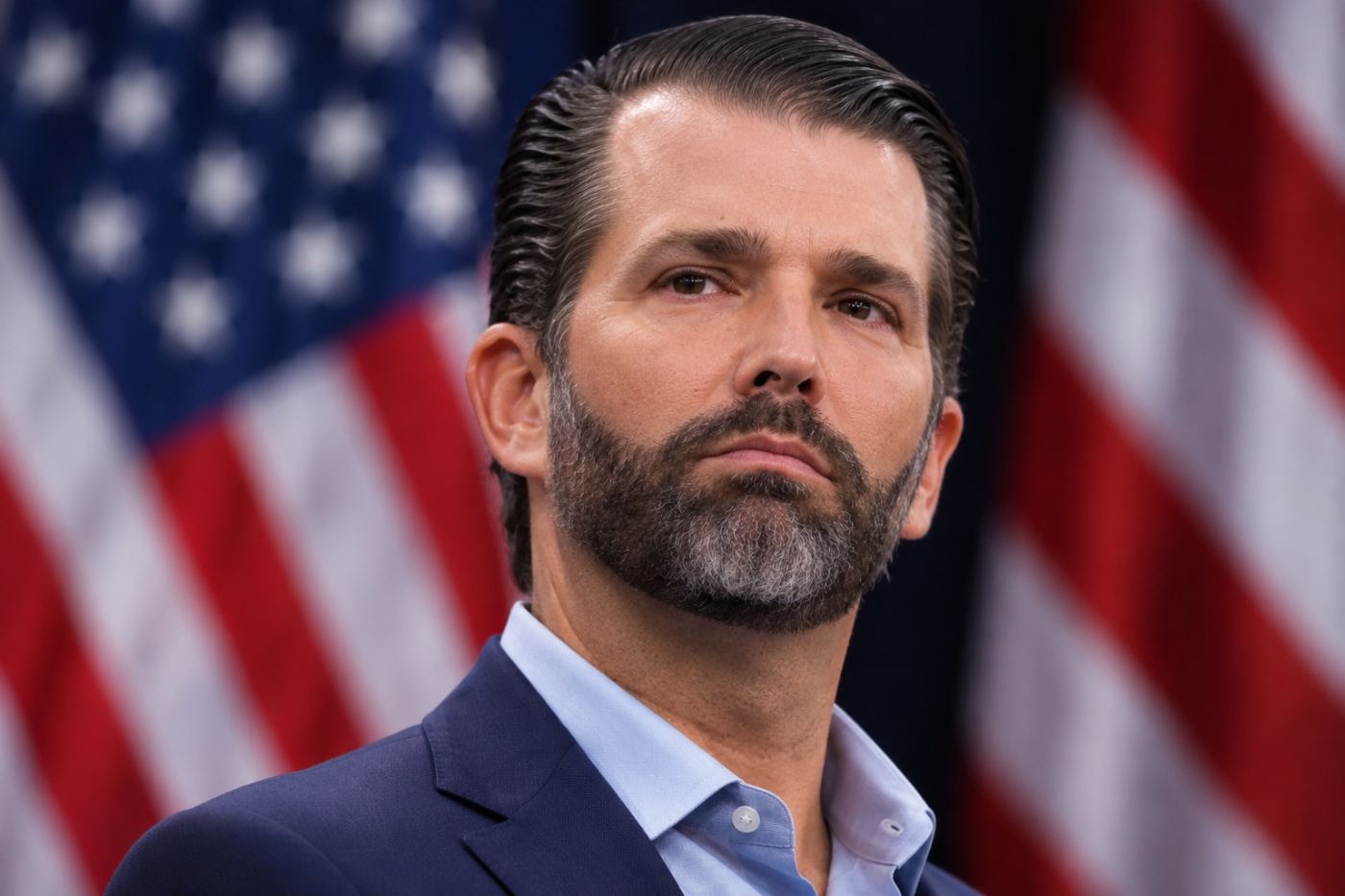
Donald Trump Jr. may have inherited his father's name, political connections, and a prominent place in the MAGA movement. But a new national poll suggests those advantages have not translated into widespread enthusiasm for a presidential campaign.
A Reuters/Ipsos survey released this week found that 43% of Republican and Republican-leaning respondents considered Trump Jr. a poor potential presidential candidate for 2028. Another 20% rated him only fair.
Just 12% described him as excellent, while 17% considered him good.
The findings raise questions about whether the Trump family name alone would be enough to sustain a second generation of presidential politics.
The Numbers Tell the Story
Trump Jr.'s ratings contrast sharply with those of several other prominent Republicans.
Vice President JD Vance received excellent ratings from 34% of Republican and Republican-leaning respondents, with another 28% calling him good.
Secretary of State Marco Rubio received 36% excellent ratings and 22% good ratings.
Florida Governor Ron DeSantis also received more favorable assessments, with 28% describing him as excellent and 24% as good.
Trump Jr., meanwhile, received positive ratings from just 29% of respondents.
These figures measure perceptions of potential candidates, not actual voting intentions in a Republican primary. Nevertheless, they reveal significant differences in how respondents evaluate the possible contenders.
Republicans Question Trump's Political Legacy
Perhaps the survey's most consequential finding concerns Donald Trump himself.
Asked whether the party's next presidential nominee should govern similarly to Trump, 52% of Republican and Republican-leaning respondents preferred a different approach.
Another 46% favored continuing Trump's governing style.
That division suggests the Republican electorate is debating what should follow the current administration.
Trump has maintained extraordinary influence over Republican politics since his first presidential campaign in 2015. His endorsements, political priorities, and personal loyalty demands have shaped the party for more than a decade.
But the survey indicates that carrying his political legacy forward may not be universally appealing, even among voters inclined toward Republicans.
Don Jr. Hasn't Announced a Campaign
Trump Jr. has occasionally entertained the possibility of seeking public office.
At the Qatar Economic Forum in May 2025, he acknowledged that he might consider running someday.
He later clarified that he had no interest in running for president in 2028 or entering electoral politics in the immediate future.
That distinction matters. Trump Jr. is not currently an announced presidential candidate, and the poll does not measure the performance of an active campaign.
He remains an influential political commentator, fundraiser, and advocate for his father's agenda.
But public visibility and political influence do not necessarily translate into presidential appeal.
A Party Facing an Identity Question
The survey arrives shortly after the 2026 midterm elections, which produced substantial Republican losses.
As attention begins shifting toward 2028, Republican voters are being asked to consider whether the party should continue Trump's approach or pursue something different.
The Reuters/Ipsos findings cannot determine what voters will ultimately decide. The election remains two years away, and potential candidates have not formally entered the race.
Still, the results present an important challenge to assumptions about political inheritance.
Donald Trump built a movement around his name. The latest polling suggests that name alone may not be enough to carry his son into the White House.