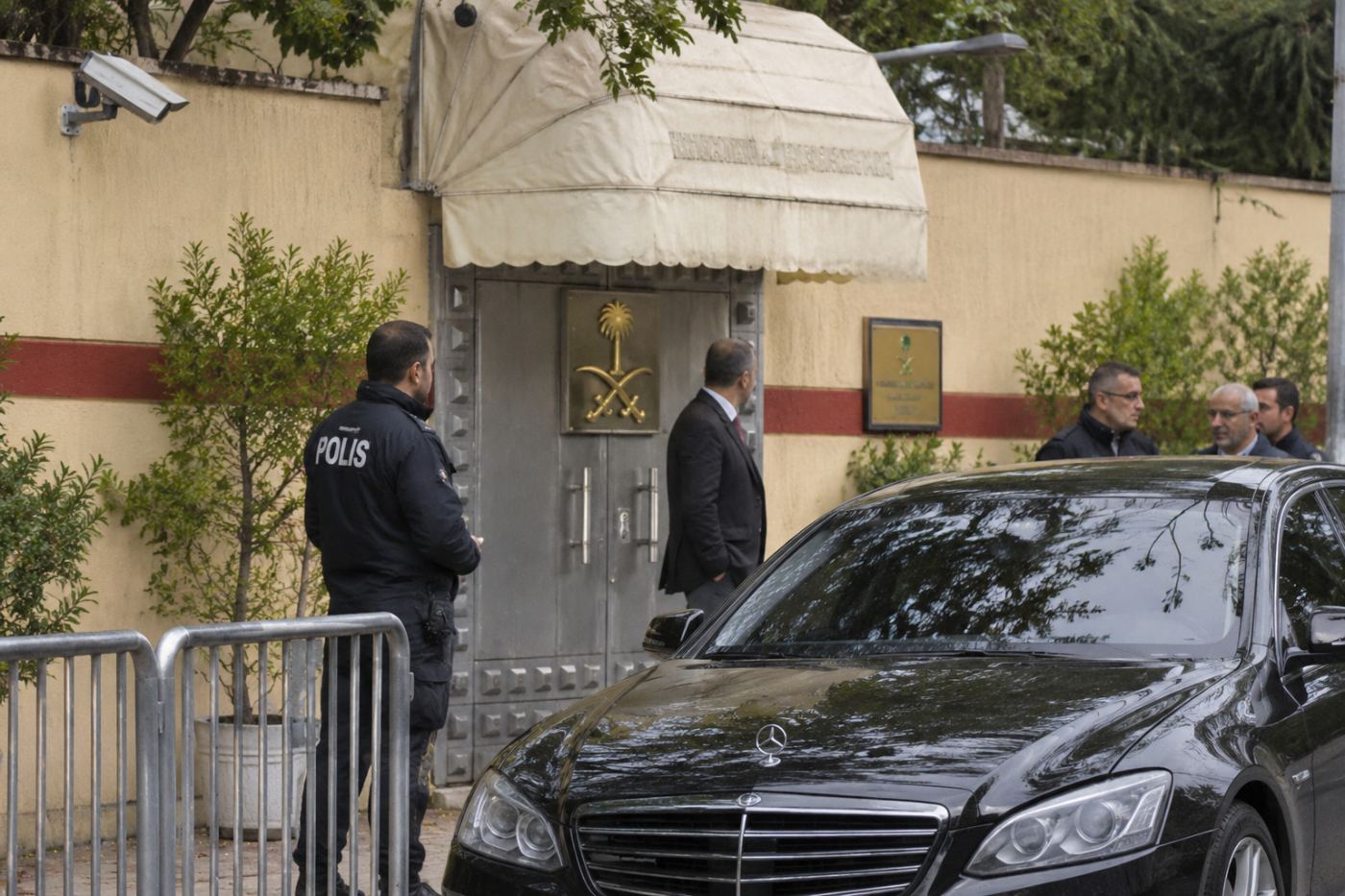
A journalist had been murdered inside a Saudi consulate. American intelligence officials had implicated one of the world's most powerful princes. International outrage was growing.
But on November 20, 2018, President Donald Trump made his priorities clear.
The United States would stand by Saudi Arabia.
In an extraordinary White House statement, Trump defended America's relationship with the kingdom despite intelligence assessments implicating Saudi Crown Prince Mohammed bin Salman in the killing of Washington Post columnist Jamal Khashoggi.
His explanation emphasized oil prices, military contracts, American jobs, and the strategic importance of Saudi Arabia.
A Journalist Walks Into a Consulate and Never Returns
On October 2, 2018, Khashoggi entered the Saudi consulate in Istanbul, Turkey, to obtain documents needed for his upcoming marriage.
He never emerged.
Saudi operatives murdered and dismembered the journalist inside the building. Saudi authorities initially denied knowledge of his disappearance before acknowledging that he had been killed.
Khashoggi, a Saudi citizen living in the United States, had written critically about the kingdom's leadership and its suppression of dissent.
The CIA subsequently assessed that Crown Prince Mohammed bin Salman had ordered the killing.
The crown prince denied ordering or knowing about the operation.
Maybe He Did, Maybe He Didn't
Trump's November 20 statement acknowledged that Khashoggi's murder was unacceptable.
But when addressing the crown prince's possible involvement, the president offered an extraordinary response.
"Maybe he did and maybe he didn't!"
Trump suggested the full facts might never be known, despite the intelligence assessment pointing toward the crown prince.
He emphasized that Saudi Arabia remained an essential American partner against Iran and terrorism.
The statement also repeated Saudi allegations portraying Khashoggi as an enemy of the state, although Trump said those allegations did not influence his decision.
For critics, the message was unmistakable: The strategic relationship would survive regardless of the crown prince's possible responsibility.
The Price of American Principles
Much of Trump's justification focused on money.
He claimed Saudi Arabia had committed to investing $450 billion in the United States, including $110 billion in military purchases.
Those figures were widely challenged as exaggerated, with many proposed purchases representing potential agreements rather than completed contracts.
Trump argued that canceling military deals would benefit Russia and China.
He also praised Saudi Arabia's cooperation in maintaining reasonable oil prices.
The president presented the decision as an application of his America First foreign policy.
But the statement raised a fundamental question: How much accountability should the United States demand when an important economic and military partner is implicated in murdering a journalist?
Even Republicans Objected
Trump's position drew criticism from lawmakers in both political parties.
Republican Senator Lindsey Graham and other members of Congress questioned the administration's willingness to defend the Saudi leadership.
Lawmakers sought additional accountability and debated restrictions on arms sales and American support for Saudi military operations in Yemen.
The administration had already sanctioned 17 Saudi individuals connected to Khashoggi's murder.
However, Trump declined to pursue a broader rupture with the kingdom or its crown prince.
A Murder, an Intelligence Assessment, and a Business Calculation
The November 20 statement became a defining example of the Trump administration's approach to Saudi Arabia.
The president acknowledged the brutality of Khashoggi's murder but placed greater emphasis on maintaining strategic and economic ties.
His defenders argued that American national security required preserving a crucial Middle Eastern partnership.
His critics argued that the response weakened accountability for an attack on a journalist and signaled that powerful allies could escape meaningful consequences.
The historical record documents both the intelligence concerns and the president's decision.
On November 20, 2018, Trump chose to preserve the Saudi relationship despite those concerns.
The decision left a lasting question about the relationship between American interests, human rights, and the price governments are willing to pay for strategic alliances.