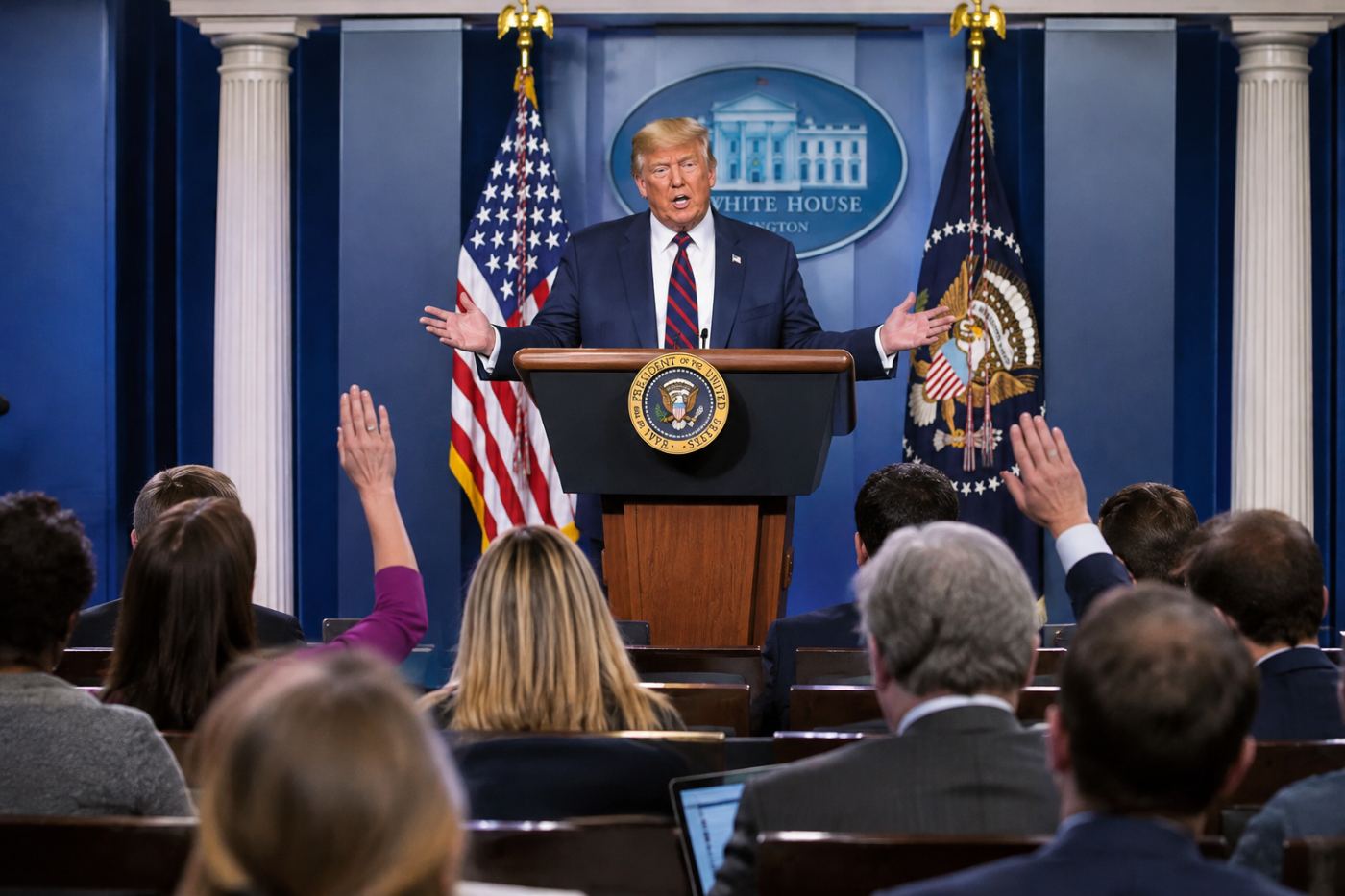
Donald Trump's administration had finally authorized the transition to President-elect Joe Biden. But the outgoing president was making one thing unmistakably clear: He had no intention of accepting his election defeat.
On November 24, 2020, Trump publicly declared that he would continue fighting the presidential election results, repeating unsupported allegations about fraudulent ballots and Dominion Voting Systems.
The declaration came just hours after his administration took its first formal step toward transferring power to Biden.
The contradiction was extraordinary. The federal government was preparing for a new president while the sitting president continued insisting that the election had been stolen.
The Transition Begins, but Trump Refuses to Concede
On November 23, General Services Administration Administrator Emily Murphy formally authorized Biden's transition team to receive federal resources.
The decision ended a 16-day delay following major news organizations' projection of Biden's victory on November 7.
The authorization allowed Biden's team to begin coordinating with federal agencies, accessing government funding, and preparing for the responsibilities of the presidency.
Trump initially appeared to accept the administrative decision.
He publicly thanked Murphy and said he had recommended that government officials cooperate with the initial transition procedures.
But shortly afterward, Trump made clear that his cooperation did not mean he accepted the election results.
In a social media message posted late November 23 and widely reported on November 24, Trump questioned why the transition should affect his ongoing legal challenges.
He insisted that his campaign was moving forward and declared that he would not concede to what he characterized as fraudulent ballots and Dominion voting equipment.
The Dominion Conspiracy Theory
Trump's reference to Dominion Voting Systems was particularly significant.
Dominion supplied election technology used by jurisdictions across the United States.
Following the election, Trump and several political allies promoted allegations that Dominion equipment had manipulated vote totals to benefit Biden.
Some conspiracy theories claimed that voting machines had switched votes from Trump to Biden.
Others alleged connections between Dominion's technology and foreign governments, including Venezuela.
These allegations were unsupported by credible evidence.
On November 12, the federal Cybersecurity and Infrastructure Security Agency and election security partners had issued a statement affirming the integrity of the election.
The officials reported no evidence that voting systems had deleted, lost, or changed votes.
Nevertheless, Trump continued publicly promoting allegations involving Dominion.
His November 24 statements demonstrated that the conspiracy theories remained central to his refusal to accept the election results.
Trump's Legal Challenges Were Failing
By November 24, Trump's campaign had already encountered repeated setbacks in court.
In Pennsylvania, federal Judge Matthew Brann had dismissed a major lawsuit challenging election procedures.
The campaign had failed to establish a sufficient legal or evidentiary basis for the extraordinary relief it requested.
Pennsylvania's Supreme Court had also rejected challenges seeking to exclude thousands of mail-in ballots over technical omissions.
Meanwhile, Michigan had certified Biden's victory on November 23.
Pennsylvania and Nevada completed major certification steps on November 24.
The developments were steadily confirming the results of the presidential election.
Trump's campaign continued pursuing legal challenges, but those efforts had not demonstrated widespread fraud capable of reversing Biden's victory.
Trump Promises More Lawsuits
Trump did not limit his objections to Dominion.
On November 24, he also promoted claims that his campaign was preparing additional litigation involving alleged ballot fraud.
He asserted that a forthcoming lawsuit would detail election irregularities.
The president also shared commentary questioning the legitimacy of Biden's victory.
His public statements continued portraying the election as fundamentally corrupt, despite the absence of substantiated evidence supporting that conclusion.
The legal challenges were not merely requests for recounts or routine reviews of election procedures.
Some sought remedies that could prevent certification or invalidate large numbers of votes.
The consequences of those requests would have extended far beyond individual ballot disputes.
They could have interfered with the recognition of election results in states Biden had won.
A President Who Would Not Accept the Results
Trump's refusal to concede was unusual in modern American presidential history.
Presidential concessions are not legally required.
The Constitution does not require a defeated candidate to acknowledge the winner before the transfer of power can occur.
But concessions have traditionally served an important democratic function.
They publicly recognize the outcome and help facilitate a peaceful transfer of authority.
Trump rejected that tradition.
Rather than acknowledging Biden's victory, he continued alleging that the election had been manipulated.
His statements created a striking situation in which the outgoing administration was beginning transition preparations while its leader publicly disputed the legitimacy of the incoming president.
Election Officials Continue Their Work
Despite Trump's statements, election officials continued completing their legal responsibilities.
On November 24, Pennsylvania certified Biden's victory by 80,555 votes.
Nevada's Supreme Court unanimously approved the state's presidential election results, confirming Biden's victory by 33,596 votes.
Those certifications followed Michigan's approval of its election results the previous day.
Each development reinforced the official outcome in states Trump had contested.
The president's refusal to concede did not prevent election officials from proceeding under state law.
Nor did his allegations establish that the certified results were inaccurate.
The Consequences of Election Denial
Trump's repeated allegations also affected public confidence in the election.
Millions of Americans had voted for him, and many continued to believe his claims that the results were illegitimate.
Those claims persisted even as election officials, courts, and federal security agencies reported no evidence of widespread fraud sufficient to change the outcome.
The dispute raised concerns about how presidential statements could influence public trust in democratic institutions.
A president has the right to pursue lawful election challenges.
But critics argued that repeatedly alleging widespread fraud without substantiating those allegations risked undermining confidence in the electoral process.
Trump maintained that he was defending election integrity and pursuing legitimate legal remedies.
The evidence presented through November 24, however, had not established the sweeping misconduct he described.
November 24: Two Contradictory Messages
The events of November 24, 2020, illustrated the unusual circumstances surrounding the presidential transition.
Trump's administration was finally allowing Biden's team to prepare for taking office.
Federal agencies were beginning the process of transferring information and coordinating with incoming officials.
States were certifying Biden's victories.
Yet Trump continued publicly insisting that the election had been stolen and that he would not concede.
The distinction between an administrative transition and a presidential concession became central to the controversy.
Trump could permit government officials to cooperate with Biden without personally acknowledging defeat.
That was precisely what happened.
On November 24, the machinery of American government began moving toward the next presidency, even as the outgoing president continued challenging the result.
Biden's transition was underway.
Trump's election denial continued.