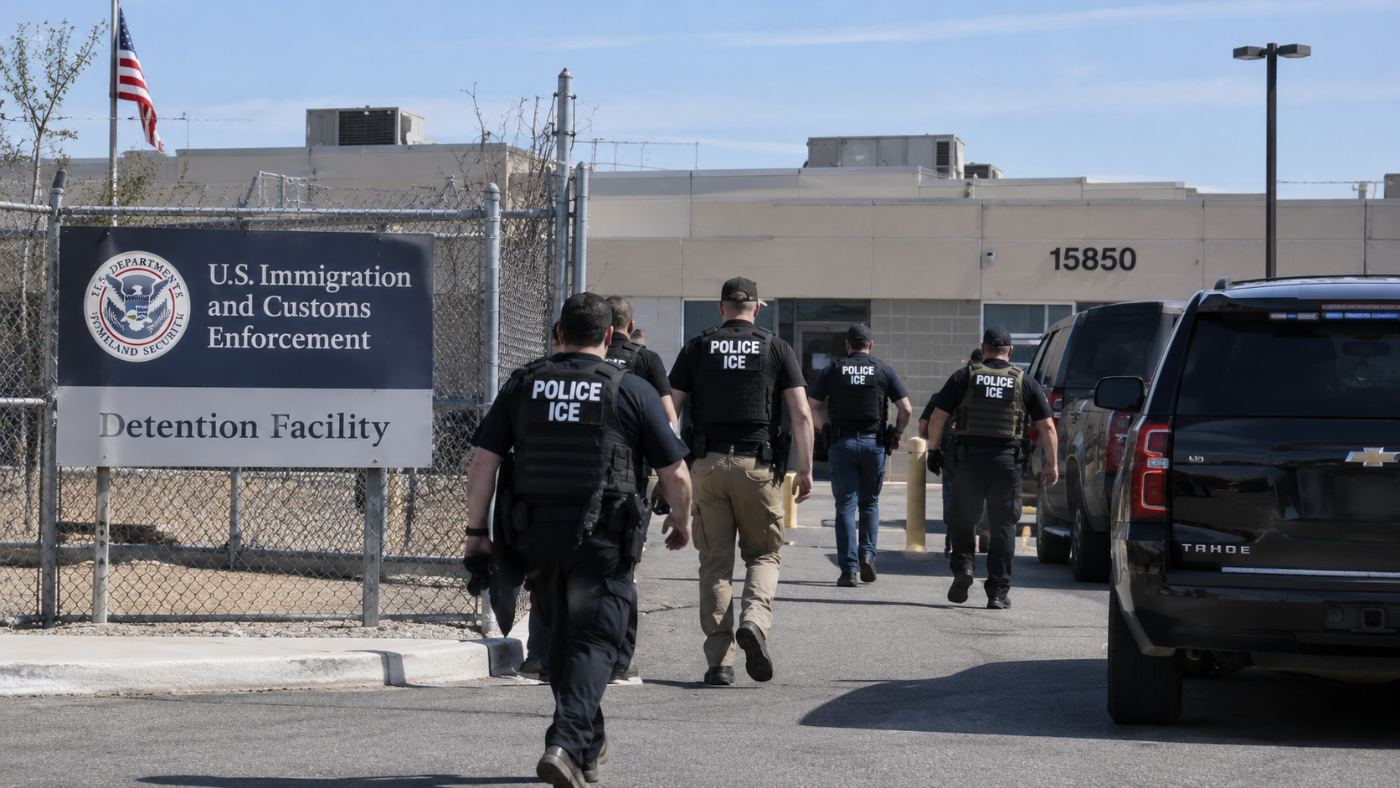
For nearly two years, Donald Trump made mass deportations a defining feature of his second presidency. His administration expanded immigration raids, increased arrests, and pursued an aggressive enforcement campaign that sparked protests, lawsuits, and growing public opposition.
Now, following Republican losses in the November midterm elections, Trump is acknowledging that his administration may have gone too far.
In a November 8 interview with CBS's 60 Minutes, Trump was asked whether his deportation policies had been too aggressive.
His response was surprisingly candid.
"I think it might be too tough, yeah."
The admission marks a significant change in rhetoric from a president who campaigned on conducting the largest deportation operation in American history.
The Political Backlash
Trump's immigration agenda was once considered one of his strongest political issues.
During the 2024 campaign, he promised to secure the border, deport undocumented immigrants, and prioritize public safety. Those promises resonated with voters concerned about illegal immigration.
But the administration's enforcement tactics generated increasing controversy.
Immigration operations expanded beyond individuals convicted of violent crimes. Workers, longtime residents, and people with established families in the United States also faced detention and removal.
High-profile enforcement operations produced confrontations between federal agents and protesters, while legal challenges raised questions about due process and government authority.
The public reaction became increasingly negative.
An Associated Press survey of more than 100,000 voters conducted around the midterm elections found that approximately six in ten believed the administration's immigration enforcement had gone too far.
A similar proportion disapproved of Immigration and Customs Enforcement's performance.
The political consequences became apparent on November 3, when Democrats won control of both the House and Senate.
Trump subsequently acknowledged that immigration enforcement had contributed to Republican difficulties.
A Change in Rhetoric, Not Necessarily Policy
Trump's comments suggest a recognition that aggressive deportation tactics have become politically costly.
But there is an important distinction between acknowledging public dissatisfaction and changing government policy.
During the interview, Trump suggested that he could work with congressional Democrats on immigration legislation.
He offered no detailed proposal explaining how enforcement practices might change.
More significantly, shortly after recording the interview, Trump selected Stephen Miller as his new White House chief of staff.
Miller has been one of the principal architects of Trump's hard-line immigration policies.
His elevation raises an obvious question: How much should Americans expect immigration enforcement to change when one of its most influential advocates has just received an even more powerful position?
Republicans Saw the Warning Signs
The administration's political concerns did not begin with the November election.
In March 2026, White House and Republican congressional officials reportedly advised GOP lawmakers to avoid emphasizing the phrase "mass deportations" during their campaigns.
Instead, they encouraged Republicans to concentrate their messaging on removing violent criminals.
The distinction was politically significant.
Polling suggested that Americans remained supportive of border security and deporting dangerous offenders but were increasingly uncomfortable with broad enforcement operations affecting immigrants without violent criminal histories.
The White House maintained at the time that its underlying enforcement agenda had not changed.
That distinction between political messaging and actual policy remains central to evaluating Trump's latest remarks.
What Happens to the Families?
For immigrants facing detention or deportation, the consequences of enforcement policy are not theoretical.
Arrests can separate parents from children, disrupt workplaces, and create uncertainty for families that have lived in the United States for years.
Supporters of stricter immigration enforcement argue that immigration laws must be enforced and that removing people without legal authorization is a legitimate government responsibility.
Critics counter that broad enforcement operations have swept up people who pose no public-safety threat and have sometimes raised serious constitutional concerns.
Trump's acknowledgment that enforcement may have been excessive does not resolve those disagreements.
Nor does it reverse deportations that have already occurred.
The Test Is What Trump Does Next
The administration now faces a choice between modifying its enforcement practices and simply changing how those practices are described.
Trump has suggested that bipartisan immigration legislation could be possible under the incoming Democratic-controlled Congress.
But without specific proposals, revised enforcement priorities, or measurable changes in detention and deportation practices, his comments remain a political acknowledgment rather than a substantive policy reversal.
The timing is impossible to ignore.
For months, the administration defended its aggressive approach even as public criticism intensified. Following an election in which Republicans lost both chambers of Congress, Trump publicly conceded that the crackdown might have been excessive.
The question is no longer whether Trump recognizes the political backlash against mass deportations. His own words suggest that he does.
The question is whether that recognition will produce meaningful changes for the people affected by his policies—or whether the administration will continue pursuing the same agenda with more carefully chosen words.