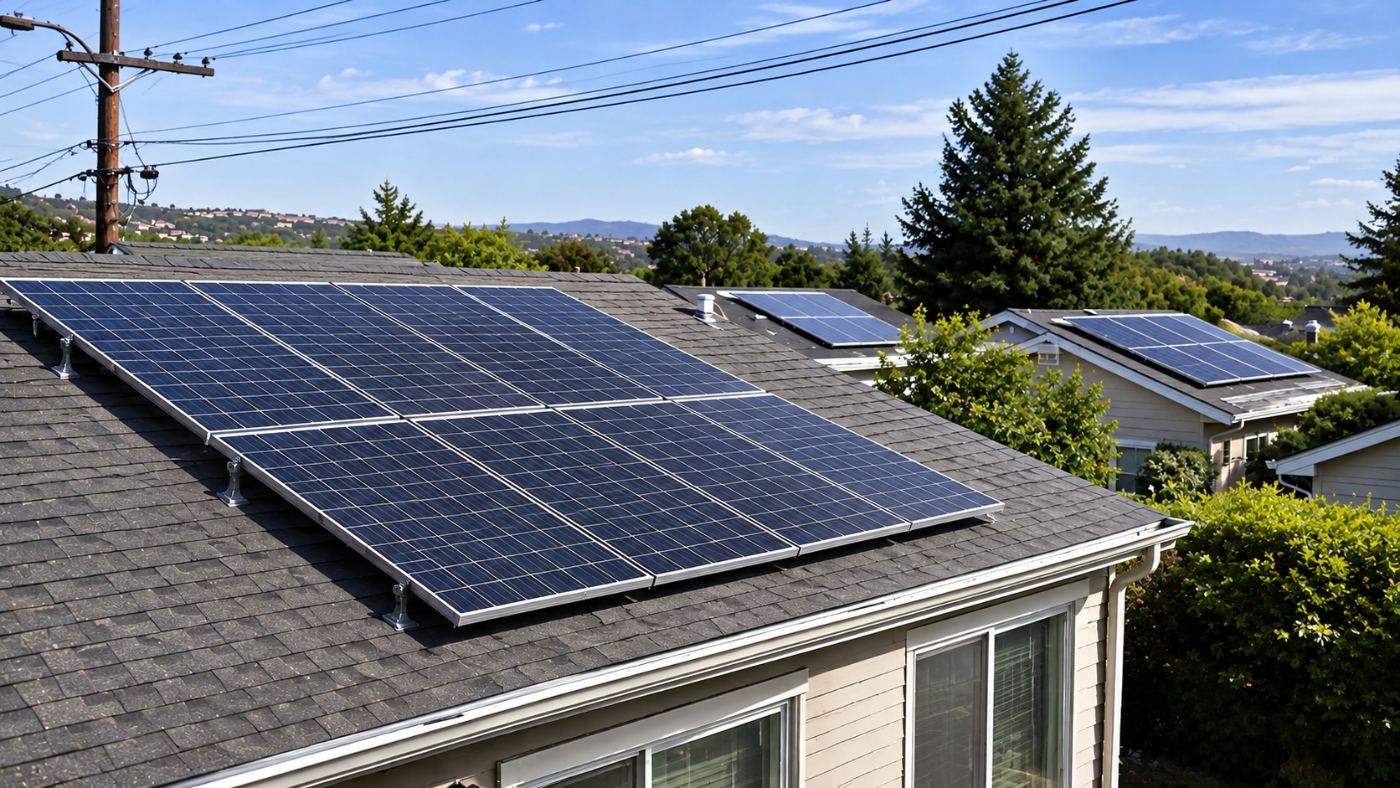
Donald Trump's administration has been caught illegally canceling a $7 billion federal solar energy program designed to lower electricity bills for low-income Americans, and despite multiple federal court rulings against the decision, the money remains frozen.
The controversy centers on the Environmental Protection Agency and its administrator, Lee Zeldin, who moved to dismantle the Biden-era Solar for All initiative even though Congress had already approved the funding.
The program was intended to help nearly one million American households access affordable solar electricity, reduce dependence on traditional energy sources, and create thousands of clean-energy jobs.
Instead, the Trump administration canceled the initiative, triggering lawsuits from states, nonprofit organizations, and solar energy developers.
Now, two federal judges have ruled that the EPA's actions were unlawful.
A $7 Billion Program for Working Americans
Congress established Solar for All through the Inflation Reduction Act of 2022, allocating $7 billion to expand solar energy access in low-income and disadvantaged communities.
The program awarded grants to 60 recipients, including state governments, Tribal organizations, and nonprofit groups.
Massachusetts alone was awarded $156 million, with state officials projecting that the investment could reduce electricity costs by approximately 20 percent for 31,000 households while supporting 2,800 clean-energy jobs.
Other states were preparing similar projects intended to reduce household energy expenses and expand renewable electricity production.
These were not hypothetical proposals. The federal government had already awarded the grants, and recipients were preparing to implement their projects.
Then Donald Trump returned to the White House.
Trump Administration Pulls the Plug
Shortly after Trump's second inauguration, his administration froze Solar for All funding.
In July 2025, Republicans enacted sweeping tax and spending legislation that terminated the program's underlying authorization while preserving previously obligated grants.
Zeldin nevertheless argued that the legislation eliminated the EPA's authority to administer those grants.
In August 2025, the agency formally canceled Solar for All, describing the initiative as a wasteful government program.
Zeldin defended the decision as responsible stewardship of taxpayer money.
But the courts disagreed.
In September 2026, a federal judge in Rhode Island ruled that the EPA exceeded its legal authority by canceling the grants.
Days later, a federal judge in Washington, D.C., reached a similar conclusion, finding the agency's termination unlawful.
Despite those decisions, billions of dollars remain unavailable to the organizations and communities that were supposed to receive them.
The EPA has indicated that it is reviewing its legal options, including a possible appeal.
Americans Pay More While Trump Blocks Relief
The administration's actions come at a particularly difficult time for American households.
Electricity costs have become an increasingly serious financial burden, driven by growing energy demand, infrastructure expenses, and other pressures on the nation's power grid.
Meanwhile, Trump has repeatedly promised to reduce energy costs for American families.
Yet his administration has worked to eliminate a program specifically designed to accomplish that objective.
Solar for All would not have solved every problem affecting electricity prices. But it offered targeted assistance to households struggling with utility bills while expanding the supply of renewable energy.
Instead, those families remain caught in a political and legal dispute over money Congress had already committed.
Another Legal Defeat for the Trump Administration
The court decisions represent another example of the Trump administration attempting to exercise authority that federal judges determined it did not possess.
The central issue was not whether the president personally supported solar energy.
It was whether the executive branch could unilaterally terminate grants that Congress had already authorized and awarded.
The courts concluded that the EPA could not lawfully cancel the program in the manner it attempted.
The resulting uncertainty has left states, developers, and community organizations unable to move forward with projects that could provide meaningful financial relief.
Even if the funding is eventually restored, the delays have already postponed potential benefits.
The Political Contradiction
The controversy exposes a fundamental contradiction in Trump's economic agenda.
The president promises cheaper energy while his administration dismantles programs intended to make electricity more affordable.
Republicans routinely criticize government spending on renewable energy, yet they have offered no comparable replacement for the assistance that Solar for All was designed to provide to low-income households.
Following the Republican Party's significant losses in the 2026 midterm elections, the administration's approach to household costs is likely to face even greater scrutiny.
Democrats preparing to take control of Congress have indicated that lowering living expenses and restoring clean-energy investments will be among their priorities.
But the immediate question remains whether the EPA will comply with the court rulings or continue fighting to prevent the money from reaching its intended recipients.
For families struggling to pay their electric bills, the distinction is hardly academic.
Donald Trump promised Americans lower energy costs. His administration illegally canceled a $7 billion program intended to deliver exactly that.