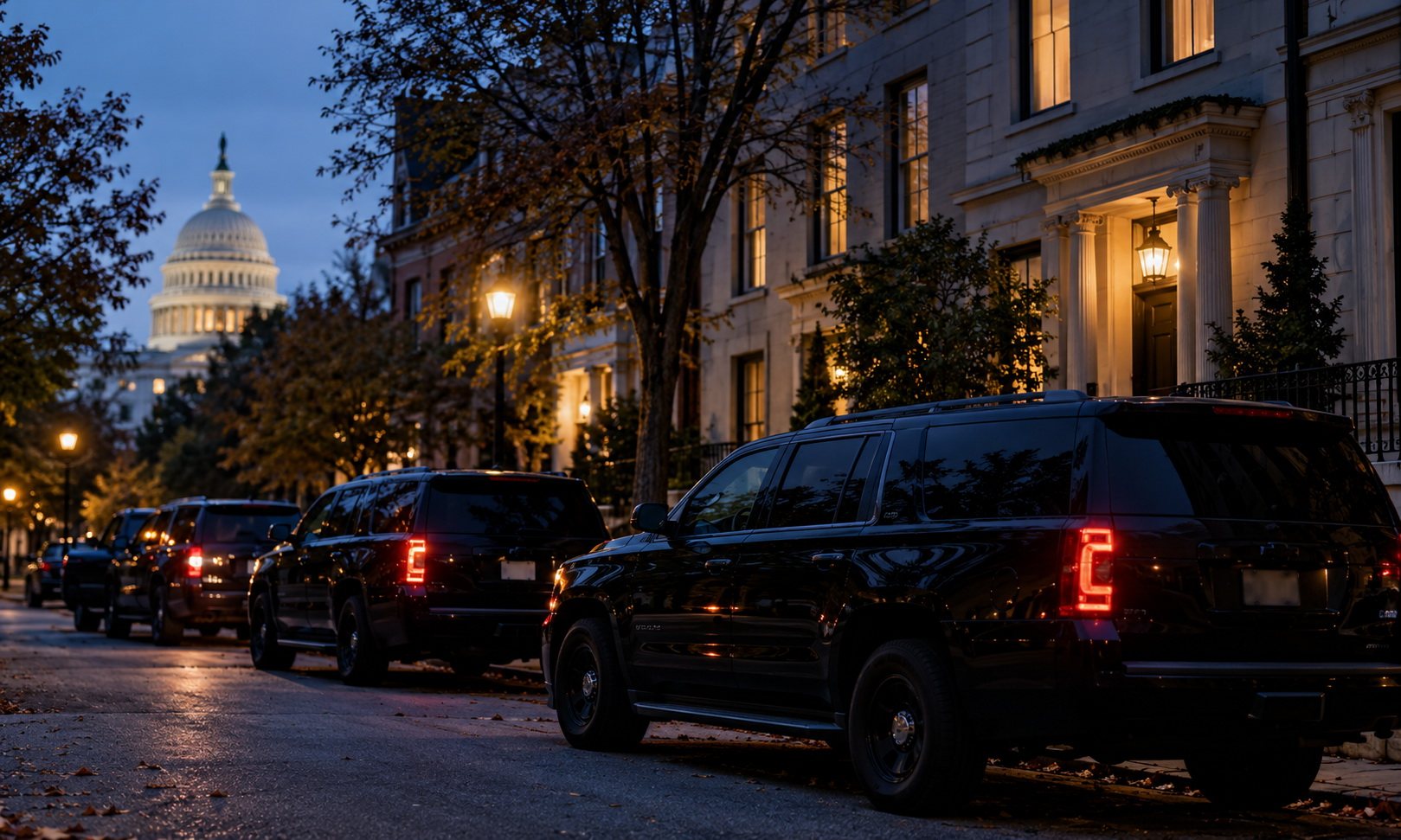
The Trump administration is facing accusations of using federal law enforcement to intimidate political opponents after federal agents conducted a predawn search of Democratic Representative Ilhan Omar's Washington, D.C., home, just three weeks before the November midterm elections.
The October 12 raid, carried out by Homeland Security Investigations agents under a court-authorized warrant, has prompted questions about political interference, the independence of the Justice Department, and whether the administration is disregarding longstanding safeguards intended to prevent federal investigations from influencing elections.
At the center of the controversy is President Donald Trump's years-long campaign of public attacks against Omar, a Somali-born American citizen who has repeatedly challenged his policies and rhetoric.
A Federal Raid Weeks Before an Election
Federal agents arrived at Omar's Washington residence early Monday morning and conducted a search connected to an ongoing criminal investigation.
The Justice Department confirmed that the operation was authorized by a federal judge but provided limited public information about the underlying allegations.
According to reporting by CBS News and other outlets, investigators are examining decades-old immigration paperwork involving Omar and her late father, including possible false statements made during the family's immigration and naturalization process.
Omar immigrated to the United States from Somalia in 1995 and became an American citizen in 2000.
The congresswoman has denied wrongdoing, and no criminal charges against her have been publicly announced.
The timing of the search has become a central issue. With the November 3 election approaching, critics are questioning why federal authorities chose to execute such a highly visible operation against a sitting member of Congress when the records under examination reportedly date back decades.
Trump's Long History of Targeting Omar
The raid did not occur in a political vacuum.
For years, Trump has singled out Omar for criticism, frequently attacking her Somali heritage, questioning her loyalty to the United States, and suggesting that she should leave the country.
His administration has also publicly discussed investigations into her immigration history.
In September, Homeland Security Secretary Markwayne Mullin acknowledged an ongoing investigation and suggested that further action was coming.
Following the raid, Trump denied personally directing the operation.
He told reporters that he had nothing to do with the search and that the investigation was a Justice Department matter.
Nevertheless, Trump continued attacking Omar publicly, including criticizing her Somali origins at a political rally after the search.
The president's previous statements, combined with the timing of the operation, have intensified demands for an explanation of how and why the investigation proceeded.
Omar Calls the Raid Political Intimidation
Omar has accused the administration of using federal investigative powers against a political adversary.
In a public statement following the search, she described the operation as an attempt to target political enemies and weaponize federal law enforcement.
She also pointed to Trump's longstanding attacks against her, characterizing the raid as another escalation in what she considers a campaign of intimidation.
"I will not be silenced," Omar declared.
Her office has maintained that she committed no wrongdoing and has described the investigation as politically motivated.
Democratic leaders have similarly questioned whether the administration is using federal investigative authority to pursue a prominent critic of the president.
The Justice Department's Election-Year Safeguards
One of the most troubling questions concerns the Justice Department's longstanding practice of avoiding overt investigative actions involving political candidates shortly before an election.
Often referred to as the 60-day rule, this informal practice is intended to protect elections from the appearance or reality of politically motivated prosecutions.
It is not a statutory prohibition, and exceptions can arise when urgent investigative circumstances justify action.
Nevertheless, the principle has historically served as an important safeguard against the misuse of federal law enforcement.
The search of Omar's home occurred only 22 days before Election Day.
Justice Department officials have defended the operation, emphasizing that the warrant received judicial authorization and that department policy does not require investigators to suspend legitimate cases during election season.
Officials have also denied that the timing was intended to influence the election.
But former federal prosecutors and legal observers have questioned why an investigation involving decades-old immigration records required such a public action so close to voting.
A judge's approval of a search warrant establishes a legal basis for a search. It does not, by itself, resolve questions about whether the timing or broader investigative decisions were influenced by political considerations.
Questions About Political Interference
The controversy extends beyond Omar's individual case.
The Justice Department possesses extraordinary powers, including the authority to obtain warrants, seize evidence, compel testimony, and pursue criminal prosecutions.
Those powers are supposed to operate independently of partisan political interests.
Critics of the Trump administration argue that the search raises concerns about what happens when a president repeatedly identifies political opponents as targets of suspicion while federal investigators pursue cases involving those same individuals.
Some legal commentators have also raised questions about whether political considerations surrounding the operation warrant review under federal restrictions on partisan activity by government employees.
No public finding has established that the raid violated the Hatch Act or that Trump personally ordered the search.
The administration maintains that investigators are pursuing a legitimate criminal inquiry.
Nevertheless, the combination of Trump's public hostility toward Omar, advance statements by administration officials about an investigation, and the operation's proximity to Election Day has made the case a test of the Justice Department's political independence.
An Investigation With Broader Consequences
The allegations involving Omar's immigration history remain unresolved.
Whether investigators ultimately establish evidence of criminal wrongdoing is a separate question from whether the administration handled the investigation appropriately.
That distinction matters.
Federal law enforcement must be able to investigate credible allegations, including those involving elected officials. But the government must also demonstrate that its investigative powers are not being used to punish political dissent or interfere with democratic elections.
For now, the administration has offered limited public details explaining the urgency of the October 12 search.
Omar remains a sitting member of Congress and an American citizen, and she has vowed to continue speaking out.
With the midterm elections approaching, the controversy has placed renewed attention on a fundamental question: Can the Justice Department maintain its independence when the president has repeatedly and publicly targeted the individual under investigation?
The answer will depend not on political accusations alone, but on evidence, transparency, and whether federal officials can demonstrate that their decisions were guided by law rather than partisan interests.