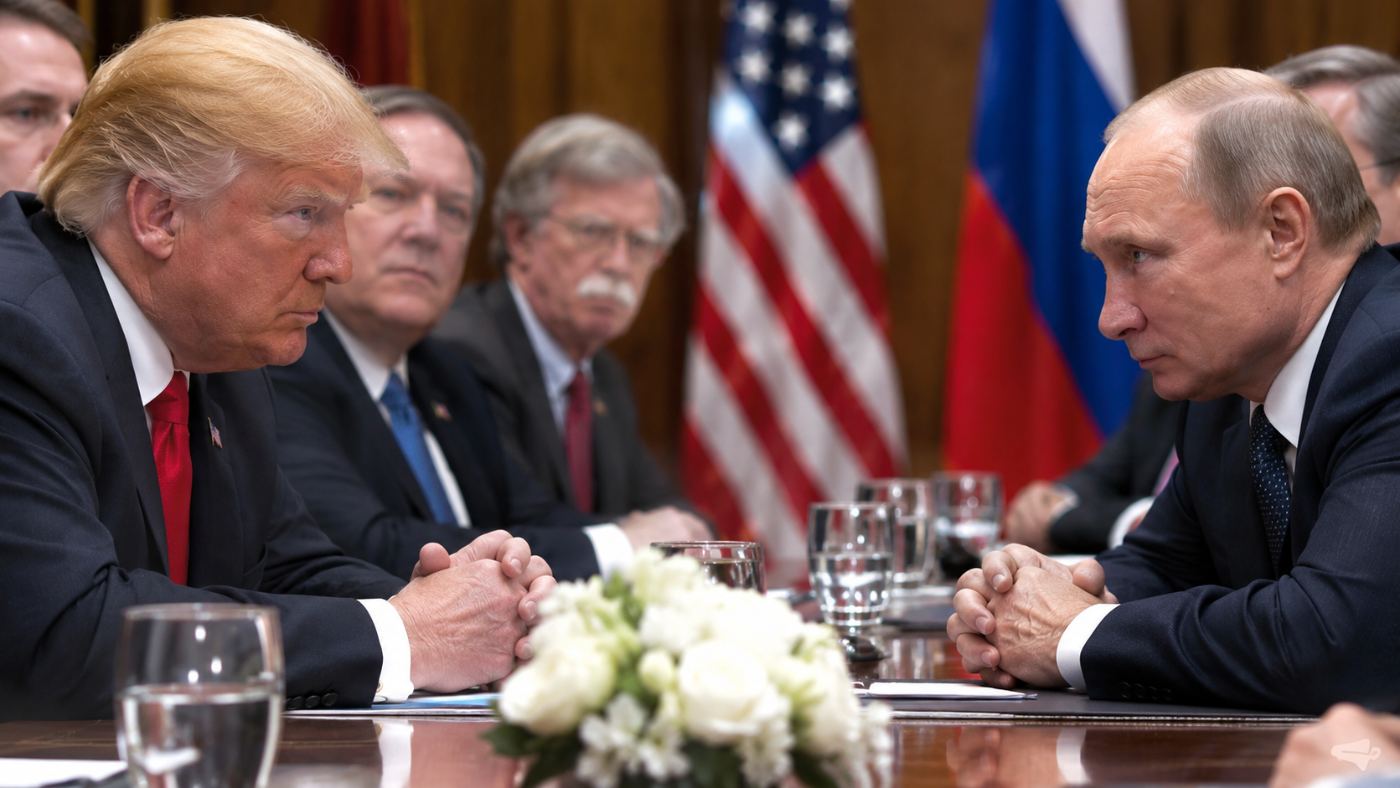
President Donald Trump abruptly canceled a scheduled meeting with Russian President Vladimir Putin on November 29, 2018, just hours after his former personal attorney, Michael Cohen, pleaded guilty to lying to Congress about a proposed Trump Tower development in Moscow.
The sudden cancellation came during Trump's flight to Argentina for the G20 summit, where the two presidents had been expected to hold high-level discussions.
Trump cited Russia's recent seizure of Ukrainian naval vessels and sailors as the reason for canceling the meeting.
However, the timing attracted considerable attention because Cohen's guilty plea had introduced new evidence about Trump's business interests in Russia during the 2016 presidential campaign.
Only a short time before departing Washington, Trump had told reporters that he still expected to meet with Putin.
He described the proposed meeting as an opportunity for productive discussions and indicated that he would review additional information about the confrontation between Russian and Ukrainian forces during his flight.
Less than an hour later, Trump reversed course.
Writing on Twitter from Air Force One, he announced that the meeting would be canceled because Russia had not returned the Ukrainian ships and sailors it had seized.
The confrontation occurred on November 25 near the Kerch Strait, which connects the Black Sea and the Sea of Azov.
Russian forces fired upon and seized three Ukrainian naval vessels, detaining 24 sailors.
The incident sharply escalated tensions between Russia and Ukraine, which had been in conflict since Russia's 2014 annexation of Crimea and its support for separatist forces in eastern Ukraine.
American and European officials condemned Russia's actions and called for the release of the vessels and their crews.
Trump's decision to cancel the meeting was therefore consistent with a legitimate foreign-policy concern.
White House Press Secretary Sarah Huckabee Sanders explained that Trump had consulted senior national security officials, including Secretary of State Mike Pompeo, National Security Adviser John Bolton, and White House Chief of Staff John Kelly.
The administration maintained that the decision was based on Russia's actions against Ukraine.
Nevertheless, the cancellation occurred during a particularly sensitive moment for Trump.
Earlier that morning, Cohen had appeared in federal court in Manhattan and admitted that he had lied to congressional investigators about negotiations for a Trump-branded skyscraper in Moscow.
Cohen had previously claimed that discussions ended in January 2016.
His guilty plea established that negotiations continued until at least June 2016, when Trump had effectively secured the Republican presidential nomination.
The revelation contradicted the earlier account of Trump's Russian business interests during the campaign.
Cohen also acknowledged contacts with Russian officials and discussions involving Trump and members of the Trump Organization.
The proposed Moscow development was never completed, and pursuing the project was not itself illegal.
However, the negotiations raised questions about Trump's public statements distancing himself from Russian business interests while seeking the presidency.
The guilty plea also placed additional attention on Special Counsel Robert Mueller's investigation into Russian interference in the 2016 election.
A meeting between Trump and Putin immediately following Cohen's admissions would almost certainly have attracted questions about the president's business relationships and the ongoing investigation.
The coincidence of the two developments fueled speculation about whether the Russia investigation had influenced Trump's decision.
No publicly established evidence demonstrated that Cohen's guilty plea caused the cancellation.
The White House consistently attributed the decision to Russia's military actions against Ukraine.
The controversy also revived memories of Trump's previous summit with Putin in Helsinki, Finland, on July 16, 2018.
During a joint press conference, Trump appeared to give considerable weight to Putin's denial of Russian election interference, despite the conclusions of American intelligence agencies.
His remarks generated bipartisan criticism in Washington.
Trump subsequently attempted to clarify his statements, but the Helsinki summit remained a significant source of controversy surrounding his approach to Russia.
The planned Argentina meeting would have provided another opportunity for the two leaders to discuss international security, arms control, and their countries' increasingly strained relationship.
Instead, Trump's cancellation left the Kremlin adjusting its schedule.
Russian officials initially indicated that they had not received formal confirmation of the cancellation.
Kremlin spokesman Dmitry Peskov suggested that Putin could use the newly available time for other meetings during the summit.
Ukrainian President Petro Poroshenko welcomed Trump's decision, viewing it as an important demonstration of international opposition to Russia's actions.
The episode illustrated the competing pressures facing the Trump administration.
On one side was a genuine international crisis involving Russian military aggression against Ukraine.
On the other was an expanding federal investigation that had just produced new revelations about Trump's business dealings in Russia.
The two developments converged on the same day, creating an unusually complicated diplomatic situation.
The cancellation also highlighted the unpredictable nature of Trump's public communications.
Within approximately an hour, the president moved from publicly anticipating a meeting with Putin to announcing that it would not take place.
The reversal followed consultations with senior advisers, but its abrupt announcement through social media created uncertainty surrounding a major international diplomatic engagement.
For Trump, the developments surrounding the G20 summit demonstrated how difficult it had become to separate his administration's foreign-policy decisions from the continuing investigation into his campaign.
Cohen's guilty plea did not establish that Trump had coordinated with Russia's election interference operation.
It did establish that negotiations for a potentially lucrative Moscow development continued during the presidential campaign, contrary to Cohen's earlier congressional testimony.
Those revelations intensified scrutiny of Trump's relationship with Russia at precisely the moment he was preparing for another meeting with Putin.
The events of November 29, 2018, remain significant because they brought together two major controversies of Trump's first presidency: Russian aggression against Ukraine and questions about the president's business relationships with Russia.
Trump publicly attributed his decision to cancel the meeting to the seizure of Ukrainian vessels and sailors, and the available evidence does not establish an alternative motive.
Nevertheless, the extraordinary timing ensured that the cancellation became part of the broader historical record surrounding the Mueller investigation and Trump's relationship with Vladimir Putin.