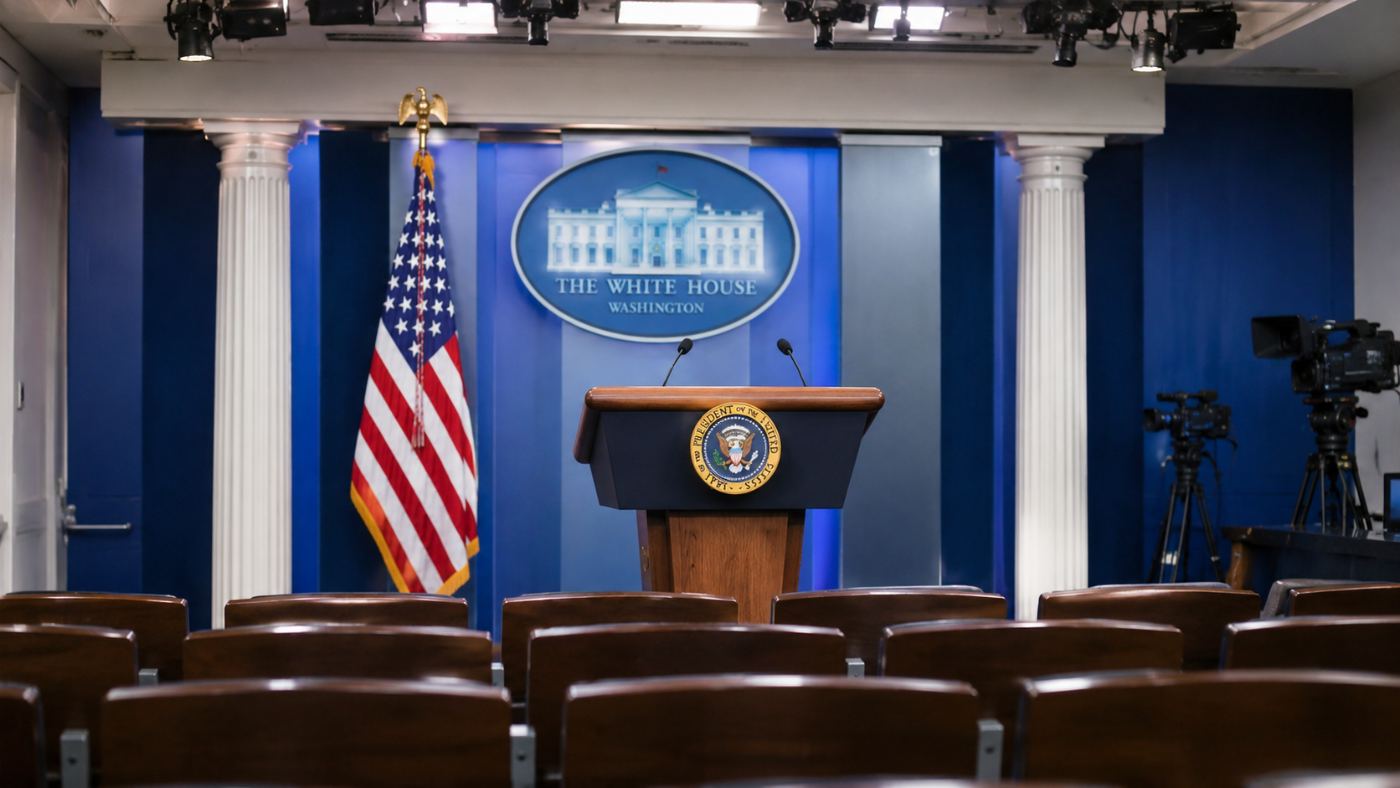
The United States is navigating the aftermath of a historic midterm election, an ongoing military conflict with Iran, and significant upheaval inside the Trump administration.
Yet the White House has been operating without an official press secretary for more than three weeks.
Instead of announcing a permanent replacement, President Donald Trump spent the weekend joking about giving the job to UFC chief executive Dana White, even sharing an animated video depicting professional fighters attacking journalists inside the White House briefing room.
The spectacle raises questions about how the administration communicates with the American public.
Two Press Secretaries Gone in Two Months
Karoline Leavitt, who served as Trump's press secretary beginning in January 2025, announced her resignation in August 2026 following the birth of her second child.
Leavitt said she wanted to spend more time with her family and subsequently joined Fox News as a contributor.
Trump waited until October 9 to announce her replacement, conservative commentator Katie Zacharia, who previously worked for Trump Media & Technology Group.
Zacharia's tenure lasted just five days.
Following difficulties during press appearances, she departed the position on October 16. White House officials said she would transition into another administration role.
Trump publicly acknowledged that he had encouraged Zacharia to reconsider whether she wanted the demanding position.
Since her departure, the White House has not named another permanent press secretary.
Trump Suggests a UFC Fighter Could Handle the Press
On November 7, Trump announced on Truth Social that he had offered the position to longtime friend Dana White, the chief executive of the Ultimate Fighting Championship.
Trump suggested that White could bring several professional fighters to help him deal with reporters.
The president subsequently shared an animated video showing White directing UFC fighters to attack journalists in the White House briefing room.
The video depicted reporters fleeing as the room descended into violence.
By Sunday, Trump insisted the announcement had been a joke.
He told reporters that White was capable of handling the position but that the supposed job offer was not serious.
White was nevertheless scheduled to visit the White House on Monday for what Trump described as unrelated matters.
An Important Position Left Vacant
The White House press secretary traditionally serves as the administration's principal public spokesperson, conducting briefings, answering questions from journalists, and explaining presidential policies.
The position is particularly important during national emergencies, military operations, and periods of political uncertainty.
Although other White House communications officials continue working, the absence of a designated press secretary leaves one of the administration's most visible public-facing positions unfilled.
There is no constitutional requirement that the president appoint a press secretary. Nevertheless, the position has long been an established part of modern presidential administrations.
A White House in Transition
The vacancy comes amid a broader shakeup following the November 3 midterm elections, when Democrats captured control of both chambers of Congress.
Trump has also replaced White House Chief of Staff Susie Wiles with Stephen Miller, a longtime adviser closely associated with the administration's immigration policies.
The changes arrive as Republicans debate their political direction and the administration prepares for two years of divided government.
The press secretary vacancy is therefore more than an ordinary staffing question.
It concerns the administration's ability to communicate consistently with journalists and the public during a consequential period.
Who Speaks for the President?
Trump has frequently bypassed traditional communications channels, relying on social media posts, informal conversations with reporters, and direct public statements.
That approach allows him to communicate without waiting for scheduled briefings, but it does not replace the accountability provided by regular questioning of an administration spokesperson.
For now, the White House briefing room remains without a permanent press secretary.
And while the president jokes about replacing the position with a professional fight promoter, the underlying question remains unanswered:
Who will be responsible for explaining the administration's decisions to the American people?