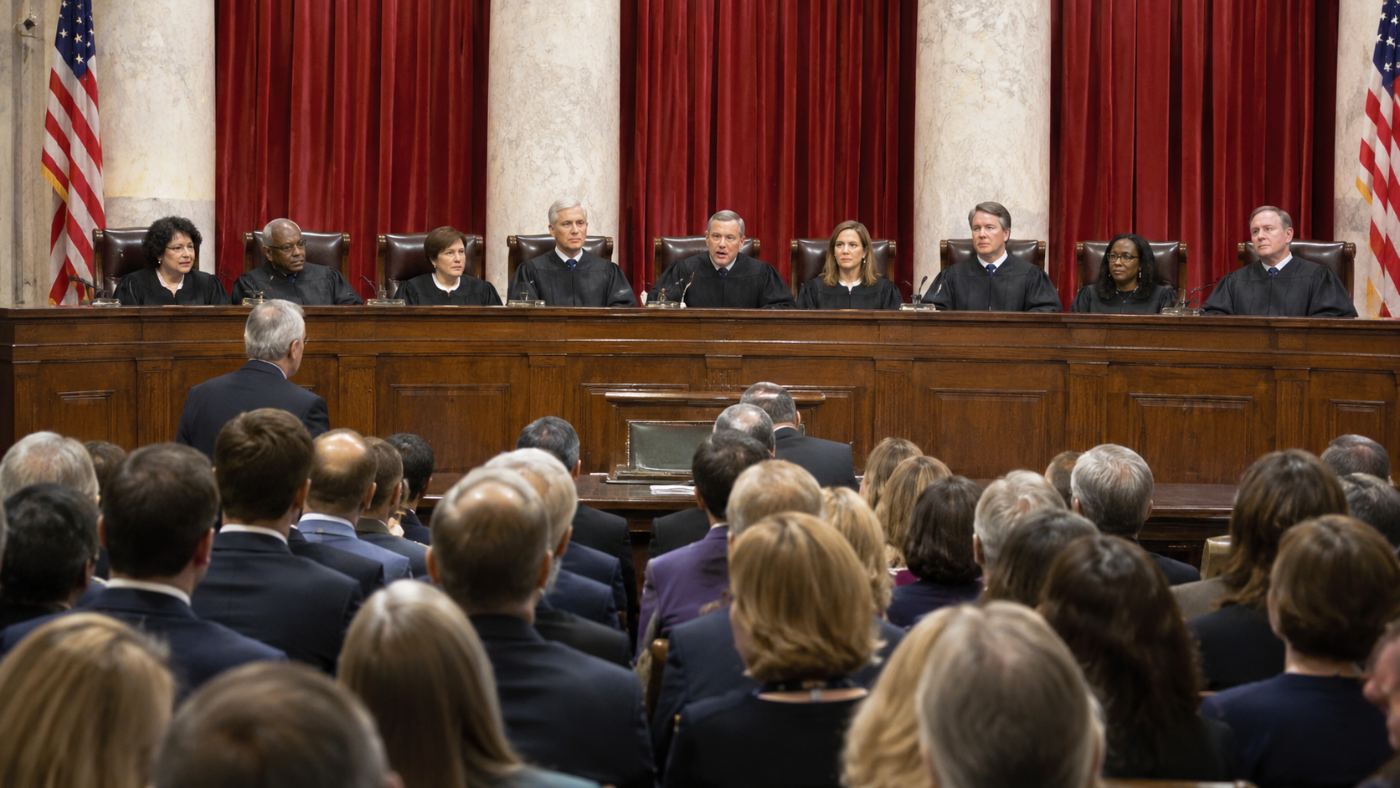
President Donald Trump's campaign to eliminate diversity, equity, and inclusion (DEI) programs suffered a legal setback Monday when the United States Supreme Court refused to hear his administration's appeal involving approximately $59 million in federal research grants.
The decision leaves in place a lower court ruling that found the administration likely violated the First Amendment by canceling research funding based on viewpoints it opposed.
None of the nine Supreme Court justices publicly dissented from the decision.
Trump's DEI Crackdown Reaches University Research
Shortly after returning to the White House in January 2025, Trump signed executive orders directing federal agencies to eliminate programs associated with diversity, equity, and inclusion.
The administration subsequently terminated research grants awarded to University of California researchers, including funding from the National Science Foundation and National Endowment for the Humanities.
Projects affected by the broader funding crackdown included research addressing racial equity in science education and expanding educational opportunities for Indigenous youth.
According to court documents, federal agencies identified some grants for termination through keyword searches involving terms such as diversity, climate change, and gender ideology.
Researchers challenged the cancellations, arguing that the government was punishing them for the subjects they studied and the viewpoints their research was perceived to represent.
Federal Judges Find Constitutional Problems
U.S. District Judge Rita Lin issued a preliminary injunction blocking the termination of certain grants, concluding that the researchers were likely to succeed in demonstrating unconstitutional viewpoint discrimination.
The Ninth Circuit Court of Appeals subsequently upheld the relevant First Amendment protections.
The distinction was significant.
The government generally has considerable authority to establish funding priorities and decide which research programs receive taxpayer support.
However, the appeals court concluded that canceling existing grants because officials disapproved of researchers' perceived viewpoints raised a different constitutional problem.
The Trump administration argued that elected officials must retain authority to redirect federal spending toward their policy priorities.
Its lawyers warned that the lower court's reasoning could restrict future administrations' ability to determine which research projects deserve public funding.
Supreme Court Declines to Intervene
The administration appealed to the Supreme Court, seeking to overturn the lower court's decision.
On November 16, the justices declined to review the case, known as Trump v. Thakur.
Their refusal leaves the preliminary injunction intact, protecting the disputed research funding while litigation continues.
The decision does not constitute a final Supreme Court ruling that Trump's policies are unconstitutional. Rather, it allows the lower court's findings and temporary protections to remain in effect.
The approximately $59 million at issue represents only a portion of the administration's broader research funding reductions.
A Constitutional Limit on Presidential Power
The dispute illustrates an important distinction between changing government priorities and using federal funding decisions to penalize disfavored expression.
Trump's administration maintains that it has authority to stop financing research inconsistent with its policies.
The researchers argue that the First Amendment prevents the government from selectively canceling existing grants because it objects to their viewpoints.
For now, the lower courts' protections remain in place, and the administration's attempt to obtain Supreme Court intervention has failed.
The broader legal battle over federal research funding continues, with potentially significant implications for academic freedom, government spending authority, and the constitutional limits of presidential power.