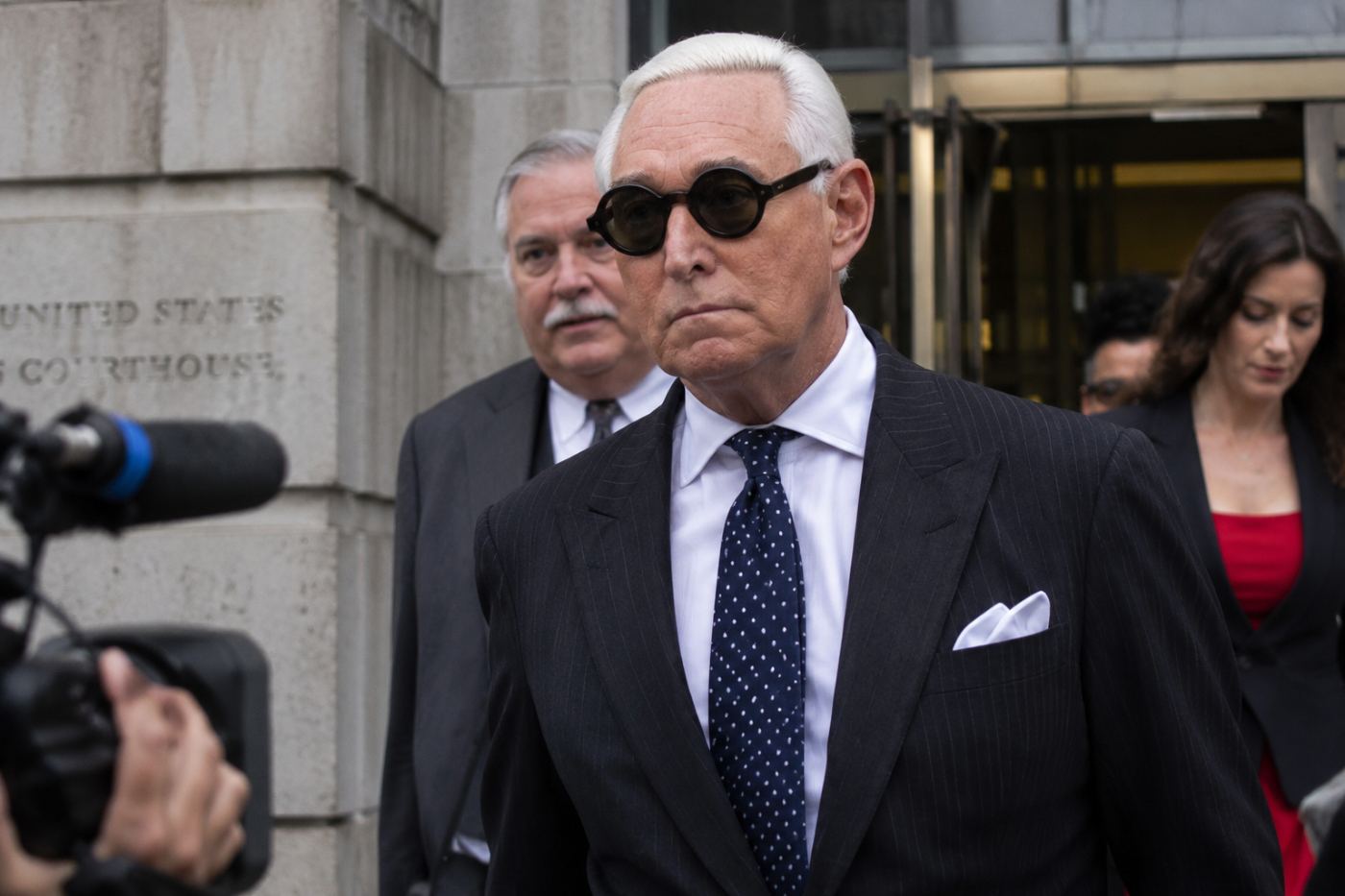
Roger Stone, a longtime friend, political adviser, and outspoken defender of President Donald Trump, was convicted Friday on all seven federal charges stemming from his efforts to obstruct a congressional investigation into Russian interference in the 2016 presidential election.
A federal jury found the 67-year-old Republican operative guilty of five counts of making false statements to Congress, one count of obstructing an official proceeding, and one count of witness tampering.
The verdict represents another significant conviction arising from Special Counsel Robert Mueller's investigation and raises new questions about efforts by Trump's associates to conceal information about contacts involving WikiLeaks.
Seven Charges. Seven Guilty Verdicts.
Stone's conviction followed a trial in U.S. District Court in Washington, where prosecutors presented emails, text messages, and witness testimony contradicting statements he made to the House Intelligence Committee.
The committee was investigating Russian election interference, including the release of Democratic emails stolen by Russian hackers and published by WikiLeaks during the 2016 presidential campaign.
Prosecutors argued that Stone deliberately misled lawmakers about his efforts to obtain information concerning WikiLeaks and its founder, Julian Assange.
Stone had claimed that he possessed an intermediary capable of communicating with Assange.
But evidence presented at trial contradicted his account of those contacts and his communications with Trump campaign officials.
The Witness He Tried to Silence
One of the most damaging elements of the prosecution involved Stone's treatment of radio personality Randy Credico.
Stone had identified Credico as an intermediary to WikiLeaks, but prosecutors established that Stone attempted to pressure him into supporting a false account of their communications.
Evidence showed Stone encouraging Credico to avoid cooperating with investigators and to invoke his Fifth Amendment rights.
Prosecutors also presented threatening messages Stone sent to Credico, including a reference to taking away his therapy dog.
The jury concluded that Stone's conduct constituted witness tampering.
The Trump Campaign Connection
Former Trump campaign officials testified about their interest in WikiLeaks' publication of material damaging to Hillary Clinton.
Steve Bannon, who served as chief executive of Trump's 2016 campaign, testified that Stone was regarded as a potential source of information about WikiLeaks.
Former campaign official Rick Gates also described communications involving Stone and the campaign's interest in forthcoming disclosures.
The evidence illustrated how individuals connected to Trump's political operation sought information about material obtained through Russian hacking.
Stone was not charged with participating in the hacking itself. His convictions concern obstruction, false statements, and witness tampering.
Trump Responds With Accusations
Rather than distancing himself from his longtime associate, Trump responded to the verdict by questioning why several of his political opponents had not faced similar prosecutions.
The president's reaction continued his longstanding criticism of investigations involving his campaign and associates.
Stone has maintained his innocence and pleaded not guilty to every charge.
His defense attorneys challenged the prosecution's interpretation of his communications, but the jury rejected those arguments.
Another Conviction in Trump's Political Orbit
Stone joins a growing list of Trump associates convicted of federal offenses arising from investigations connected to the 2016 election.
The verdict does not establish that Trump committed a crime, nor was the president a defendant in Stone's trial.
Nevertheless, it demonstrates that a longtime presidential confidant provided false information to Congress and attempted to interfere with a witness during an investigation into foreign election interference.
Stone remains free under court-imposed conditions while awaiting sentencing, currently scheduled for February 6, 2020.
He faces the possibility of a substantial prison sentence.
The Cost of Concealing the Truth
Congressional investigations depend on truthful testimony, particularly when lawmakers are examining foreign interference in American elections.
Stone's conviction demonstrates the legal consequences of attempting to obstruct that process.
For a political operative who spent decades cultivating a reputation for aggressive tactics and loyalty to powerful Republican figures, Friday's verdict marks a serious personal and legal setback.
Roger Stone spent years defending Donald Trump. Now a federal jury has determined that he broke the law while obstructing an investigation into the very campaign he helped support.