Donald Trump had defended Saudi Arabia despite intelligence assessments implicating its powerful crown prince in the murder of journalist Jamal Khashoggi.
Now, some of the president's own Republican allies were demanding accountability.
On November 21, 2018, a growing confrontation between Trump and congressional Republicans threatened to produce new sanctions against Saudi Arabia, despite the president's determination to preserve the relationship.
Among those challenging Trump were Senators Lindsey Graham, Bob Corker, Jeff Flake, and Rand Paul.
Their objections exposed a serious disagreement within the Republican Party over whether strategic alliances and lucrative arms deals should outweigh demands for accountability in a journalist's murder.
A Murder and a Presidential Defense
On October 2, 2018, Washington Post columnist Jamal Khashoggi entered the Saudi consulate in Istanbul, Turkey.
He never emerged.
Saudi operatives murdered and dismembered the journalist, who had written critically about Crown Prince Mohammed bin Salman and the kingdom's leadership.
The CIA assessed that the crown prince had ordered the killing, according to contemporary reporting.
Saudi officials denied that he had authorized the operation.
Rather than publicly endorse the intelligence assessment, Trump issued a November 20 statement defending America's partnership with Saudi Arabia.
The president emphasized oil prices, arms purchases, American jobs, and Saudi Arabia's importance in confronting Iran.
He acknowledged the brutality of Khashoggi's murder but questioned whether the crown prince's responsibility could ever be conclusively established.
Even Lindsey Graham Had Enough
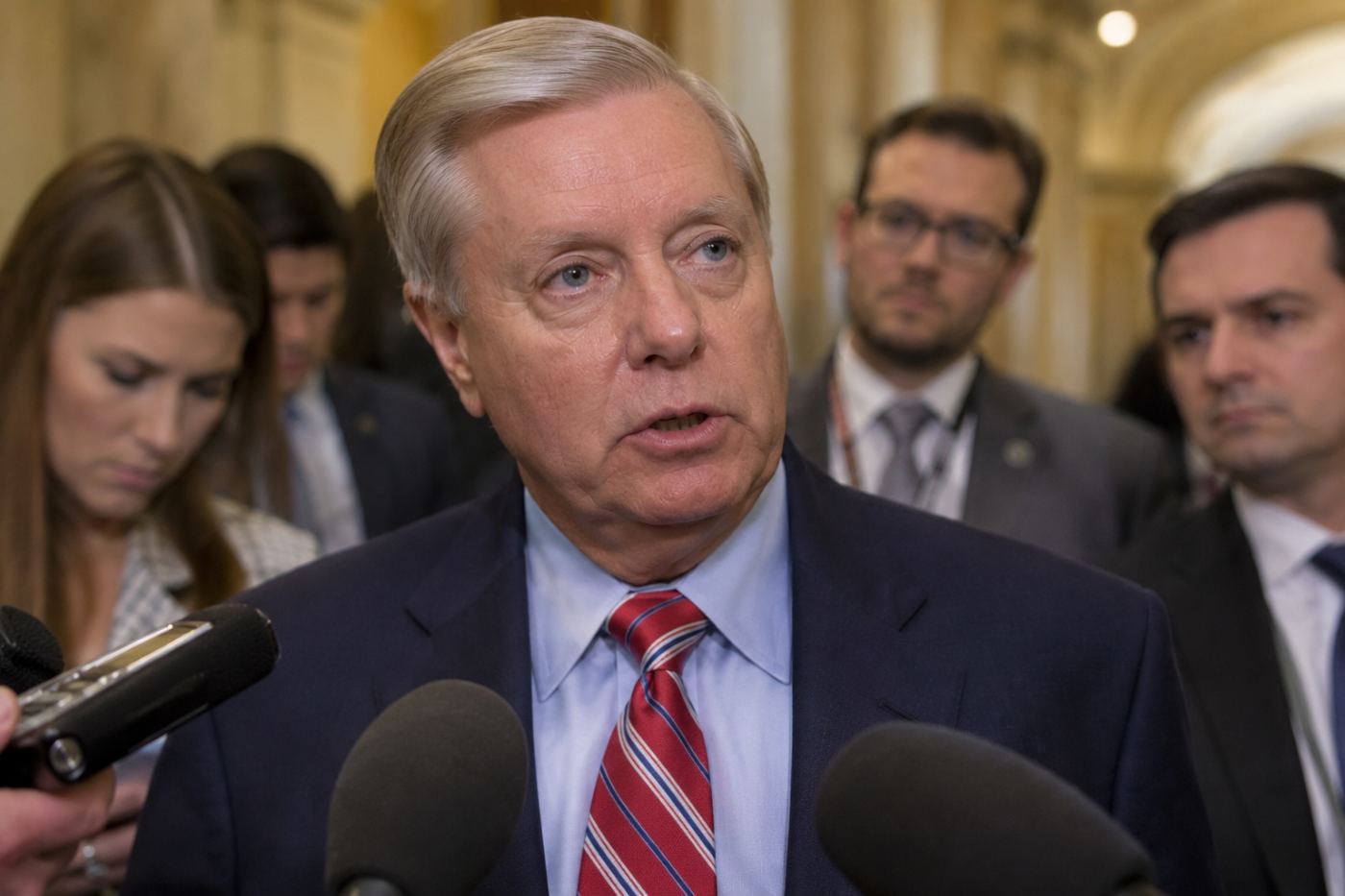
One of the strongest Republican objections came from Senator Lindsey Graham of South Carolina.
Graham was among Trump's most dependable congressional allies, particularly on foreign policy and national security.
But he rejected the administration's approach to Saudi Arabia.
Graham argued that the crown prince's behavior had damaged the American-Saudi relationship and that failing to respond would weaken America's moral standing.
He supported imposing additional sanctions and suggested attaching punitive measures to legislation necessary to keep the federal government funded.
The proposal raised the possibility that Congress could force a confrontation with Trump over Saudi policy.
For a president accustomed to Republican support, Graham's criticism represented a significant public disagreement.
Bob Corker Challenges the White House
Senator Bob Corker, the Republican chairman of the Senate Foreign Relations Committee, was equally critical.
Corker expressed astonishment at Trump's defense of Saudi Arabia and compared the White House statement to public relations work on behalf of the Saudi crown prince.
The criticism went beyond political rhetoric.
Corker joined Democratic Senator Robert Menendez in invoking the Global Magnitsky Human Rights Accountability Act.
Their request sought a formal administration determination concerning the crown prince's responsibility for Khashoggi's killing.
The move was designed to compel the administration to address evidence of human rights violations rather than leave the matter to presidential statements.
Republicans Consider Acting Without Trump
The controversy exposed divisions within the Republican Party over America's relationship with Saudi Arabia.
Senators Jeff Flake and Rand Paul also criticized the administration's response.
Other lawmakers considered sanctions, restrictions on weapons transfers, and measures addressing American support for the Saudi-led military campaign in Yemen.
The administration had already imposed sanctions on 17 Saudi individuals connected to Khashoggi's murder.
But critics argued those penalties did not adequately address the intelligence assessment implicating the crown prince.
Trump maintained that preserving the partnership was necessary for American economic and national security interests.
Congressional critics countered that strategic importance should not eliminate accountability.
Trump Thanks Saudi Arabia While Congress Demands Action
The contrast became particularly striking on November 21.
As Republican lawmakers discussed stronger penalties, Trump publicly thanked Saudi Arabia for helping lower oil prices.
The president celebrated falling energy costs while members of his own party questioned whether the administration was doing enough to respond to a journalist's killing.
The disagreement illustrated two competing approaches to American foreign policy.
Trump emphasized the economic and strategic value of the Saudi relationship.
His congressional critics emphasized accountability, human rights, and the consequences of appearing to excuse abuses by an important ally.
A Republican Rebellion Over Accountability
The confrontation did not immediately produce the sweeping sanctions some lawmakers wanted.
But it demonstrated that opposition to Trump's handling of the Khashoggi murder extended beyond Democrats and traditional administration critics.
Even Republicans who generally supported the president were prepared to challenge his approach.
The dispute would continue into December, when the Senate voted to advance legislation addressing American military support for the Saudi-led war in Yemen.
On November 21, 2018, the divide was already unmistakable.
Trump wanted to preserve his relationship with Saudi Arabia.
Several prominent Republicans wanted stronger consequences for the killing of Jamal Khashoggi.
And the president's defense of the kingdom had created a confrontation with members of his own party over the limits of American loyalty to a powerful foreign ally.