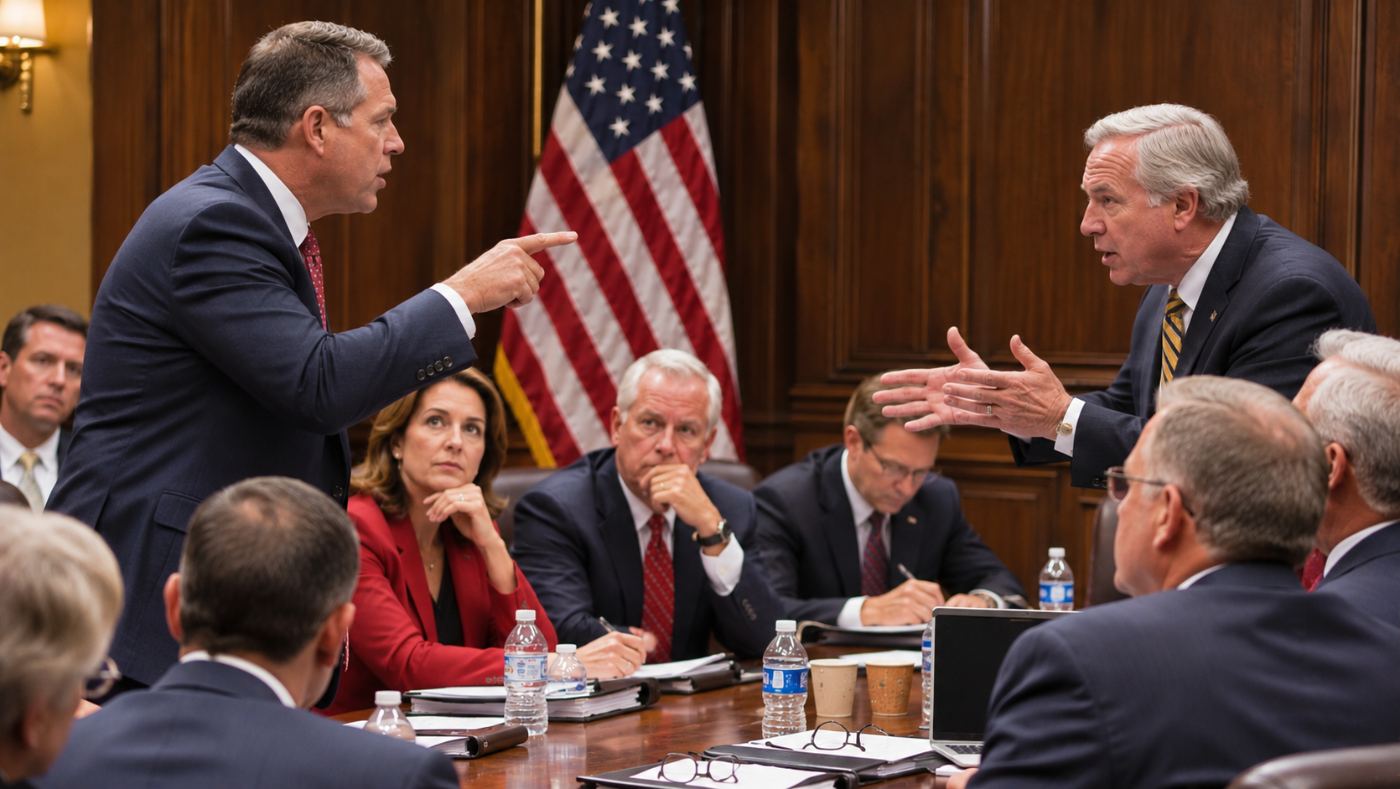
The Republican Party is confronting a growing internal struggle following its sweeping defeat in the 2026 midterm elections, with disagreements emerging over President Donald Trump's leadership, economic policies, the war with Iran, and the party's future.
After years of Republicans largely falling in line behind Trump, the election losses have encouraged some party officials to question whether continued loyalty to the president is compatible with rebuilding their congressional strength.
But the divisions extend beyond a simple contest between Trump supporters and opponents.
Many Republicans challenging the party's direction still support Trump's broader political agenda.
Republicans Turn on Their Own Leadership
A leadership fight is developing inside the Republican National Committee, where some members want to replace Chairman Joe Gruters, Trump's preferred party leader.
Kentucky Republican KC Crosbie has launched a challenge, arguing that the organization must confront what went wrong during the midterms.
Critics are demanding greater accountability for campaign spending and electoral strategy.
Trump's allies are defending Gruters, while the White House has reportedly pressured committee members to support the existing leadership.
The dispute represents an unusual challenge to Trump's influence over the Republican Party's national organization.
Candidates Were Already Distancing Themselves
The divisions did not begin on Election Day.
An October Reuters investigation found that Republican candidates in 41 of 62 competitive congressional races had distanced themselves from Trump on particular policies or reduced their public association with him.
The Iran war emerged as a major source of disagreement.
Some Republican candidates opposed continued military involvement, while others criticized the economic consequences of the conflict.
The administration defended its military strategy, but the disagreements exposed tensions within a party whose leadership had generally supported Trump's decisions.
The House and Senate Take Different Paths
Following the election, congressional Republicans selected leaders reflecting different approaches.
House Republicans elevated Trump ally Jim Jordan, signaling continued support for the president's political style.
Senate Republicans rallied behind John Thune, whose relationship with Trump has been more complicated.
The contrasting leadership choices illustrate the competing pressures facing Republican lawmakers.
Some believe maintaining Trump's political coalition remains essential.
Others argue that the party must address the concerns of suburban voters, younger Americans, and independents who moved away from Republican candidates.
The Battle for 2028 Begins
The question of who succeeds Trump is becoming increasingly important.
Vice President JD Vance remains closely associated with the MAGA movement but has publicly blamed the Iran war for Republican losses.
Florida Governor Ron DeSantis has criticized the conflict and warned about the scale of the party's electoral defeat.
Senator Ted Cruz is also discussing another presidential campaign, while Secretary of State Marco Rubio remains a subject of speculation.
These potential candidates represent overlapping conservative constituencies rather than two clearly separated political parties.
Trump has not endorsed a successor.
A Party Divided Over Its Future
Republicans face competing explanations for their defeat.
Some blame economic dissatisfaction, rising living costs, and the Iran war.
Others argue that Republicans failed to communicate their accomplishments or adequately respond to voter concerns.
Trump's supporters maintain that his agenda remains central to the party's identity.
Critics within the GOP increasingly question whether the party can address its electoral problems without reconsidering some of his policies and leadership decisions.
The Republican Party has not formally split, and Trump retains substantial influence among its elected officials and voters.
Nevertheless, the midterm results have opened disagreements that were previously less visible.
The central question facing Republicans is whether they can reconcile loyalty to Trump's political movement with demands for a different approach after the 2026 defeat.