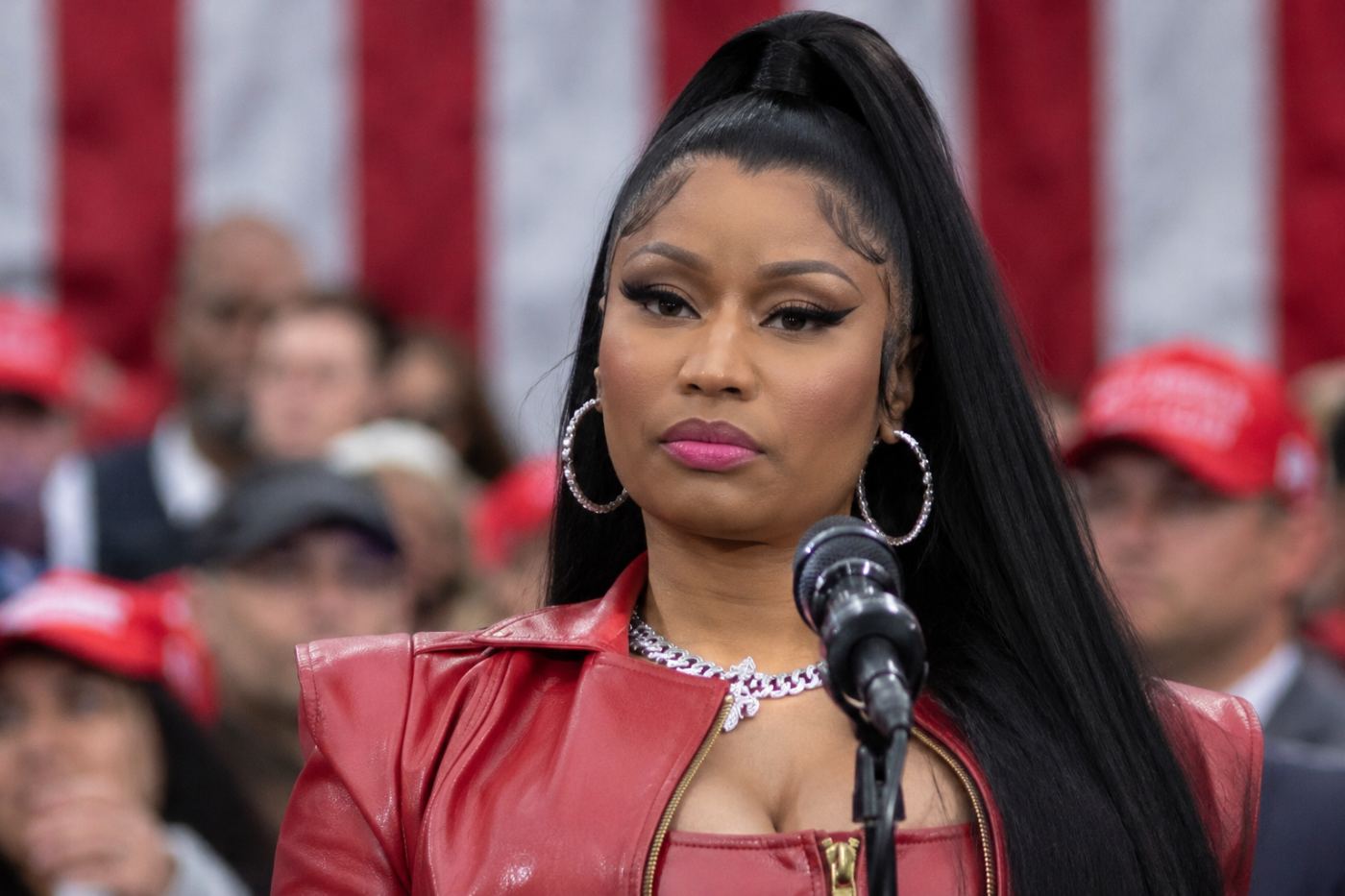
Rapper Nicki Minaj spent months enthusiastically embracing President Donald Trump, promoting Republican candidates, and encouraging her millions of followers to support the GOP in the 2026 midterm elections.
Unfortunately for Minaj and the president, voters had other plans.
Following Tuesday's sweeping Democratic victories, the Grammy-nominated entertainer found herself facing widespread online ridicule as the Republican candidates she had publicly championed suffered embarrassing defeats.
Minaj had emerged as one of Trump's most recognizable celebrity supporters, appearing alongside the president at campaign events, praising his leadership, and urging young Americans to vote Republican.
Her political transformation was particularly striking given her previous criticism of Trump's immigration policies during his first administration.
But by 2026, Minaj had become an enthusiastic advocate for the president, publicly describing herself as his biggest fan and promising to support Republican candidates.
She even traveled aboard Air Force One with Trump to Michigan, where the pair campaigned for Republican Senate candidate Mike Rogers.
During the campaign appearance, Minaj enthusiastically encouraged the crowd to support Trump and Republican candidates.
Rogers subsequently lost to Democrat Abdul El-Sayed by more than seven percentage points.
Michigan Republican gubernatorial candidate John James, another candidate promoted during the campaign, also lost to Democrat Jocelyn Benson.
The defeats were part of a much larger political disaster for Republicans, who lost control of both chambers of Congress as Democrats captured seats in states previously considered reliably Republican.
For Minaj, the results triggered a wave of mockery across social media.
Critics questioned whether her high-profile political endorsements had accomplished anything beyond alienating portions of her fan base.
Others suggested that her enthusiastic embrace of Trump had placed her on the losing side of a historic political shift.
The backlash was amplified by another controversy involving an unlikely figure: Chucky, the fictional killer doll from the popular horror franchise.
During the campaign, Minaj shared an AI-generated image depicting Chucky wearing a Republican-themed button encouraging people to vote red.
The image attracted the attention of filmmaker Don Mancini, the creator of the Child's Play franchise.
Mancini publicly rejected Minaj's appropriation of the character for Republican political messaging, criticizing her use of artificial intelligence and declaring that Chucky belonged to the Democratic electoral wave.
The exchange added another layer of embarrassment to an already difficult week.
There was also considerable irony surrounding Minaj's participation in the election.
Despite urging Americans to vote Republican, Minaj has publicly acknowledged that she is not a United States citizen and therefore cannot vote in federal elections herself.
The Trinidad-born entertainer has discussed pursuing American citizenship, but her inability to participate directly in the election became another target for online critics.
Minaj's relationship with Trump had become increasingly visible throughout the year.
At a January administration event, she enthusiastically praised the president and declared her unwavering support.
During an October campaign appearance in Michigan, Trump made headlines for publicly commenting on Minaj's physical appearance rather than focusing exclusively on the Republican candidates he was supposedly there to support.
The unusual partnership illustrated the administration's growing reliance on celebrity endorsements to generate enthusiasm among younger voters.
But the election results demonstrated the limitations of that strategy.
Millions of social media followers, enthusiastic campaign appearances, and celebrity endorsements could not overcome voter dissatisfaction with the Republican Party.
Importantly, there is no evidence that Minaj's endorsements caused the Republican defeats. The election results reflect a much broader collection of political and economic concerns.
Nevertheless, her highly publicized participation made her an obvious target for critics celebrating Democratic victories.
As the results became clear, Minaj had not publicly addressed the election-night losses, according to reporting published Wednesday.
Her silence contrasted sharply with the enthusiasm she had displayed throughout the campaign.
For months, Minaj had promoted Trump's political movement as a winning cause and encouraged her supporters to embrace Republican leadership.
The American electorate delivered a decidedly different verdict.
And while Nicki Minaj's music career remains firmly established, her latest venture into electoral politics has ended with an uncomfortable lesson: celebrity popularity does not necessarily translate into political influence.