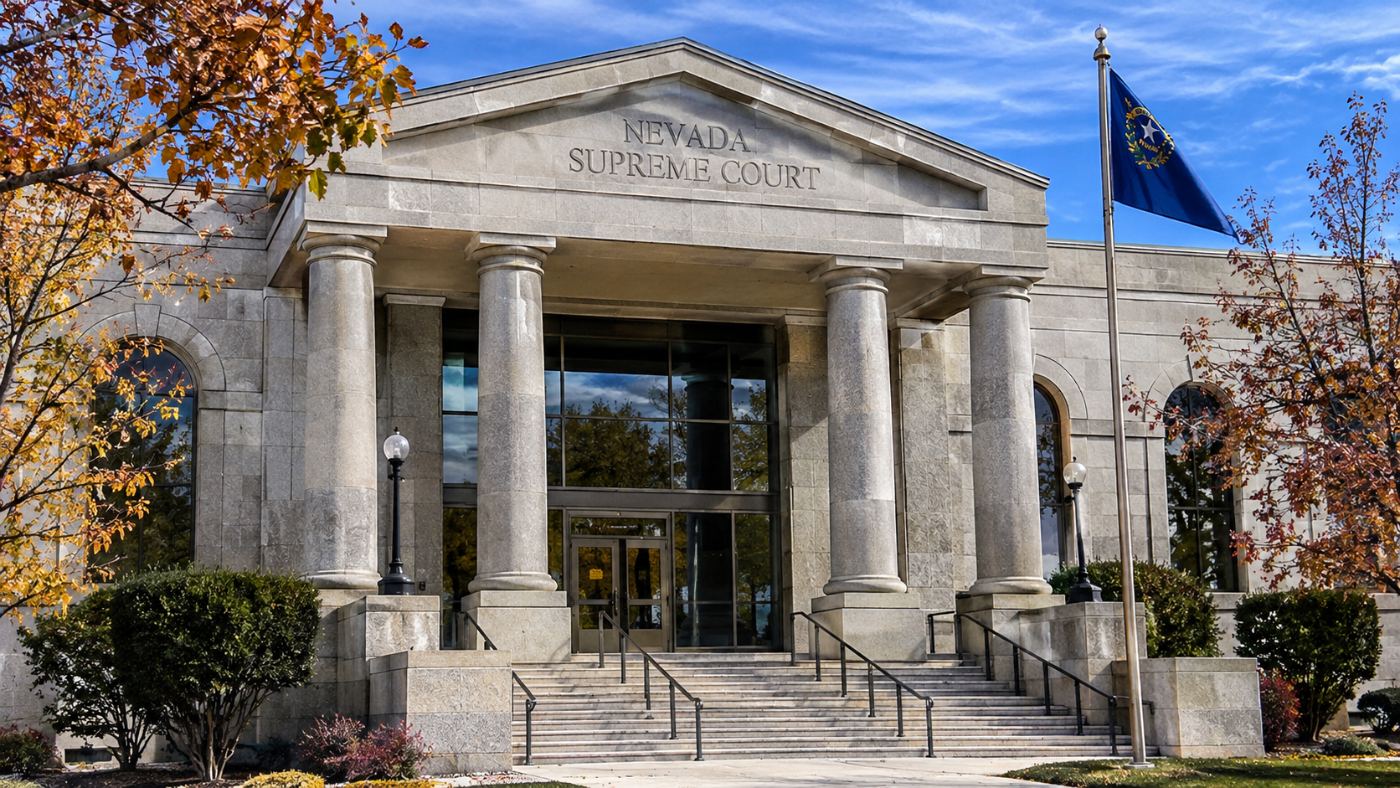
Donald Trump's attempts to challenge the 2020 presidential election encountered another obstacle on November 24, when Nevada officially certified Joe Biden's victory and confirmed that the state's six electoral votes belonged to the Democratic ticket.
The Nevada Supreme Court unanimously approved the statewide election results, confirming Biden's victory over Trump by 33,596 votes.
The certification came as Trump continued alleging widespread election fraud and his allies pursued legal challenges in battleground states.
But Nevada's election officials had completed their count, and the state's highest court formally confirmed the outcome.
Nevada Confirms Biden's Victory
The certified results showed Biden defeating Trump by more than two percentage points:
- Joe Biden: 703,486 votes
- Donald Trump: 669,890 votes
- Biden's margin: 33,596 votes
Biden received approximately 50.06% of the vote, compared with Trump's 47.67%.
Nevada had supported Hillary Clinton in 2016, and Biden's victory continued the state's Democratic presidential voting streak.
The results were certified following Nevada's legally established election procedures.
Unlike states where certification was handled primarily by executive election officials, Nevada required its Supreme Court to canvass and certify the statewide vote.
On November 24, the justices unanimously approved the results.
Trump Refuses to Accept Another Battleground Defeat
Trump had spent the weeks following Election Day repeatedly claiming that the presidential election had been stolen.
His campaign and Republican allies challenged voting procedures in multiple states, including Nevada.
Among the allegations were claims involving mail-in ballots, voter eligibility, signature verification, and election administration.
Republican challengers argued that irregularities had affected the reliability of Nevada's results.
However, those allegations had not been substantiated by evidence sufficient to invalidate Biden's victory.
Nevada election officials defended the state's voting procedures, and the official results continued to show Biden ahead by more than 33,000 votes.
The November 24 certification established the result while legal challenges continued.
Republican Allegations Face Scrutiny
Nevada Republicans had raised numerous allegations about the state's election process.
Some involved claims that ballots had been cast by deceased voters or individuals who no longer lived in Nevada.
Others questioned the accuracy of signature verification and the handling of mail-in ballots.
Election officials disputed the suggestion that such allegations demonstrated widespread fraud.
Nevada law permitted eligible voters to cast ballots under circumstances that could be misunderstood when reviewing voter-registration records, including certain situations involving military personnel and voters temporarily living elsewhere.
Individual allegations required investigation rather than automatic acceptance as evidence of illegal voting.
Trump and his allies continued publicizing their concerns, but the state's official vote count remained unchanged.
Certification Did Not End the Legal Challenges
Nevada's certification did not immediately end Republican efforts to contest the results.
Trump's presidential electors and Republican allies pursued a separate election contest seeking to challenge Biden's victory.
That case proceeded after the November 24 certification.
The distinction is important.
The Supreme Court's certification confirmed the official election results. It was not a judicial ruling resolving every allegation raised in subsequent litigation.
Nevertheless, certification represented an important legal milestone.
The state had completed its canvass and formally identified Biden as the winner.
Another State Moves Forward Without Trump
Nevada's action came during a critical period in the national election aftermath.
On November 23, Michigan certified Biden's victory despite Trump's objections.
On November 24, Pennsylvania also certified its results, confirming Biden's victory by 80,555 votes.
Nevada's certification added another six electoral votes to Biden's officially confirmed state victories.
The developments reinforced the results reported after Election Day.
Trump continued challenging the outcome, but state election systems were proceeding through their established legal processes.
The Electoral College Reality
Nevada's six electoral votes were part of Biden's eventual Electoral College victory.
Biden ultimately received 306 electoral votes, compared with Trump's 232.
The same Electoral College margin had delivered Trump the presidency in 2016, although the candidates and states involved were different.
In 2020, however, Trump refused to acknowledge Biden's victory and continued questioning the legitimacy of the results.
Nevada's certification demonstrated that the formal election process was advancing regardless of the president's public objections.
A State's Decision, Not the President's
The president of the United States does not have authority to simply reject a state's certified election results.
States administer presidential elections under federal and state law, with established procedures for counting ballots, resolving disputes, and appointing electors.
Candidates can challenge election procedures through the courts.
But allegations alone do not overturn certified results.
In Nevada, the official count showed Biden winning by 33,596 votes.
The Nevada Supreme Court unanimously certified that result.
Trump's continued objections did not prevent the state from completing its responsibilities.
November 24: Nevada Makes Its Choice Official
On November 24, 2020, Nevada joined the growing number of battleground states formally confirming Joe Biden's presidential victory.
Trump and his allies continued contesting the election, alleging irregularities and pursuing legal challenges.
But Nevada's official count remained intact.
The state's Supreme Court approved the results, confirming Biden's six electoral votes.
The certification did not settle every pending lawsuit, but it marked another significant step toward completing the presidential election process.
For Trump, it was another state where his objections had failed to prevent certification.
For Nevada's voters, it meant their state's presidential election results had been formally recognized.
The president could continue disputing the outcome.
Nevada had certified it.