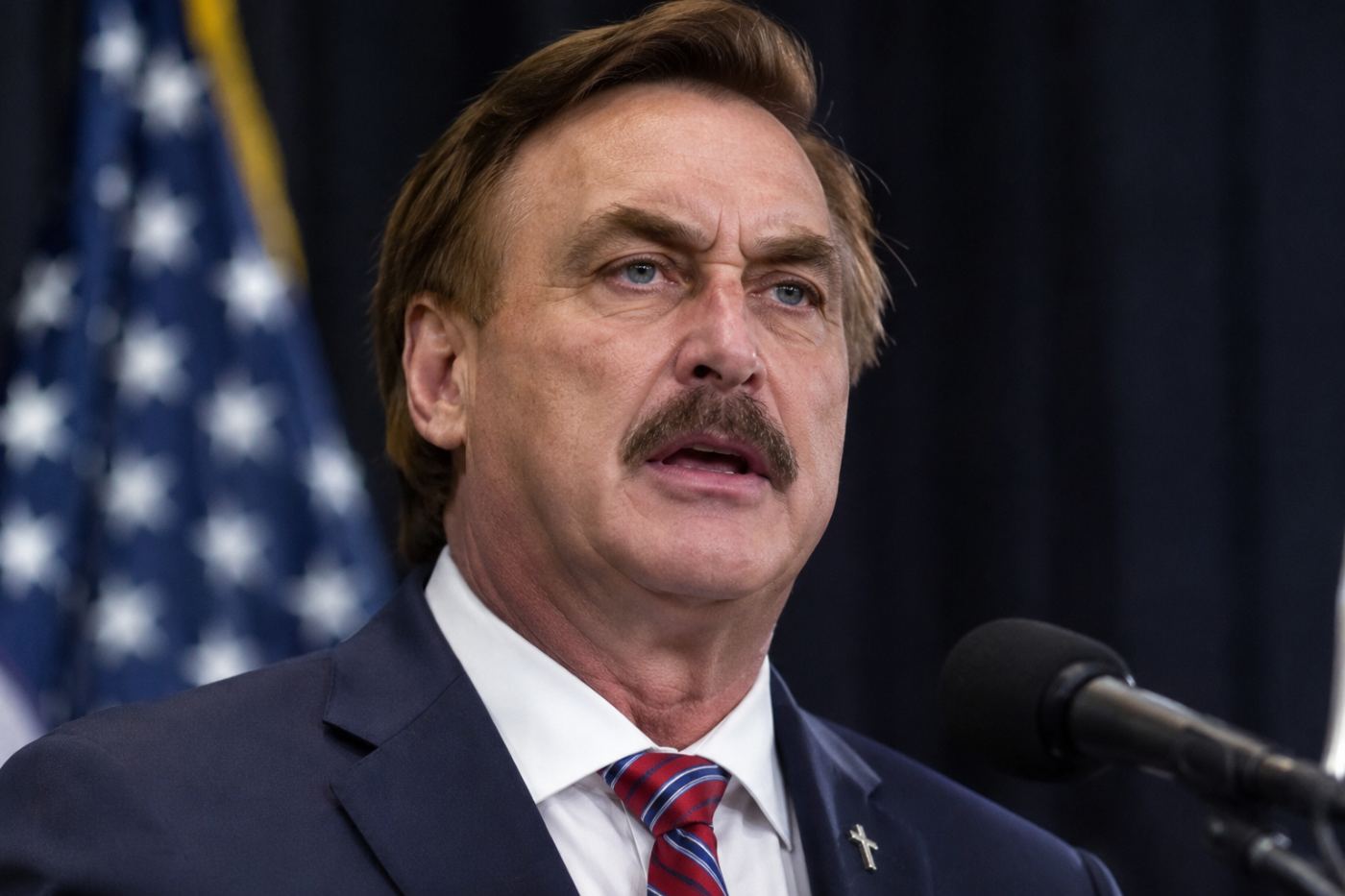
MyPillow founder and longtime Donald Trump ally Mike Lindell is once again alleging widespread election irregularities. Following Democratic victories in the 2026 midterm elections, Lindell is calling for recounts and asking supporters to contribute to his election-related legal fund.
But newly examined financial records raise questions about where previous donations have gone.
According to an investigation published by The Washington Sun, the Lindell Legal Offense Fund paid approximately $4.04 million to Lindell Management LLC, a separate company owned and operated by Lindell, during 2023 and 2024.
Those payments accounted for roughly two-thirds of the nonprofit's spending during that period.
The disclosure adds a financial dimension to Lindell's latest campaign questioning election results.
Follow the Money
The Lindell Legal Offense Fund operates as a 501(c)(4) nonprofit organization and solicits donations to support election investigations and legal action.
Its tax filings show approximately $12 million in contributions during 2023 and 2024.
Over those two years, the organization paid $4.04 million to Lindell Management LLC for management services.
A federal court filing identifies Lindell as the owner and operator of that company.
The nonprofit's tax returns list the company as a contractor but also indicate that the organization did not conduct business with Lindell's other companies.
That apparent inconsistency raises questions about the organization's financial disclosures.
The records do not establish that the payments were illegal or that Lindell personally received the money. They also do not provide a detailed explanation of the services performed.
Lindell was listed as chairman of the nonprofit but received no reportable compensation directly from it.
Nevertheless, donors have a legitimate interest in understanding why millions of dollars intended to support election-related legal efforts were paid to a business owned by the organization's chairman.
Another Election, Another Fraud Allegation
Following the November 3 midterm elections, Lindell claimed his team had discovered suspicious patterns in election results across multiple states, including Texas and Kansas.
He argued that Republican candidates receiving more votes in certain down-ballot races than their party's Senate nominees demonstrated election interference.
Lindell singled out the Texas Senate election, where Democrat James Talarico defeated Republican Ken Paxton.
According to unofficial results, several Republican candidates running for state and local offices received more votes than Paxton.
Lindell portrayed that difference as evidence of manipulation.
But election experts disagree.
Charles Stewart III, director of the Election Data and Science Lab at the Massachusetts Institute of Technology, told The Washington Sun that the voting patterns were consistent with Paxton's relative weakness as a candidate.
Similar differences appeared in Texas during the 2024 election, when Republican judicial candidates received more votes than Republican Senator Ted Cruz.
The data Lindell cited did not establish election interference.
Trump Questions the Results Too
Lindell's allegations emerged as Trump began questioning the election results himself.
Although Trump initially accepted the Democratic victories, he subsequently posted on Truth Social questioning whether the election had been conducted honestly.
He also renewed his criticism of voting machines.
Neither Trump's statements nor Lindell's statistical claims established evidence of widespread election fraud.
The distinction matters because allegations about election integrity can undermine confidence in legitimate results when they are presented without supporting evidence.
Recounts and election audits are established procedures for checking results. Claims of fraud, however, require evidence beyond unexpected voting patterns.
Previous Financial Scrutiny
The Lindell Legal Offense Fund is not the only organization associated with Lindell to face questions about its finances.
In 2025, Minnesota Attorney General Keith Ellison's office began investigating three other Lindell-linked charities over concerns about financial transactions and whether the organizations were conducting meaningful charitable activities.
A judge subsequently ordered the organizations to comply with requests for financial records.
Lindell characterized that investigation as politically motivated.
The separate investigation does not establish wrongdoing by the Lindell Legal Offense Fund, but it adds context to the questions surrounding his nonprofit operations.
What Donors Deserve to Know
The financial disclosures leave several questions unanswered.
What specific management services justified $4.04 million in payments? How were those amounts determined? Why did the nonprofit's tax filings report no business dealings with Lindell's other companies despite identifying his LLC as a contractor?
And how much of the money raised for election-related activities ultimately supported investigations rather than administration, promotion, or litigation involving Lindell himself?
These are questions about financial accountability, not proof of criminal conduct.
The nonprofit also reported millions in legal expenses, including payments to a law firm that represented Lindell in defamation litigation. The available records do not establish precisely which cases those payments funded.
The Election Claims Continue
Lindell has spent years challenging election results, including his own unsuccessful 2026 Minnesota Republican gubernatorial primary campaign.
His latest allegations follow a familiar pattern: suspicious interpretations of voting statistics, demands for additional scrutiny, and appeals for financial support.
The newly reported nonprofit payments make transparency particularly important.
The election results can be examined through established procedures. The nonprofit's financial records deserve examination as well.
Supporters who contribute money to investigate elections should be able to determine how their donations are spent, especially when substantial payments are directed to a company owned by the person leading the fundraising effort.
Until Lindell produces credible evidence supporting his latest fraud allegations, his claims remain unsubstantiated. And until the financial arrangements are fully explained, questions about the nonprofit's spending will remain unanswered.