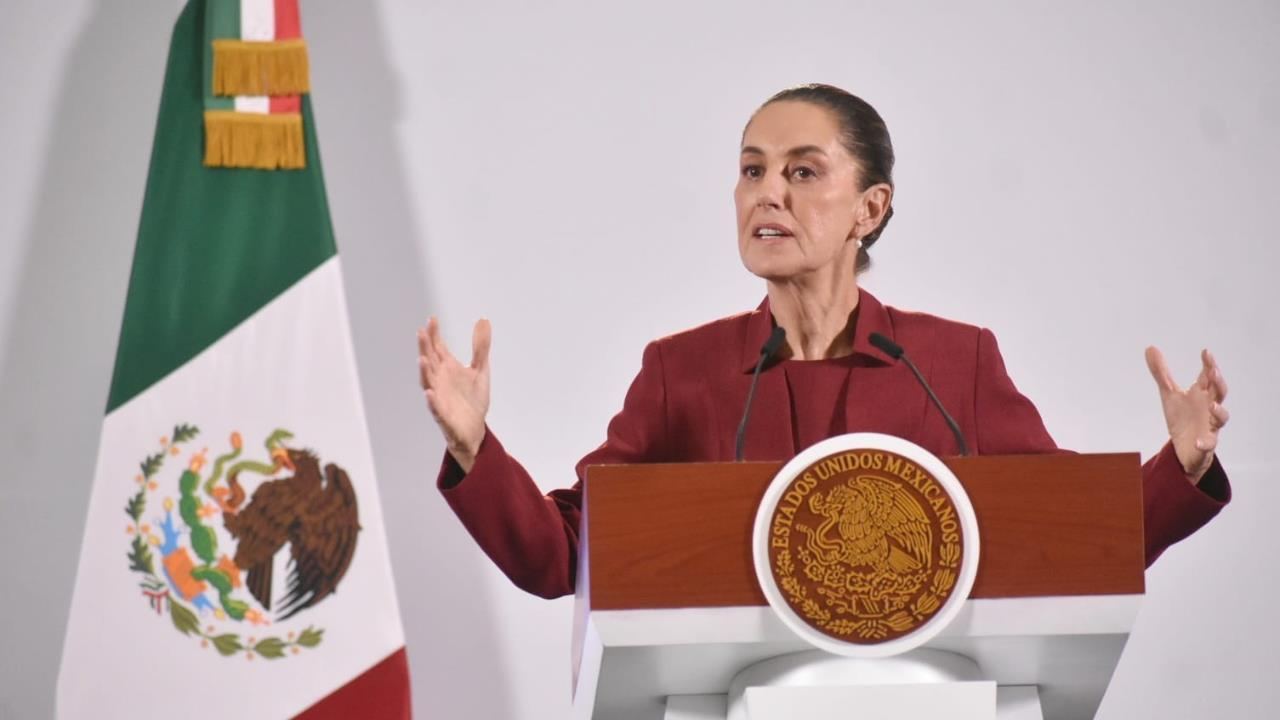
President-elect Donald Trump declared a diplomatic victory on November 27, 2024, claiming that Mexican President Claudia Sheinbaum had agreed to stop migration through Mexico and effectively close the southern border of the United States.
There was one significant problem with Trump's announcement: Mexico's president offered a very different account of their conversation.
Within hours, Sheinbaum publicly clarified that Mexico had not agreed to close its borders. Instead, she explained that her government was continuing immigration enforcement policies already in place and favored cooperation between the two countries.
The disagreement unfolded just two days after Trump threatened to impose sweeping 25 percent tariffs on all imports from Mexico and Canada when he returned to the White House in January.
Trump had presented those tariffs as a means of forcing neighboring countries to take stronger action against illegal immigration and fentanyl trafficking.
Following his telephone conversation with Sheinbaum, Trump announced on Truth Social that the Mexican president had agreed to stop migration through Mexico and into the United States.
He described the conversation as productive and suggested that Mexico had effectively agreed to close America's southern border.
In a subsequent message, Trump claimed that Mexico would immediately prevent migrants from reaching the United States.
The statements created the impression that his tariff threats had already produced a major diplomatic concession.
Sheinbaum's public response challenged that interpretation.
The Mexican president explained that she had discussed her government's existing immigration strategy, including efforts to assist migrants and address caravans before they reached the northern border.
She emphasized that Mexico was not proposing to close its border with the United States.
Instead, her administration wanted to maintain communication and cooperation while respecting human rights and national sovereignty.
The distinction was important.
Mexico had already been taking steps to reduce the number of migrants reaching the American border before Trump's November tariff announcement.
Those efforts included immigration checkpoints, transportation of migrants away from northern border communities, and coordination with American authorities.
Sheinbaum's description therefore did not establish that Mexico had agreed to implement a new border closure in response to Trump's demands.
The disagreement also exposed the difference between political announcements and actual diplomatic agreements.
Trump portrayed the conversation as evidence that his aggressive negotiating strategy was producing immediate results.
Sheinbaum described a discussion about existing policies and continued cooperation.
Neither government announced a formal agreement to close the border, and no new bilateral border-closure policy was established that day.
The episode unfolded against the backdrop of a much larger economic dispute.
Mexico is one of America's largest trading partners, with deeply integrated automotive, agricultural, manufacturing, and energy supply chains.
Trump's proposed tariffs threatened to increase costs for American importers and potentially trigger retaliation against American exports.
Sheinbaum had already warned that tariffs would not resolve the underlying causes of migration or drug trafficking.
She argued that the two countries needed coordinated policies rather than economic threats.
Her administration also emphasized that fentanyl trafficking involved problems on both sides of the border, including American demand for illegal drugs and the movement of firearms from the United States into Mexico.
Trump's supporters viewed his tariff threats as a negotiating tool that could pressure foreign governments into making concessions.
Critics warned that the strategy could damage economic relationships while producing exaggerated claims of diplomatic success.
The November 27 exchange illustrated those competing interpretations.
Trump announced that Mexico had agreed to stop migration into the United States.
Mexico's president responded that her country was managing migration through existing policies and had not agreed to close its borders.
The difference was not merely semantic. A complete border closure would represent a dramatic change in relations between two countries whose economies and communities depend heavily on cross-border movement.
Managing migration through enforcement and humanitarian programs is a substantially different policy.
The events of November 27, 2024, demonstrated how quickly conflicting public statements could create uncertainty about American foreign policy before a new administration had even taken office.
They also raised questions about how future negotiations between Trump and foreign leaders would be communicated to the public.
The historical record establishes that Trump claimed a major border agreement had been reached, while Sheinbaum explicitly rejected the characterization that Mexico had agreed to close its borders.
What remained unproven was Trump's suggestion that his tariff threats had secured a new commitment to halt migration.
The episode became an early example of the diplomatic tensions surrounding Trump's return to the presidency, with Mexico publicly defending its sovereignty while seeking to preserve cooperation with its most important trading partner.