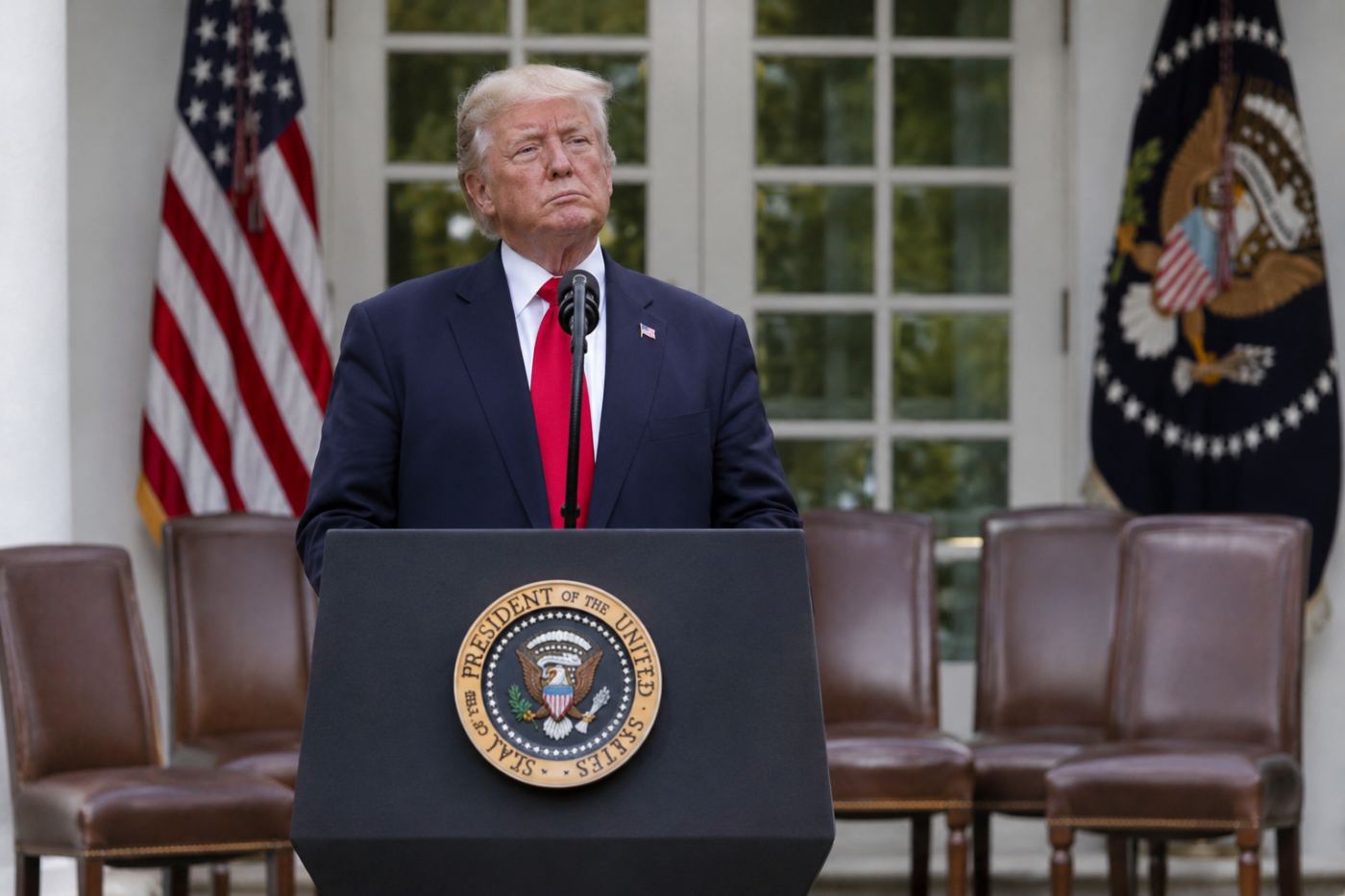
For nearly a decade, Donald Trump has held together a Republican coalition containing traditional conservatives, Christian nationalists, populists, libertarians, and foreign-policy hawks.
Their differences were often overshadowed by one shared political objective: keeping Trump in power.
Following the Republican Party's sweeping defeat in the 2026 midterm elections, those differences are becoming increasingly difficult to ignore.
And the disagreements are no longer confined to Trump's opponents.
They are emerging from within MAGA itself.
The Iran War Divides America First
One of the most significant disputes involves the administration's military campaign against Iran.
Trump built much of his political identity around criticizing prolonged American military involvement overseas. His promise to avoid new foreign wars appealed to voters skeptical of Washington's interventionist foreign policy.
The Iran conflict has complicated that message.
Vice President JD Vance has acknowledged the war's role in Republican electoral losses, while former Trump ally Marjorie Taylor Greene has accused the president of abandoning his America First promises.
Meanwhile, Defense Secretary Pete Hegseth continues defending the administration's military strategy despite mounting political pressure.
The disagreement exposes a fundamental question: Does America First mean avoiding foreign military entanglements, or using American military power aggressively to confront perceived threats?
Different factions within Trump's coalition have very different answers.
Former Allies Become Critics
Marjorie Taylor Greene provides one of the clearest examples of the movement's internal divisions.
Once among Trump's most outspoken defenders, Greene has criticized his handling of the Iran war, economic affordability, and the Jeffrey Epstein files.
Trump, in turn, has attacked his former ally.
Their dispute illustrates how disagreements over specific policies can develop into broader questions about political loyalty.
For Greene and other critics, supporting America First does not necessarily mean supporting every decision Trump makes.
For Trump's most committed defenders, public criticism of the president remains difficult to reconcile with loyalty to the movement.
A White House Under Pressure
The political tensions have reached the administration itself.
Following the midterms, speculation intensified over Hegseth's future at the Pentagon. Trump publicly defended his defense secretary, while Republican Congressman Thomas Massie announced plans to pursue impeachment proceedings.
Even the White House communications operation has attracted attention.
Trump recently appeared alongside UFC executive Dana White in the briefing room after publicly floating the idea of making him press secretary.
Trump subsequently characterized the proposal as a joke. White indicated that he had no intention of accepting the position.
The unusual appearance came amid questions about the administration's response to its electoral setbacks.
The Battle for 2028
Beyond the immediate disputes lies a larger challenge: the Republican Party's future leadership.
Vance, Marco Rubio, Ron DeSantis, and other prominent Republicans represent different political backgrounds and priorities.
Their disagreements extend beyond personalities.
Trade policy, immigration, relations with NATO, support for Israel, the federal budget, and the role of American military power could all become defining issues in the next Republican presidential nomination contest.
Trump's influence remains substantial, but the approaching 2028 election creates incentives for ambitious Republicans to establish political identities of their own.
That process may bring disagreements previously kept behind closed doors into public view.
Can MAGA Survive Without Trump?
The Republican coalition has never been ideologically uniform.
Its members have frequently disagreed over spending, international alliances, social issues, and the appropriate reach of government.
Trump's personal popularity among Republican voters helped contain many of those disputes.
The 2026 election results have reopened questions about whether loyalty to one political figure can substitute for agreement on governing priorities.
Trump's supporters argue that his movement remains influential and that disagreements are a normal feature of political parties.
His critics see the divisions as evidence of a coalition struggling to reconcile its promises with the consequences of governing.
Both perspectives point toward the same underlying issue.
MAGA must eventually decide whether it is a political philosophy capable of surviving its founder or a movement whose identity depends primarily on Donald Trump himself.
The Republican Party's response to its midterm defeat may begin answering that question long before the 2028 presidential election.