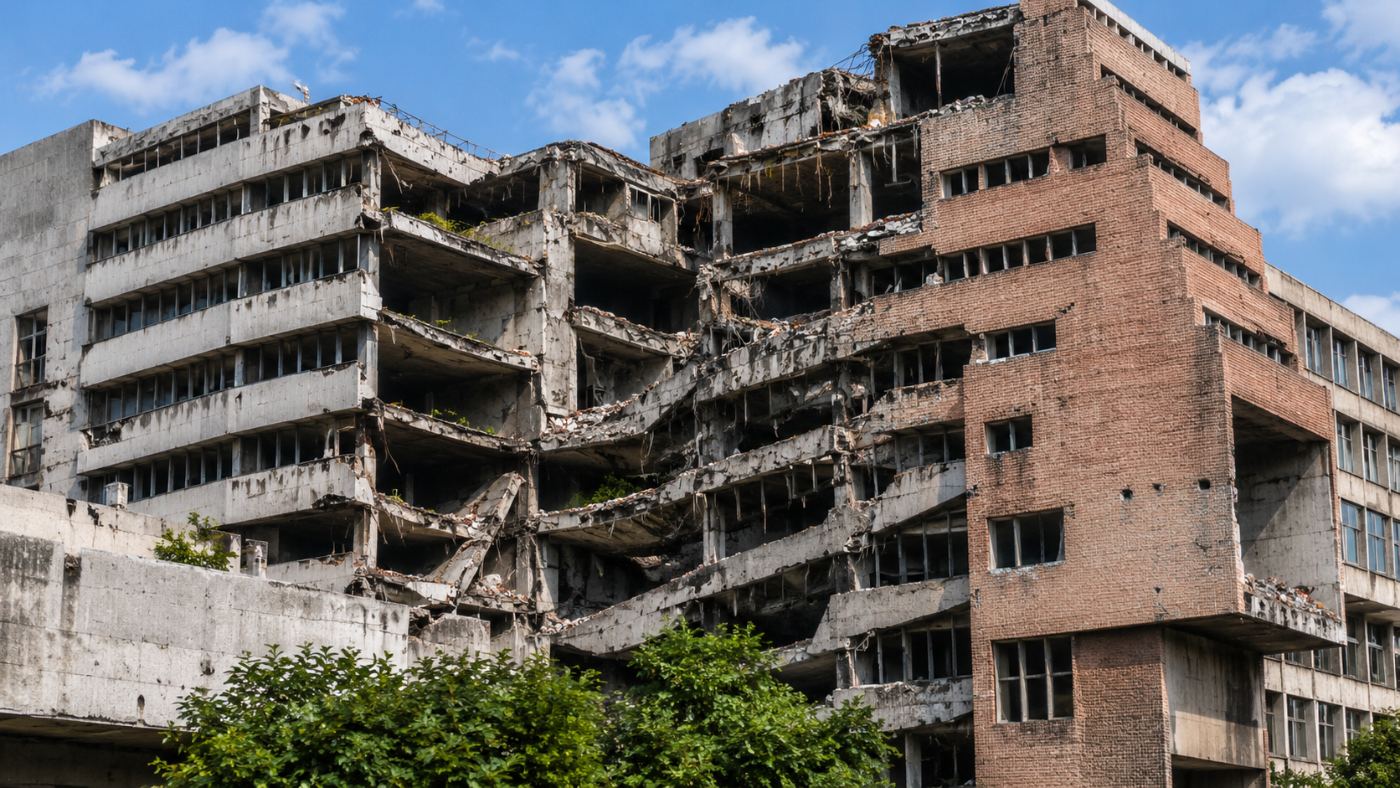
Another high-profile business venture connected to Donald Trump's family has come to an end, this time in Serbia, where a proposed $500 million luxury development backed by Jared Kushner has collapsed amid public protests, allegations of forged government documents, and a criminal investigation.
The Serbian government has confirmed plans to terminate its agreement with Kushner's investment company, ending a controversial proposal to transform a historic military headquarters in Belgrade into a luxury hotel and residential complex bearing the Trump name.
The project had faced fierce opposition from Serbian citizens who objected to turning a nationally significant landmark into a private commercial development.
A Controversial Deal From the Beginning
The project centered on the former Yugoslav military headquarters in Belgrade, a landmark severely damaged during NATO's 1999 bombing campaign.
For many Serbians, the buildings represent an important part of their country's history.
Kushner's investment firm, Affinity Partners, pursued a development that would have included luxury accommodations, residences, commercial space, and a Trump-branded hotel.
Under the agreement reached in 2024, Serbia would provide the land through a 99-year lease.
Documents subsequently revealed that the government had also committed to removing the site's protected cultural status and demolishing existing structures at public expense.
The arrangement prompted accusations that Serbian authorities were offering unusually favorable terms to a businessman closely connected to the American president.
Criminal Charges and Public Outrage
The controversy intensified when Serbian prosecutors investigated how the buildings had lost their protected heritage designation.
Authorities alleged that government documents used to justify removing those protections had been falsified.
In December 2025, prosecutors charged Serbian Culture Minister Nikola Selaković and three other officials in connection with the process.
The defendants denied wrongdoing.
Kushner and his investment company were not charged with crimes in connection with the project.
Nevertheless, the criminal proceedings created another serious obstacle for a development already facing widespread opposition.
Demonstrators argued that the historic site should be preserved rather than demolished for a luxury complex.
Kushner Walks Away
In December 2025, Kushner's company announced it was withdrawing from the development, saying the project had become too divisive.
The Serbian government has now moved to terminate the underlying agreement.
Construction Minister Aleksandra Sofronijević confirmed that the government decided in August 2026 to end the contract, with formal termination paperwork expected to be completed in November.
According to Serbian reporting, both sides agreed to waive potential financial claims, avoiding possible penalties or arbitration.
The original agreement reportedly exposed Serbia to compensation demands of up to €50 million if certain contractual obligations were not fulfilled.
A Business Deal With Political Implications
The failed project also raised broader questions about the intersection of private business interests and American foreign policy.
Kushner is Trump's son-in-law and has maintained a prominent role in international diplomacy while pursuing private investments overseas.
Critics questioned whether Serbian leaders had offered favorable treatment to strengthen relations with the Trump administration.
Supporters of the project argued that it would attract investment, create jobs, and revitalize a damaged section of Belgrade.
Ultimately, the development never overcame the legal controversy and public resistance surrounding the historic property.
The collapse leaves a proposed half-billion-dollar investment abandoned, criminal proceedings continuing, and Serbia reconsidering the future of one of its most recognizable landmarks.
For Kushner and the Trump family's international business interests, the Belgrade project stands as a reminder that political connections cannot guarantee a development's success when local opposition and legal scrutiny intervene.