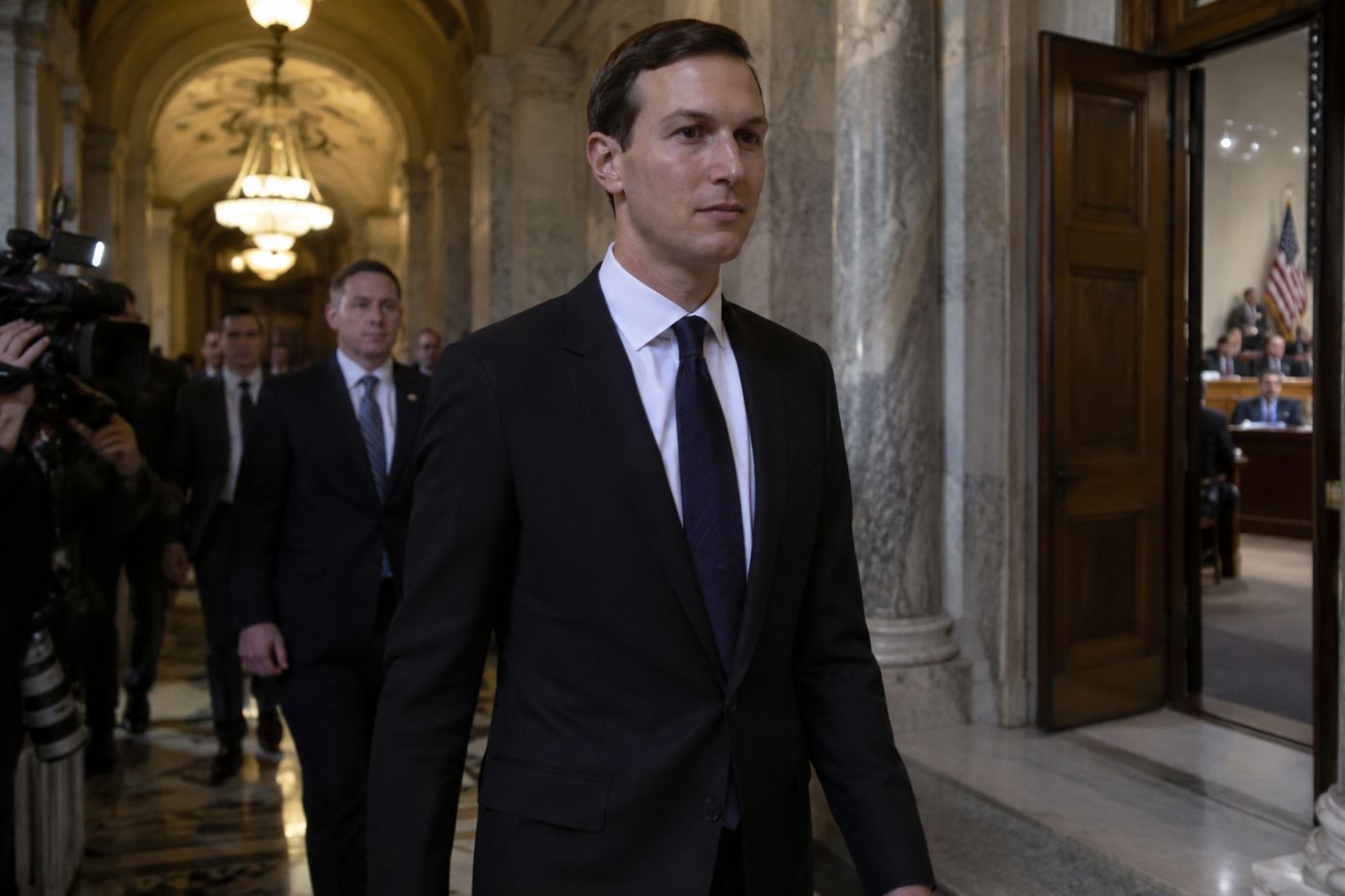
Jared Kushner, President Donald Trump's son-in-law, could soon face the kind of congressional scrutiny he has largely avoided while simultaneously conducting American diplomacy and managing a private investment empire financed by foreign governments.
With Democrats preparing to take control of Congress in January, Kushner's unusual position as an unofficial presidential adviser may become a serious liability.
A November 5 investigation published by Popular Information details how congressional investigators could compel Kushner to testify, demand financial records from his investment firm, and examine his communications with foreign leaders whose governments have invested billions in his business.
At the center of the controversy is Affinity Partners, the private equity firm Kushner established after leaving the White House in 2021.
The firm received a $2 billion investment from Saudi Arabia's sovereign wealth fund, controlled by Crown Prince Mohammed bin Salman. Other investors include entities connected to Qatar and the United Arab Emirates.
Meanwhile, Kushner has participated in sensitive diplomatic negotiations involving Iran, Ukraine, Gaza, and other international conflicts.
A Diplomat Without an Official Government Position
Unlike his role during Trump's first administration, Kushner has not accepted a formal government appointment.
The White House describes him as a volunteer, an arrangement that administration officials maintain exempts him from financial disclosure requirements applicable to government employees.
That distinction creates a troubling question: If Kushner is important enough to negotiate with foreign governments on behalf of the United States, why should he be exempt from the transparency requirements imposed on government officials?
Government ethics watchdogs have questioned whether Kushner's responsibilities effectively make him a federal employee regardless of his unofficial title.
His financial relationships also raise questions about the Constitution's Foreign Emoluments Clause, although whether that provision legally applies to his current arrangement remains unresolved.
Millions in Fees From Foreign Governments
The financial stakes are enormous.
In March, congressional Democrats estimated that Affinity Partners collected more than $60 million in fees from foreign investors during 2025, including approximately $39 million attributable to Saudi Arabia.
Those figures are congressional estimates, not independently verified disclosures of Kushner's personal earnings.
The concern extends beyond the money itself.
Foreign governments investing in Kushner's firm may also have significant interests in American military policy, diplomatic negotiations, arms sales, and regional security arrangements.
That overlap creates the possibility of conflicts between Kushner's responsibilities to the United States and his financial obligations to investors.
No public finding establishes that Kushner exchanged American policy decisions for investments. Nevertheless, the lack of comprehensive disclosure makes meaningful independent scrutiny difficult.
Congress Could Demand Answers Under Oath
According to Popular Information, congressional investigators have several options once Democrats assume committee leadership.
They could subpoena Kushner to testify about his communications with foreign officials, examine investment agreements, and request records showing whether business discussions overlapped with diplomatic negotiations.
Investigators could also subpoena Affinity Partners and outside financial institutions involved in administering its investments.
Kushner's insistence that he is merely a private citizen could complicate any attempt to claim the executive-branch immunity sometimes asserted for senior presidential advisers.
Legal challenges would remain possible, and congressional subpoenas would not automatically establish wrongdoing.
The Accountability Question
Kushner and representatives of Affinity Partners have maintained that their activities comply with applicable laws and that Kushner acts in America's interests.
But the fundamental issue remains unanswered.
Why should the president's son-in-law be permitted to influence American foreign policy while maintaining lucrative financial relationships with governments directly affected by that policy, without providing the financial transparency expected of senior officials?
For years, Kushner has operated at the intersection of presidential family connections, international diplomacy, and private wealth.
The incoming Congress may finally have the authority to examine where those interests overlap.
And for an administration that has repeatedly promised to confront corruption in Washington, the financial dealings of the president's own family present an especially revealing test of accountability.