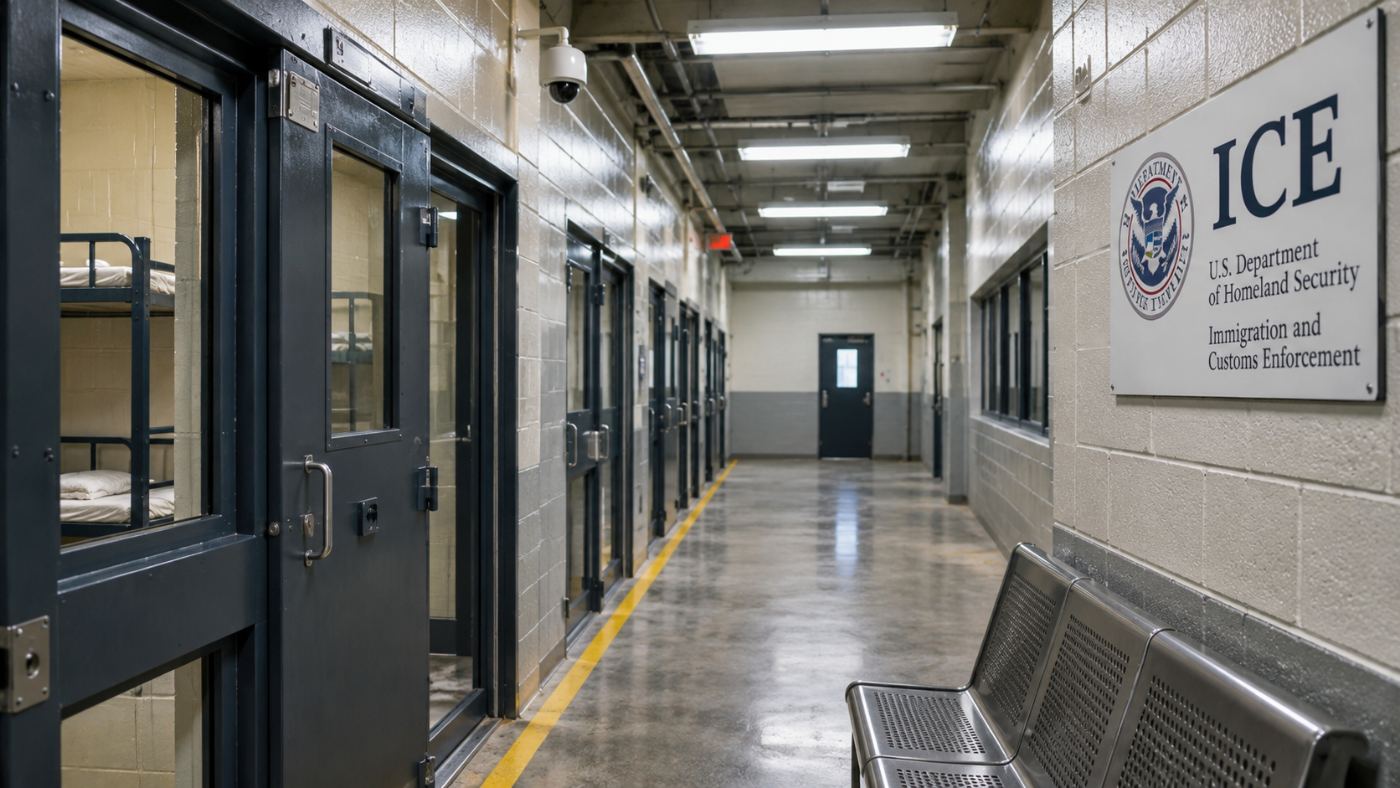
A Wisconsin state trooper was preparing to board a domestic flight when federal immigration agents approached him, placed him in handcuffs and shackles, and transported him to an immigration detention facility.
Carel Aaron Van Der Merwe, 21, wasn't fleeing authorities. He wasn't crossing the border. He was traveling to New Mexico to visit his family.
He was also a sworn Wisconsin State Patrol officer with a federal work permit valid through 2030.
Nevertheless, Immigration and Customs Enforcement arrested him Thursday at Dane County Regional Airport.
His detention became the latest controversy surrounding President Donald Trump's aggressive immigration enforcement policies, which have also resulted in American citizens being detained, families being separated, and fatal shootings involving federal immigration agents.
A State Trooper Becomes an ICE Detainee
Van Der Merwe immigrated legally from South Africa with his family in 2019. His family subsequently sought asylum, and he has spent years awaiting an interview.
While his immigration case remained unresolved, he obtained federal authorization to work and joined the Wisconsin State Patrol.
His attorney, Marc Christopher, said Van Der Merwe informed agents about his pending asylum application and valid work permit, but they detained him anyway.
The Department of Homeland Security defended the arrest, saying his original permission to remain in the United States expired in September 2019. Federal officials maintain that a work permit and pending asylum application do not independently establish lawful immigration status.
Van Der Merwe was released November 6 under an order of supervision, but his immigration proceedings remain unresolved.
His attorney questioned why federal resources were being used to detain a working law enforcement officer with no known criminal history.
More Than 500 American Citizens Detained
Van Der Merwe is not an American citizen. But his arrest comes amid mounting evidence that the administration's immigration crackdown has also swept up people who are.
An October 29 investigation by ProPublica identified 519 incidents involving U.S. citizens reportedly detained by federal immigration agents between January 2025 and October 21, 2026.
The journalists examined court documents, news reports, videos, and other evidence, requiring at least two sources for each documented incident.
The federal government does not maintain a comprehensive public accounting of these cases.
DHS has repeatedly insisted that it does not arrest American citizens for immigration enforcement.
Yet documented encounters include citizens handcuffed during raids, detained despite asserting their citizenship, and held while authorities investigated their identities.
Some were released within hours. Others experienced considerably longer detention.
The findings raise serious questions about how federal agents establish identity and citizenship before depriving someone of their freedom.
American Citizens Shot and Killed
The consequences of immigration enforcement have extended far beyond detention.
On January 7, 2026, ICE agent Jonathan Ross fatally shot Renée Good, a 37-year-old American citizen and mother of three, in Minneapolis.
Federal authorities maintained that Good's vehicle threatened the agent. Witness videos raised questions about that account, showing her vehicle turning away as the shooting occurred.
Seventeen days later, Border Patrol agents fatally shot Alex Pretti, a 37-year-old intensive care nurse employed by the Department of Veterans Affairs.
Video evidence showed agents struggling with Pretti on a Minneapolis sidewalk before shots were fired. Footage of the encounter prompted questions about the government's initial explanation.
Another American citizen, 23-year-old Ruben Ray Martinez, was fatally shot by a Homeland Security Investigations agent in South Padre Island, Texas, in March 2025.
His death received little national attention until records obtained months later revealed the involvement of federal immigration personnel.
DHS maintained that Martinez struck an agent with his vehicle. His family disputed aspects of the government's account.
These cases involve different circumstances and federal agencies, but all three deaths have generated demands for greater transparency and accountability.
American Children Sent Out of Their Own Country
Immigration enforcement has also affected American-born children.
In April 2025, three U.S.-citizen children were taken to Honduras when their mothers were deported.
One was a four-year-old boy undergoing treatment for metastatic cancer. His family's attorneys said the removal interrupted his medical care.
A federal judge expressed serious concern that another child, a two-year-old American citizen, had been removed without meaningful legal process.
The Trump administration argued that the mothers chose to take their children with them rather than leave them in the United States.
Attorneys representing the families disputed that characterization, arguing that the women were denied a meaningful opportunity to make alternative arrangements.
The distinction matters: American citizens cannot legally be deported as noncitizens, although children may accompany deported parents. Whether these families had a genuine choice remains contested.
Who Holds ICE Accountable?
The Trump administration argues that aggressive immigration enforcement is necessary to uphold federal law and remove people without lawful immigration status.
But the documented detention of American citizens, disputed removals of children, and fatal shootings have intensified scrutiny of how those policies are carried out.
The Wisconsin trooper's arrest illustrates another dimension of the controversy: federal authorities detained someone who had permission to work as a state law enforcement officer while awaiting resolution of an immigration case.
His release after one day does not resolve the broader questions about why detention was necessary.
Nor does the release of American citizens mistakenly caught in enforcement operations erase the consequences of their detention.
The Constitution's protections against unreasonable seizures and deprivation of liberty without due process do not disappear during immigration enforcement.
The central question is no longer simply how many people the Trump administration can arrest or deport. It is whether federal immigration authorities are exercising their extraordinary powers with sufficient safeguards, transparency, and accountability.
For the American citizens detained, the families separated, and those who lost loved ones, that question has consequences far beyond politics.