President Donald Trump's efforts to overturn his election defeat have reached an extraordinary new stage in Pennsylvania, where his personal attorney, Rudy Giuliani, is pursuing a legal strategy that could replace the state's popular-vote outcome with a decision made by Republican lawmakers.
With Joe Biden leading Pennsylvania by more than 70,000 votes, Trump's campaign is no longer relying solely on recounts or challenges to individual ballots.
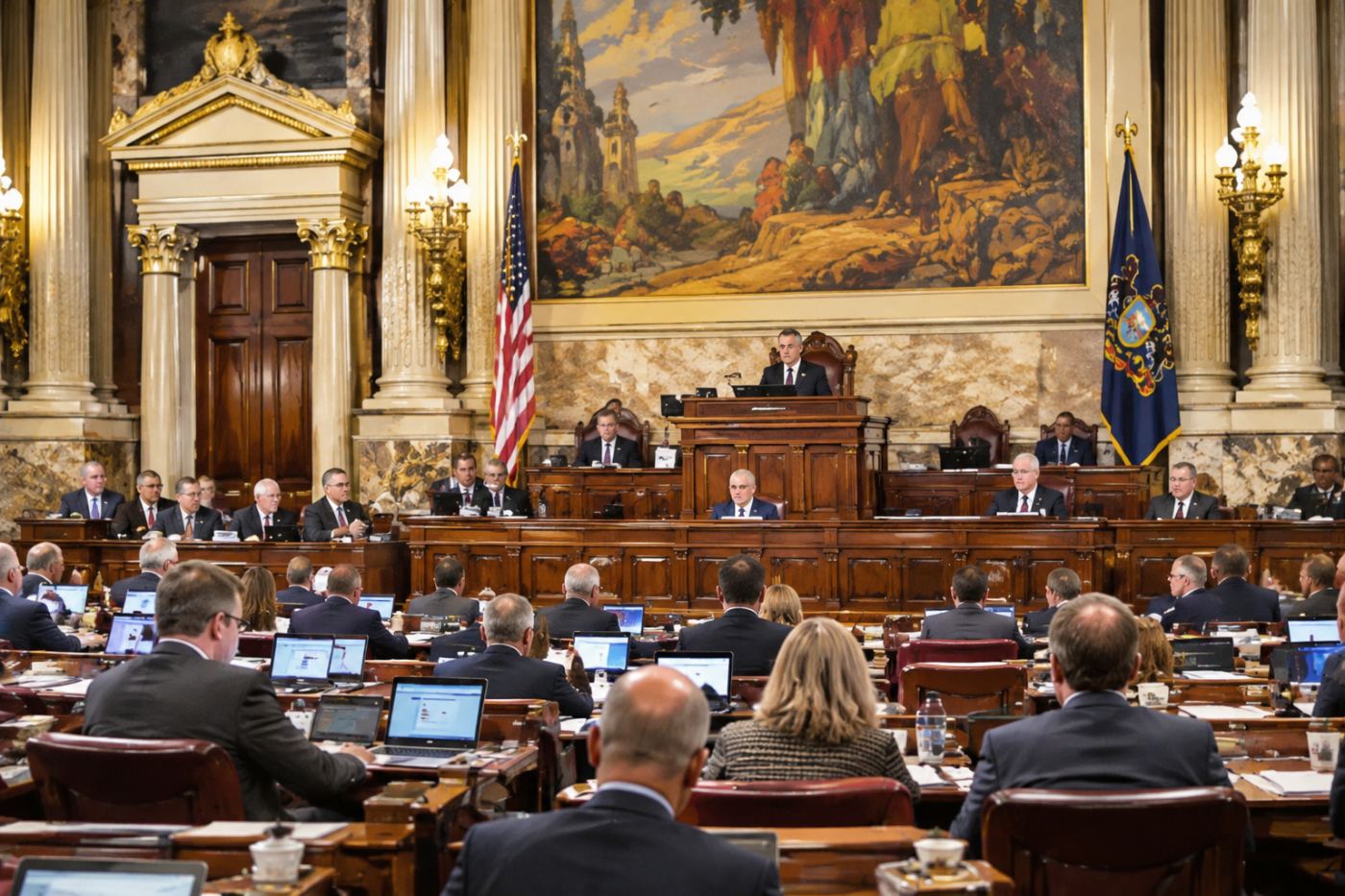
Instead, Giuliani is asking a federal court to consider declaring Pennsylvania's election results defective, potentially allowing the Republican-controlled state legislature to select the state's presidential electors.
The proposal raises a fundamental question: Can a losing presidential candidate use the courts to transfer the power of choosing a president from millions of voters to a group of politicians?
From Challenging Ballots to Challenging the Election
Trump's campaign initially focused its Pennsylvania lawsuit on allegations involving election observers and differences in how counties handled mail-in ballots.
The campaign argues that some counties improperly allowed voters to correct technical problems with their ballots while other counties did not offer the same opportunities.
Pennsylvania officials dispute the campaign's interpretation and maintain that election procedures complied with applicable law.
On Tuesday, Giuliani appeared before U.S. District Judge Matthew Brann in Williamsport, arguing that the state's election was plagued by irregularities.
He made sweeping allegations about voter fraud but acknowledged that the lawsuit itself was not formally alleging fraud.
That distinction is critical.
The campaign is asking for extraordinary judicial intervention without establishing that widespread fraudulent voting changed Pennsylvania's result.
The Legislature Strategy
According to reporting by The Washington Post, Giuliani's latest court filings contemplate asking a federal judge to declare Pennsylvania's election results defective.
Under the proposed remedy, the state's Republican-controlled legislature could be directed to select presidential electors rather than allowing the established certification process to proceed.
Pennsylvania law, however, provides for electors to be appointed by the governor based on the popular-vote result.
Republican legislative leaders have themselves acknowledged that existing law does not give them authority to disregard the election outcome and appoint a different slate.
The Constitution grants state legislatures authority to establish the manner of selecting presidential electors. Pennsylvania has already exercised that authority by adopting a popular-vote system.
Changing the rules after Election Day presents serious legal obstacles.
Millions of Votes at Stake
Pennsylvania's presidential election involved more than 6.8 million voters.
Biden's lead is substantial, and Trump's campaign has not demonstrated irregularities approaching the number of votes needed to reverse it.
Nevertheless, the requested legal remedies could affect far more ballots than the number actually disputed.
Judge Brann has questioned how the campaign could justify relief that would effectively disenfranchise millions of Pennsylvanians.
The issue extends beyond which candidate benefits.
Voters participated under election rules established before November 3. Retroactively changing the process for selecting electors would undermine the expectations of every Pennsylvanian who cast a ballot.
Another Courtroom Setback
Giuliani's appearance comes as Trump's election litigation faces repeated difficulties.
On Tuesday, Pennsylvania's Supreme Court rejected a Republican challenge concerning the distance between election observers and ballot-counting operations in Philadelphia.
The court concluded that election officials had complied with state law.
Meanwhile, several attorneys have withdrawn from Trump's federal Pennsylvania lawsuit, leaving Giuliani to take a more prominent role.
The president continues alleging widespread election fraud, but his campaign has yet to present evidence establishing that such fraud altered the outcome.
A Political Strategy Beyond the Courtroom
The Pennsylvania litigation is part of a broader effort to challenge certification in battleground states.
Trump's allies are examining whether delays and disputes could create opportunities for Republican legislators to intervene.
The Washington Post reports that Giuliani has discussed pressuring Republican officials to postpone certification and potentially allow legislatures to select electors.
Whether those efforts can succeed legally is another matter.
Election-law experts see formidable obstacles, and the proposed strategy lacks support from Pennsylvania's established election procedures.
The Question Pennsylvania Must Answer
Donald Trump has the right to challenge election irregularities in court.
But legal challenges require evidence, and remedies must comply with the Constitution and state law.
A president's dissatisfaction with an election result does not authorize politicians to substitute their preferences for the votes of the public.
Having failed to demonstrate fraud sufficient to reverse Pennsylvania's result, Trump's legal team is exploring whether the election itself can be set aside.
The distinction is enormous.
The voters have made their choice. Giuliani is now asking whether the political system can be persuaded to make a different one.