House Republican leader Kevin McCarthy's attempt to defend Donald Trump following a controversial dinner with white nationalist Nick Fuentes came under scrutiny on November 30, 2022, when FactCheck.org published an analysis challenging McCarthy's claim that the former president had condemned Fuentes four separate times.
The problem was straightforward: McCarthy could not substantiate the four condemnations he described.
The controversy began after Trump hosted a November 22 dinner at his Mar-a-Lago resort attended by rapper Kanye West, now known as Ye, and Fuentes, a far-right activist known for promoting white nationalist ideology and Holocaust denial.
The gathering generated widespread criticism from Jewish organizations, civil rights advocates, and Republican officials.
Trump maintained that Fuentes had arrived unexpectedly as Ye's guest and that he had not been familiar with the activist's background.
However, Trump's initial public explanations focused on his claimed lack of knowledge about Fuentes rather than explicitly condemning his ideology.
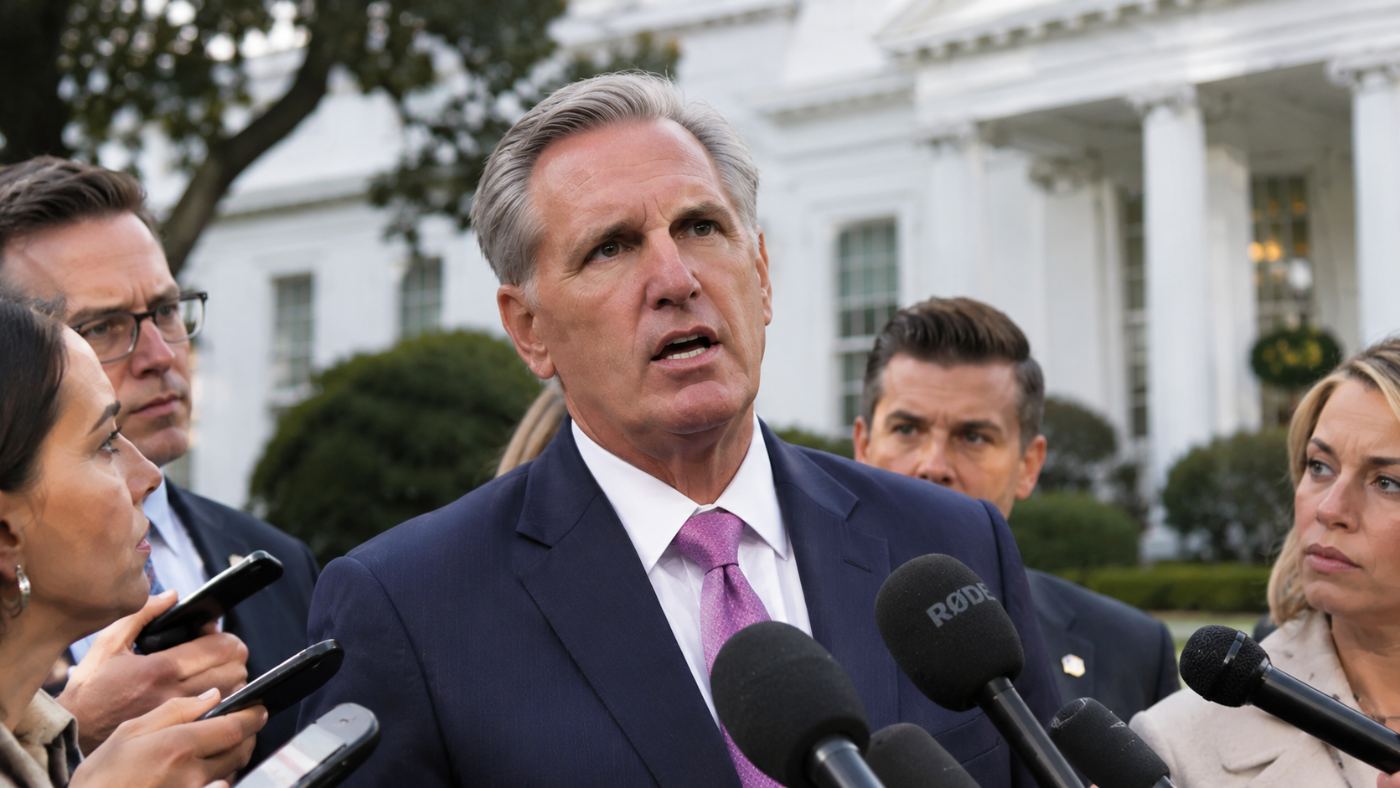
On November 29, McCarthy was questioned by reporters about the controversy while visiting the White House.
He declared that Fuentes had no place in the Republican Party and said political leaders should not associate with him.
McCarthy then attempted to defend Trump, asserting that the former president had condemned Fuentes four times.
Reporters immediately challenged the assertion.
They pointed out that Trump had repeatedly said he did not know Fuentes, but that those explanations were not the same as condemning his extremist beliefs.
McCarthy continued defending his position while reiterating his own opposition to Fuentes.
The exchange highlighted an important distinction between denying familiarity with a controversial individual and explicitly rejecting that person's ideology.
FactCheck.org examined the available statements and found no evidence supporting McCarthy's assertion that Trump had issued four condemnations.
Trump had released multiple statements about the dinner, but those statements largely emphasized that he had not invited Fuentes personally and had not known who he was.
In one explanation, Trump said Ye had arrived with three people he did not know.
In another, he described the dinner as brief and uneventful.
Neither statement amounted to an explicit denunciation of Fuentes's white nationalist views.
Trump later told Fox News Digital that he had not known Fuentes's views and that those views would not have been accepted had they been expressed during the dinner.
That statement addressed the controversy more directly, but it did not substantiate McCarthy's claim that Trump had already condemned Fuentes four times.
The distinction mattered because McCarthy was seeking to become speaker of the House following the 2022 midterm elections.
Although Republicans had secured a narrow House majority, McCarthy needed support from competing factions within his party, including lawmakers strongly aligned with Trump.
A direct confrontation with the former president could complicate his effort to secure the speakership.
At the same time, failing to reject white nationalism and antisemitism risked drawing criticism from lawmakers, advocacy organizations, and the public.
McCarthy's response attempted to satisfy both concerns.
He explicitly rejected Fuentes while portraying Trump as having already done the same.
The published fact-check demonstrated that the second part of that defense was unsupported by Trump's documented statements.
The controversy also revealed divisions among senior Republicans.
Senate Minority Leader Mitch McConnell warned that antisemitism and white supremacy had no place in the Republican Party.
Former Vice President Mike Pence called on Trump to apologize for hosting the dinner and unequivocally condemn those involved.
McCarthy, by contrast, sought to defend Trump's response while condemning Fuentes himself.
The dispute unfolded just two weeks after Trump announced his 2024 presidential campaign.
His dinner with Fuentes and Ye had already raised questions about his associations and his response to extremist rhetoric.
McCarthy's inaccurate account introduced another controversy: whether Republican leaders were accurately describing Trump's statements while attempting to manage the political fallout.
Fact-checking organizations distinguish between statements that can be verified and assertions unsupported by the available record.
In this case, the relevant evidence consisted of Trump's own public comments.
McCarthy claimed four condemnations had occurred.
The statements available at the time did not establish that claim.
The November 30 analysis therefore provided a documented example of how political figures can mischaracterize another politician's response to a controversy.
It also illustrated the difficulty Republican leaders faced in balancing their relationship with Trump against public opposition to antisemitism and white nationalism.
McCarthy had unequivocally condemned Fuentes.
But his assertion that Trump had already done so four times was not supported by the evidence.
The distinction remained central to the controversy.
On November 30, 2022, the fact-check placed McCarthy's defense of Trump under closer examination, demonstrating that repeating a claim about another politician's statements does not make those statements part of the historical record.