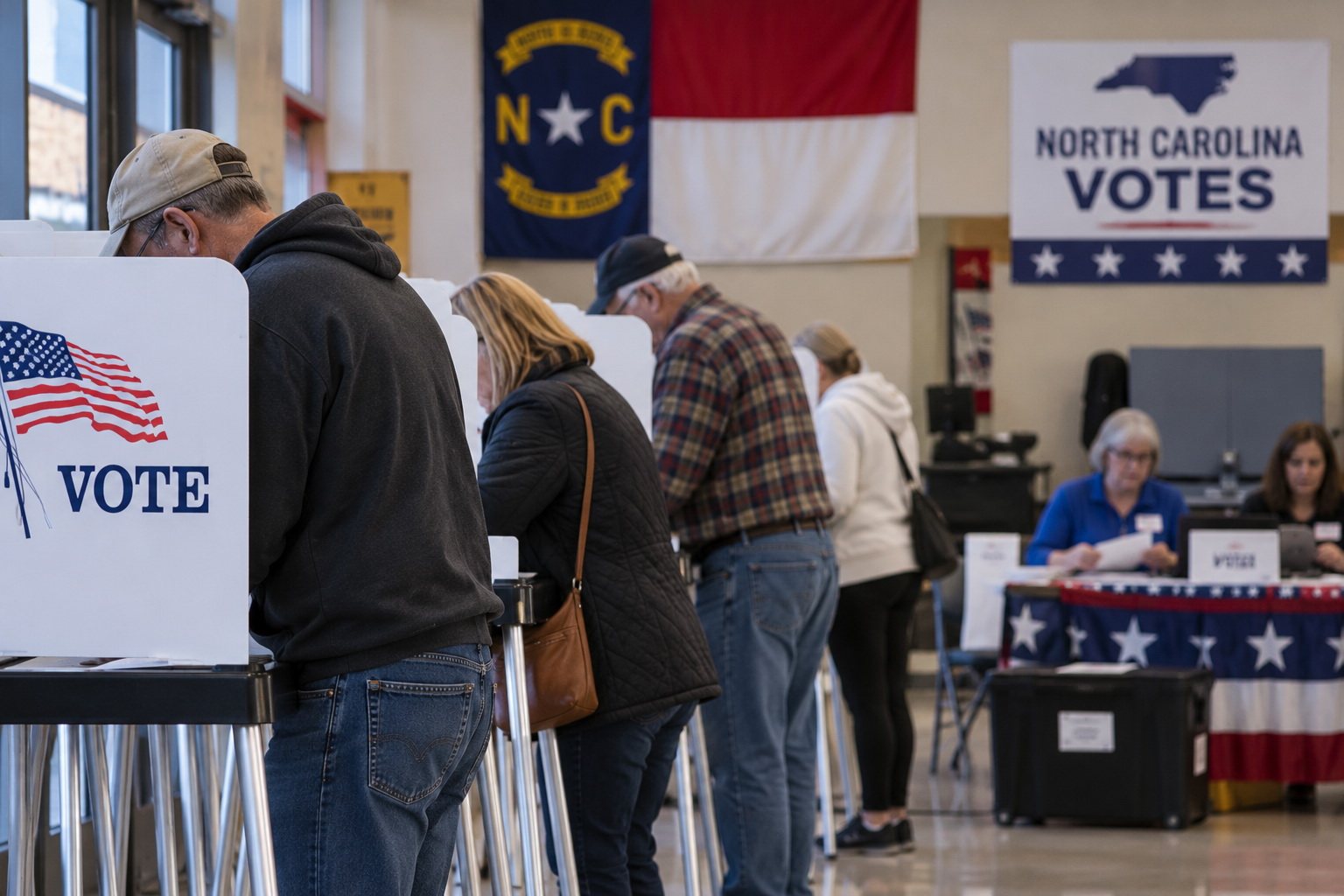
A North Carolina election official who once called on Donald Trump to invoke the Insurrection Act over the results of the 2020 presidential election has now acknowledged that he has found no evidence of widespread voter fraud in the county he helps oversee.
The admission, reported in an October 8 interview published by Vox, highlights a contradiction between the extraordinary allegations surrounding the 2020 election and the evidence encountered by some of the officials now responsible for administering elections.
The official's earlier position was dramatic: He had advocated using one of the federal government's most extraordinary emergency authorities in response to an election whose outcome Trump refused to accept.
But after assuming responsibility for overseeing elections at the county level, the official reportedly acknowledged finding "no proof" of widespread voter fraud in his jurisdiction.
The revelation comes just weeks before the November 2026 midterm elections, as North Carolina continues to grapple with disputes over election administration, voting access, and the appointment of officials who previously promoted election conspiracy theories.
From Election Conspiracy Claims to Election Oversight
The disclosure came from Ryan Oehrli, a statewide accountability reporter at NC Local who has investigated election administration in North Carolina.
Speaking with Vox, Oehrli discussed how individuals who previously promoted conspiracy theories about American elections have gained positions on county election boards.
Among those officials was a county board chair who had previously called for Trump to invoke the Insurrection Act because of the 2020 presidential election results.
The Insurrection Act is a collection of federal laws that, under specified circumstances, permits the president to deploy military forces domestically.
Calling for its invocation over a disputed election represents a substantial escalation beyond ordinary legal challenges, recounts, or election audits.
Yet Oehrli reported that the same official subsequently acknowledged finding no proof of widespread voter fraud in his own county.
The reporting did not identify the official by name in the Vox interview, and the statement concerned his county specifically. It was not a declaration that election fraud has never occurred anywhere in the United States.
Nevertheless, the contrast is significant.
An official who once advocated an extraordinary federal response to election results now acknowledges that the widespread fraud he might have expected to encounter has not been substantiated in the jurisdiction he oversees.
The 2020 Election Claims Were Repeatedly Rejected
Trump's claims that widespread fraud deprived him of victory in the 2020 presidential election have been extensively examined through recounts, audits, investigations, and litigation.
Joe Biden won the election with 306 electoral votes to Trump's 232.
Trump and his allies challenged results in multiple states, but those efforts did not establish fraud sufficient to overturn the outcome.
Federal and state election officials repeatedly reported that the available evidence did not support allegations of widespread, outcome-changing fraud.
Despite those findings, claims that the election had been stolen became a defining feature of Trump's political movement.
The consequences extended beyond the presidential contest itself.
Election administrators faced threats and harassment, public confidence in voting systems became increasingly polarized, and efforts to change election procedures continued long after the 2020 results were certified.
Now, some individuals associated with those allegations occupy positions that give them direct influence over election administration.
North Carolina's Election Boards Changed Hands
North Carolina's system of election oversight has undergone substantial changes.
According to Oehrli's reporting, the state's Republican-controlled General Assembly transferred authority over appointments to county election board leadership away from Democratic Governor Josh Stein and to Republican State Auditor Dave Boliek.
The changes took effect in 2025, shifting control of county election boards across the state from Democrats to Republicans.
County election boards perform essential functions, including investigating voting irregularities, selecting polling locations, and conducting hearings involving election protests.
These responsibilities give board members considerable influence over how elections are administered and how disputes are handled.
The concern raised by Oehrli's investigation is not simply that Republicans now control these boards.
It is that some officials appointed to oversee elections previously promoted allegations about election integrity that were not supported by established evidence.
Their new positions place them in direct contact with the procedures and safeguards they had previously questioned.
Election Officials Confront the Safeguards They Once Questioned
Oehrli's reporting also examined Jay DeLancy, a voting-integrity activist appointed to a county election board.
DeLancy said he had attempted to remove names from voter registration rolls that he believed were duplicates.
According to Oehrli, existing legal safeguards prevented the removals he sought.
DeLancy reportedly complained about the involvement of lawyers in the process.
The episode illustrates how election administration differs from political accusations.
Removing voters from registration lists requires compliance with laws and procedures intended to protect eligible voters from being improperly disenfranchised.
Allegations of duplicate registrations or improper voting must be examined against evidence and legal requirements.
Election officials cannot simply remove voters because they suspect something is wrong.
Those safeguards are particularly important when the individuals making such decisions have previously expressed sweeping doubts about the integrity of the electoral system.
An Attempt to Eliminate Sunday Voting
The controversy in North Carolina has extended beyond voter registration.
Oehrli reported that DeLancy participated in an effort to eliminate Sunday voting in Lee County.
Among the arguments DeLancy presented was a religious objection to requiring election workers to work on Sunday, invoking the biblical commandment concerning the Sabbath.
The state election board ultimately rejected the proposal.
Sunday voting has been an important voting option for some communities, including churches that organize group trips to polling places.
Restrictions on voting schedules can therefore have practical consequences even when presented as administrative or religious concerns.
The dispute demonstrates that debates over election administration are not limited to allegations about past elections.
They also concern the rules that determine when and how Americans can cast ballots in future contests.
The Evidence Matters More Than the Allegations
The North Carolina official's reported acknowledgment is notable because it comes from someone who previously supported an extraordinary response to the 2020 election.
There is a substantial difference between believing that widespread fraud occurred and finding evidence that supports such a belief.
County election officials are responsible for evaluating actual irregularities, applying election law, and distinguishing verified problems from unsupported claims.
The fact that this official reported finding no proof of widespread fraud in his county does not resolve every question about election administration elsewhere.
But it does underscore a basic requirement of democratic accountability: Allegations must be supported by evidence.
The 2020 election produced years of accusations, investigations, and political conflict. The central allegation that widespread fraud changed the presidential outcome was never substantiated.
Now, as the country approaches another national election, the individuals overseeing voting procedures include some who previously advanced or embraced those accusations.
A Warning About the Future of Election Administration
The larger significance of the North Carolina story extends beyond one county board chair.
Election officials occupy positions of public trust. Their decisions can determine polling locations, voting schedules, voter eligibility procedures, and the handling of disputed ballots.
That authority requires adherence to the law and a willingness to follow evidence, including when the evidence contradicts previously held political beliefs.
The official's acknowledgment that he found no proof of widespread voter fraud is an important part of the public record.
So is his earlier call for Trump to invoke the Insurrection Act over the 2020 election.
Taken together, those statements raise questions about how election officials reconcile past allegations with the evidence they encounter while performing their duties.
The 2026 midterms will once again test public confidence in American election administration.
And in North Carolina, that test includes officials who once questioned the legitimacy of elections but now bear responsibility for protecting the integrity of the process themselves.