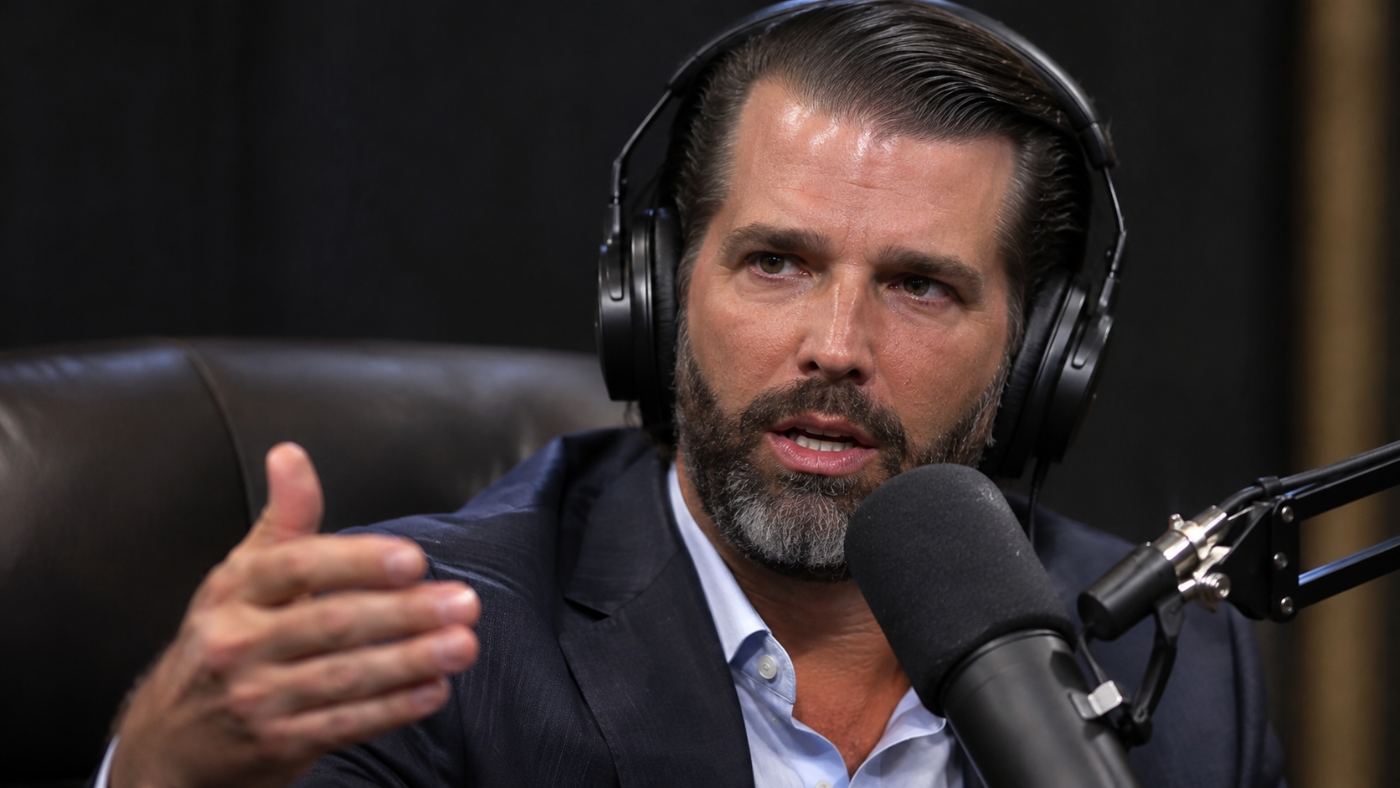
Donald Trump Jr. has delivered an unusually candid assessment of the Republican Party's devastating 2026 midterm election losses, acknowledging that his father's decision to launch a war against Iran violated a central campaign promise and contributed to the party's electoral collapse.
Speaking on his Triggered podcast, the president's eldest son rejected attempts by conservative commentators to dismiss the political consequences of the conflict.
Rather than blaming Democrats or the media, Trump Jr. pointed directly to the administration's foreign policy decisions, rising gasoline prices, and the frustration of voters who believed they had elected a president committed to avoiding new wars.
His comments represent a significant acknowledgment from one of the MAGA movement's most prominent figures that the administration's actions have alienated some of its own supporters.
The Promise That Helped Elect Trump
Throughout the 2024 presidential campaign, Donald Trump repeatedly portrayed himself as the candidate who would keep the United States out of costly foreign conflicts.
After years of American military involvement in Afghanistan and Iraq, the promise resonated with voters exhausted by prolonged wars and their financial consequences.
Trump criticized previous administrations for involving the country in overseas conflicts and promoted his America First agenda as an alternative to military intervention.
But during his second term, the president launched a war against Iran, creating precisely the kind of foreign entanglement his campaign had promised to avoid.
Trump Jr. acknowledged that contradiction.
"We also campaigned on not getting into these things," he said during his podcast.
He added that Americans had little appetite for another military conflict following their experiences in Afghanistan and Iraq.
Don Jr. Rejects Republican Excuses
Trump Jr. specifically criticized conservative commentators who argued that the Iran war had nothing to do with the Republican Party's election losses.
He identified the conflict as a major factor in changing voter sentiment, particularly because of its effect on gasoline prices.
Rising fuel costs became an immediate financial concern for households already struggling with inflation and higher living expenses.
Trump Jr. argued that voters were reacting not simply to the war itself, but to the economic consequences they experienced every day.
His remarks were notable because they challenged the efforts of some Republicans to explain away the election results without examining the administration's decisions.
Trump Jr. described the Democratic victories as a political wake-up call and warned Republicans against assuming that voters would automatically remain loyal to the MAGA movement.
Voters Do Not Owe Republicans Their Loyalty
Perhaps the most revealing part of Trump Jr.'s assessment concerned the changing composition of the Republican electorate.
He acknowledged that many voters who supported his father in 2024 had previously voted Democratic or had not participated in elections before Trump's political rise.
Those voters, he argued, were attracted to Trump and his promises rather than to the Republican Party as an institution.
Their support was conditional.
Trump Jr. also recognized that the administration's immigration enforcement policies had alienated some voters.
Exit polling indicated that approximately 57 percent of voters believed the administration's immigration crackdown had gone too far.
His comments echoed concerns raised by other Republicans following the election, including Vice President JD Vance, who identified the Iran war and the cost of living as central factors in the party's defeat.
A Rare Moment of Accountability Within MAGA
Trump Jr.'s criticism comes at a difficult moment for the Republican Party.
Democrats captured control of both the House and Senate in the November 3 elections, while Republicans suffered significant defeats in several states.
The results exposed divisions within the MAGA coalition over foreign policy, immigration enforcement, and the administration's economic priorities.
For years, Trump and his allies presented the movement as a political alternative to the establishment Republicans who supported prolonged overseas military interventions.
The war with Iran complicated that message.
Trump Jr. did not condemn his father or call for an immediate end to the conflict. He acknowledged that he lacked access to the intelligence used to justify the administration's decisions.
Nevertheless, his comments challenged Republicans who insisted the war had played no role in their election losses.
He argued that the party could not rebuild without acknowledging why voters had turned against it.
The Political Cost of Broken Promises
Trump Jr.'s assessment raises a broader question about the relationship between campaign promises and political accountability.
Trump returned to office promising to avoid new wars, reduce living expenses, and put American interests first.
The administration's decision to wage war against Iran placed those promises under renewed scrutiny.
Higher gasoline prices and the economic consequences of the conflict became significant concerns for voters.
The midterm results demonstrated that loyalty to Trump did not necessarily translate into unconditional support for every decision made by his administration.
Even members of his own family now acknowledge that distinction.
Whether Republicans respond by reconsidering their foreign policy approach or simply adjusting their political messaging remains uncertain.
For Trump Jr., however, the immediate lesson appears clear: the Republican Party cannot recover politically by pretending that its decisions had no consequences.
Donald Trump promised Americans that his presidency would mean no new wars. His own son now acknowledges that breaking that promise helped cost Republicans control of Congress.