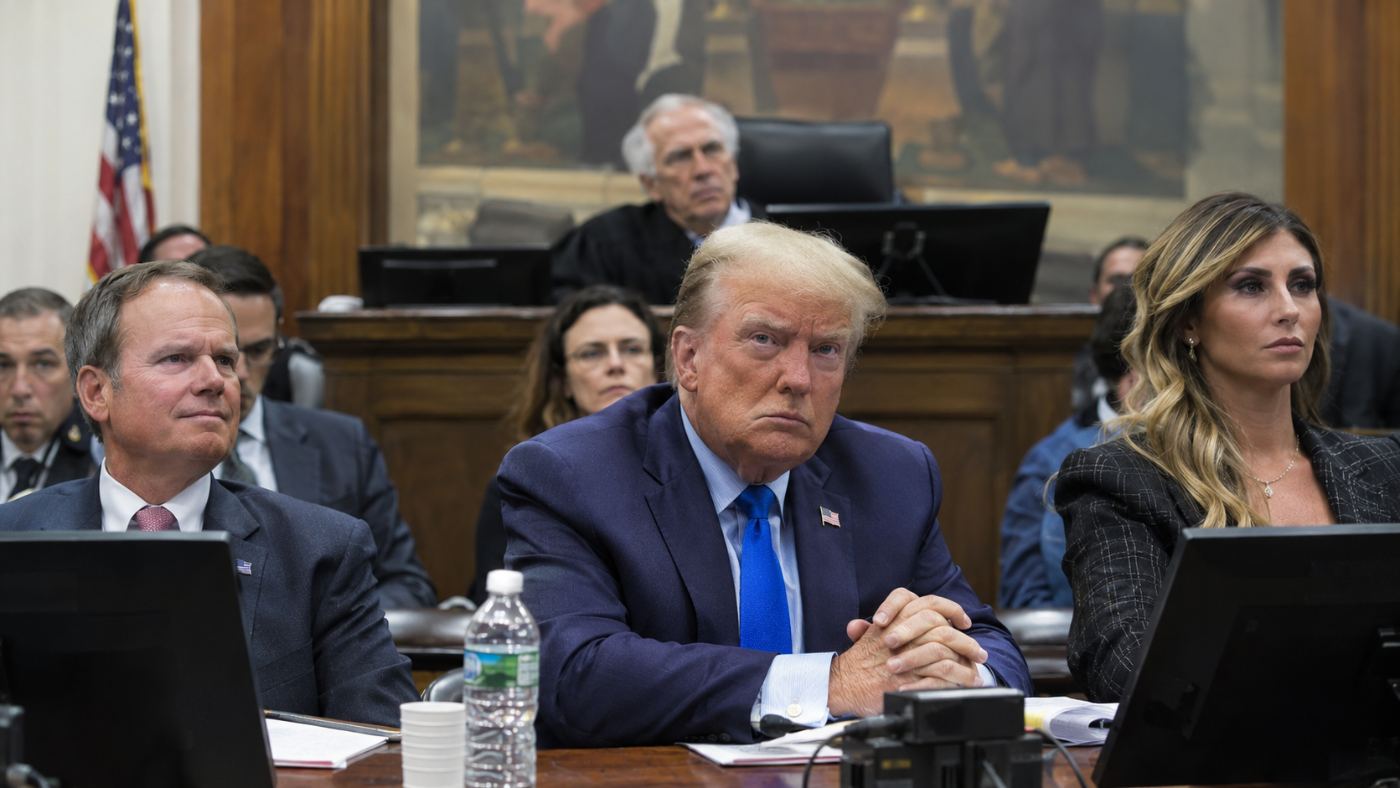
A New York appeals court reinstated a gag order against former President Donald Trump on November 30, 2023, restoring restrictions on his ability to publicly attack court personnel involved in his civil fraud trial.
The decision followed weeks of controversy surrounding Trump's criticism of a judicial law clerk, repeated violations of the original order, and threats directed at court employees.
The ruling represented another legal setback for Trump, who had argued that the restrictions violated his constitutional right to free speech.
The case involved a $250 million civil fraud lawsuit brought by New York Attorney General Letitia James against Trump, his adult sons, and the Trump Organization.
James accused the defendants of repeatedly inflating the values of real estate holdings and other assets on financial statements used to obtain favorable loans and insurance arrangements.
Before the trial began, Justice Arthur Engoron had ruled that Trump and other defendants were liable for persistent fraud. The proceedings that followed addressed additional allegations and potential financial penalties.
But as the trial progressed, Trump's conduct outside the courtroom became a controversy of its own.
On October 3, the second day of the trial, Trump published a social media post targeting Engoron's principal law clerk, Allison Greenfield.
The post included Greenfield's photograph alongside Senate Majority Leader Chuck Schumer and made an insinuation about their relationship.
Trump used the image to question the impartiality of the proceedings.
The photograph was taken at a public event, but the accompanying accusation was unsupported.
Engoron quickly ordered Trump to remove the post and prohibited parties in the case from making public statements about members of his court staff.
The judge explained that personal attacks against court employees were unacceptable, particularly given the potential for harassment and threats.
Trump subsequently violated the order.
On October 20, Engoron fined him $5,000 after the offending social media post remained accessible on his campaign website despite having been removed from Truth Social.
Trump's attorneys described the continued appearance of the post as an inadvertent oversight.
The judge nevertheless imposed the penalty and warned that further violations could result in more serious consequences.
Five days later, Trump was fined another $10,000.
The second penalty followed comments Trump made to reporters outside the courtroom about a person sitting alongside the judge.
Engoron interpreted the remarks as referring to his law clerk.
Trump maintained that he had been talking about his former attorney and political opponent Michael Cohen, who was testifying during the trial.
The judge rejected that explanation.
Together, the two violations resulted in $15,000 in fines.
Trump's attorneys challenged the gag order, arguing that it improperly restricted political speech and prevented their client from criticizing what he considered an unfair judicial process.
On November 16, an appellate judge temporarily suspended the order while the appeal was considered.
That suspension allowed Trump to resume public criticism of the court staff.
The situation changed on November 30.
A four-judge panel of the Appellate Division, First Department, reinstated the restrictions, finding that the record supported concerns about threats and harassment directed at court personnel.
The appellate court cited the need to protect court staff and ensure the orderly administration of justice.
Evidence submitted during the proceedings showed that the law clerk and other court employees had received threatening and harassing communications.
According to a court security official's sworn statement, the clerk had been subjected to hundreds of threatening or harassing messages and calls.
The official described an escalation in threatening communications following Trump's public attacks.
These developments became central to the court's assessment of whether the restrictions were justified.
Trump's attorneys argued that he was entitled to criticize the people involved in a case with substantial political consequences.
The courts distinguished between criticism of the legal proceedings and targeted statements about court employees.
The gag order did not prohibit Trump from criticizing Attorney General James, the judge, or the civil fraud allegations themselves.
It specifically restricted public comments concerning court staff.
That distinction was important because the First Amendment protects political expression, including criticism of public officials and judicial proceedings.
However, courts also possess authority to protect participants and employees from threats, intimidation, and interference with their work.
The November 30 ruling reflected the appellate court's determination that the circumstances justified restoring the restrictions while Trump's challenge continued.
The decision came during a period when Trump was facing multiple criminal and civil proceedings.
He was also campaigning for the 2024 Republican presidential nomination and frequently portrayed the cases against him as politically motivated.
His supporters argued that the legal proceedings were being used to damage his presidential campaign.
Trump himself repeatedly accused prosecutors and judges of treating him unfairly.
Attorney General James rejected those allegations and maintained that the civil fraud case concerned financial misconduct rather than electoral politics.
The gag-order dispute raised a separate issue from the underlying fraud allegations.
It concerned whether a former president and active presidential candidate could publicly target individual court employees while litigation involving him was underway.
The court's answer was that the restrictions could remain in place under the circumstances presented.
The reinstatement did not determine the final outcome of the civil fraud lawsuit, nor did it resolve every constitutional question raised by Trump's attorneys.
It did, however, restore a judicial restriction that Trump had already been penalized twice for violating.
The November 30 decision became another chapter in the legal disputes surrounding Trump's public statements during his court proceedings.
It also demonstrated the practical consequences of political rhetoric directed at individuals working within the judicial system.
Court employees who are not elected officials can become the targets of public attention when prominent defendants criticize them by name or implication.
In this case, the court received evidence that its personnel had experienced significant harassment and threats.
The appellate judges concluded that those circumstances warranted renewed protection.
For Trump, the ruling meant that his ability to criticize the civil fraud proceedings remained broad, but his ability to publicly attack court staff was once again restricted.
On November 30, 2023, the New York appellate court restored that boundary, reinforcing the principle that courtroom personnel must be able to perform their duties without becoming targets of intimidation or harassment.