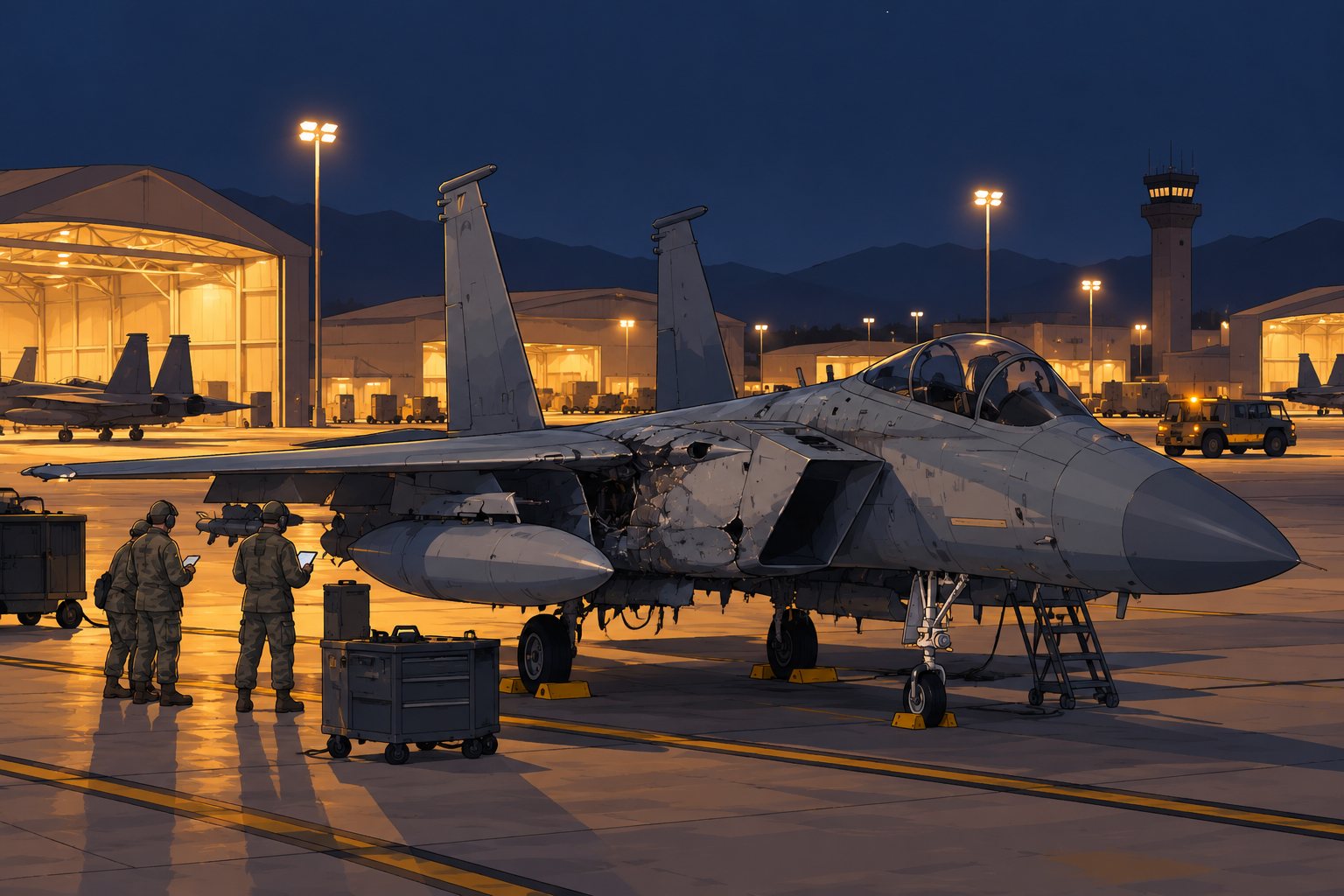
Donald Trump's war with Iran has inflicted billions of dollars in damage on the United States military, with a new congressional report revealing that 81 American aircraft have been lost or damaged since the conflict began on February 28.
The losses include advanced fighter jets, aerial refueling tankers, surveillance aircraft, helicopters, and dozens of unmanned drones.
According to the Congressional Research Service, the number of affected aircraft has nearly doubled since May, when the agency identified 42 aircraft lost or damaged.
The latest accounting raises questions about the financial and military consequences of a conflict that has already consumed tens of billions of dollars.
The Aircraft Losses: 81 and Counting
The October 5 congressional report identifies the following American military aircraft as lost or damaged:
| Aircraft | Number |
|---|---:|
| MQ-9 Reaper drones | 45 |
| F-15E Strike Eagle fighters | 12 |
| KC-135 Stratotanker refueling aircraft | 7 |
| AH-6 Little Bird helicopters | 4 |
| MQ-1 drones | 3 |
| A-10 Thunderbolt II attack aircraft | 2 |
| MC-130J Commando II aircraft | 2 |
| F-35A Lightning II stealth fighter | 1 |
| E-3 Sentry AWACS aircraft | 1 |
| MQ-4C Triton surveillance drone | 1 |
| AH-64 Apache helicopter | 1 |
| MH-60 Sea Hawk helicopter | 1 |
| HH-60W Jolly Green II helicopter | 1 |
| TOTAL | 81 |
The figures include aircraft destroyed, crashed, damaged, or otherwise lost during operations. Not all were shot down by Iranian forces, and some damaged aircraft may have returned to service.
Nevertheless, the losses represent a significant financial and operational burden.
Billions of Dollars in Aircraft Losses
The Congressional Budget Office estimates that replacing equipment lost during the conflict could cost between $1.9 billion and $3.3 billion, depending on replacement decisions.
The financial consequences extend far beyond aircraft.
American military installations throughout the Middle East have been subjected to Iranian missile and drone attacks, including facilities in Jordan, Iraq, Saudi Arabia, Kuwait, and other Gulf countries.
These attacks have damaged infrastructure, disrupted operations, and forced the Pentagon to reconsider how it protects expensive military equipment stationed overseas.
The overall cost of the war has reportedly exceeded $43 billion, with continuing operations adding substantially to the bill.
The Reaper Drone Losses Are Particularly Striking
Of the 81 aircraft listed, 45 are MQ-9 Reaper drones.
These aircraft perform surveillance, reconnaissance, and precision-strike missions and have become an important component of modern American military operations.
Although unmanned aircraft do not place pilots directly at risk, they are expensive systems that require considerable time and resources to replace.
The losses demonstrate how relatively inexpensive missiles and drones can threaten military equipment costing millions of dollars.
The Damage Goes Beyond Aircraft
The war has also placed considerable pressure on American ammunition inventories, particularly sophisticated air-defense interceptors used to protect military installations and personnel.
A Pentagon inspector general report identified munitions shortages and supply-chain bottlenecks that could take years to resolve.
The military must now contend with replacing damaged equipment, restoring installations, replenishing missile inventories, and maintaining readiness for other potential conflicts.
These costs come on top of the economic disruption caused by fighting around the Strait of Hormuz, one of the world's most important oil shipping routes.
A War With No Clear Financial Endpoint
The United States retains overwhelming military advantages over Iran, and American operations have inflicted extensive damage on Iran's conventional forces.
But military superiority does not eliminate the cost of prolonged conflict.
The latest congressional findings illustrate how even the world's most powerful military can suffer substantial losses when confronted with sustained missile and drone attacks.
With 81 aircraft lost or damaged, billions in replacement costs, and military installations requiring repairs, the consequences of Trump's decision to launch the war continue to accumulate.
The central question is no longer simply how much damage the United States can inflict on Iran.
It is how much more this war will cost the American military, American taxpayers, and the country's long-term military readiness.