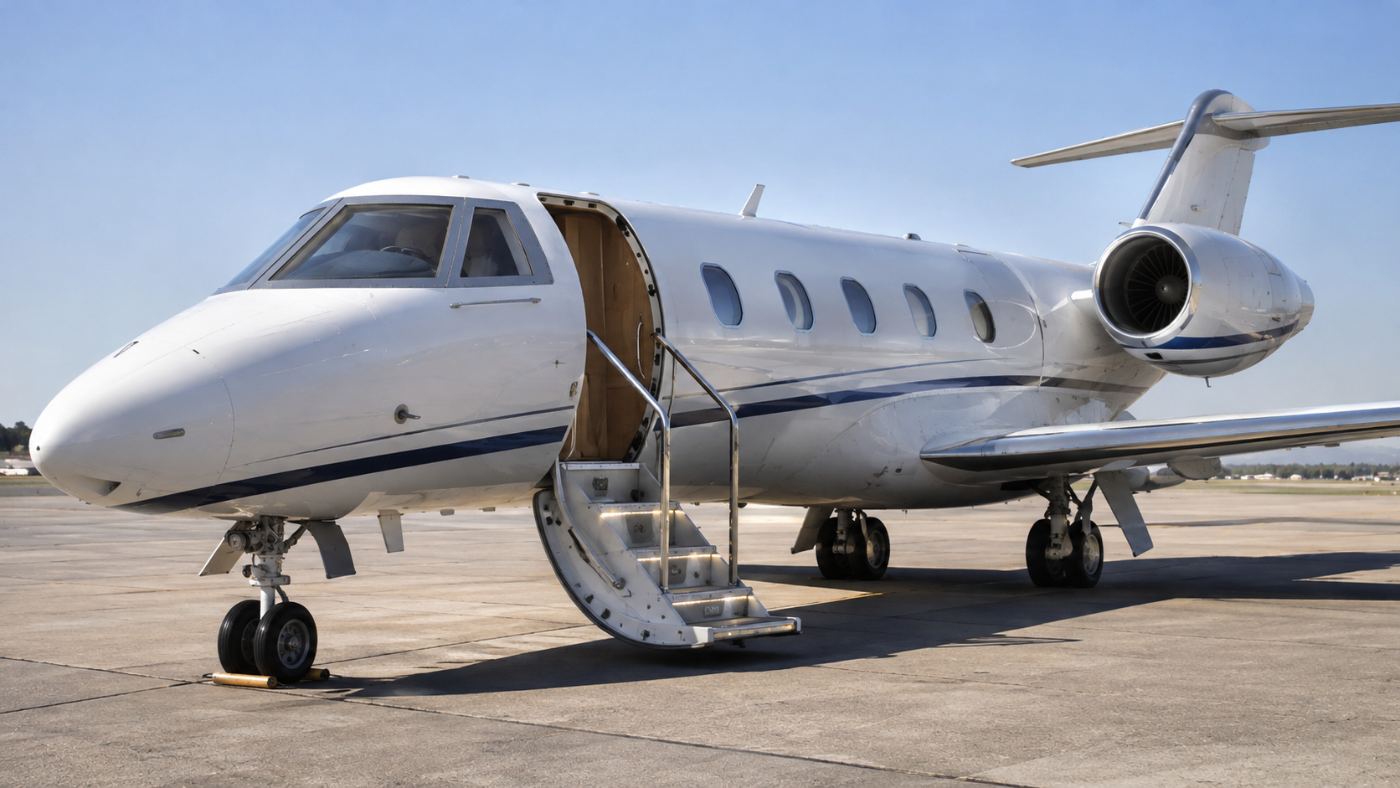
The Trump administration's Department of Homeland Security spent approximately $464 million acquiring ten aircraft, including luxury private jets, only to leave much of the fleet sitting largely unused.
Now, new reporting has raised questions about who authorized a last-minute $303 million purchase involving former Homeland Security Secretary Kristi Noem, White House official Stephen Miller, and an aviation company whose chairman contributed to a political committee supporting Noem.
Hundreds of Millions for Aircraft Gathering Dust
The controversy began with Noem's effort to replace aging Coast Guard aircraft with two Gulfstream G700 luxury jets, at a reported total cost approaching $200 million.
The purchases eventually expanded into a fleet of ten aircraft, including converted Boeing 737s.
One aircraft featured a private bedroom, luxury seating, and other high-end amenities. Another reportedly included two bedrooms, marble showers, a bar, and an exotic leather-covered table.
The planes were promoted as assets for deportation operations, border security, and government transportation.
But reporting based on internal documents revealed that seven Boeing 737s were not being used because DHS lacked the personnel needed to operate them. Several aircraft remained parked at an airport in Lake Charles, Louisiana.
Meanwhile, Immigration and Customs Enforcement continued relying on chartered aircraft for deportation flights.
The $303 Million Last-Minute Deal
According to reporting cited by AlterNet, Stephen Miller allegedly pushed for the purchase of five additional aircraft during Noem's final hours in office.
Sources quoted by the PunchUp newsletter claimed the decision was rushed through before incoming DHS leadership could assume control.
The White House disputes that account.
Administration officials maintain that Noem's leadership approved the purchases without White House involvement. Officials also say canceling the agreements could trigger approximately $200 million in termination costs.
The conflicting explanations have left unresolved questions about the decision-making process and who ultimately authorized the spending.
A Political Donor's Lucrative Contract
The aircraft were purchased from Daedalus Aviation Corporation, whose chairman, William Walters, contributed $10,000 to American Resolve, a political action committee supporting Noem.
According to reporting by The New York Times, Daedalus purchased one Gulfstream aircraft for approximately $83 million before selling it to DHS for $106 million.
Another aircraft was reportedly sold to the government for considerably more than the company's acquisition price.
Noem has disputed aspects of the reporting, including how Walters was characterized as a political donor.
The financial relationship does not independently establish corruption, but the transactions have prompted questions about procurement practices, pricing, and potential conflicts of interest.
Congress Demands Answers
Democratic Senators Patty Murray and Chris Murphy have demanded an accounting of the aircraft purchases and their intended use.
DHS officials have explored transferring or repurposing aircraft for other government agencies rather than using them for their originally advertised deportation missions.
The department has defended aircraft ownership as potentially less expensive than long-term leasing, while critics question whether the purchases were necessary.
The Cost to American Taxpayers
The controversy exposes a fundamental accountability problem.
Hundreds of millions of dollars were committed to aircraft purchases without an apparent operational plan sufficient to put much of the fleet into service.
The government now faces the possibility of paying to maintain unused aircraft, finding alternative missions for them, or absorbing substantial cancellation costs.
Whether the responsibility rests with Noem, Miller, or other senior officials remains disputed.
What is not disputed is that taxpayers financed an extraordinarily expensive aircraft acquisition program whose practical benefits remain difficult to demonstrate.